Nepal welcomed over 1.15 million international visitors in 2025, and trekking remains one of the primary reasons travelers choose Nepal. But the trails here are not only for foreign visitors. Every season, Nepali hikers, local travelers, families, students, photographers, and adventure seekers also head into the mountains for short hikes, cultural routes, and high-altitude journeys.
The reasons people trek in Nepal are as varied as the trails themselves. Some come to stand close to the world’s highest peaks, some want quiet villages and old monasteries, and others simply need a break from daily routine. What they all share is the same starting point: figuring out which trail is actually right for them.
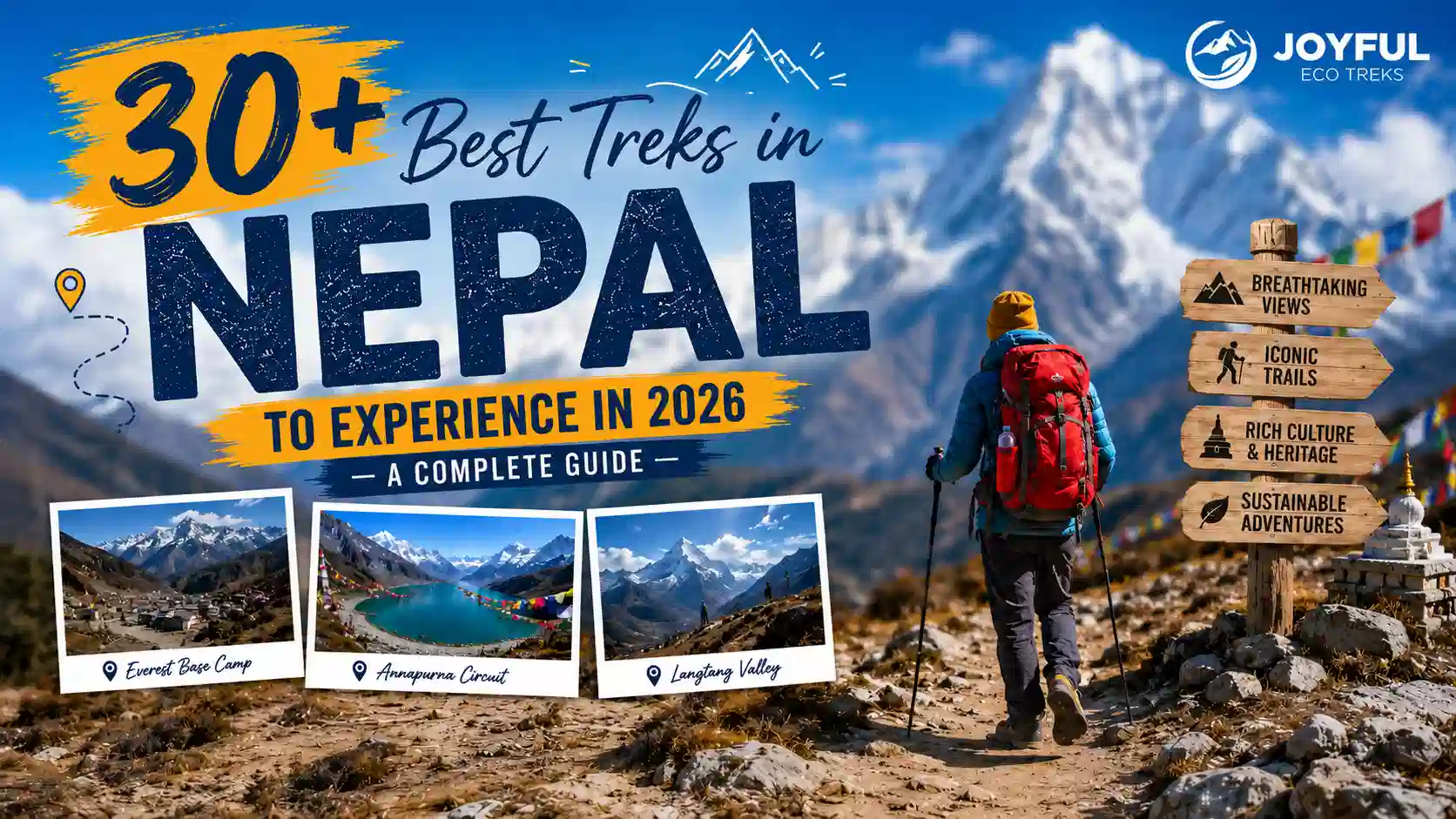
That is where this guide comes in. Here, you will find over 30 of the best treks in Nepal, from famous Himalayan classics to quieter off-beat trails. Each route is laid out clearly so you can choose the one that matches your time, fitness, and travel style.
(Methodology: We selected the best treks in Nepal by comparing what travelers usually look for before planning a trek: scenery, altitude, duration, difficulty, cultural experience, crowd level, accessibility, and overall trekking experience. Instead of focusing only on famous routes, we also included quieter trails, short beginner-friendly hikes, remote wilderness routes, spiritual journeys, and less-crowded alternatives to give every type of trekker a fair starting point.)
- Nepal is one of the world’s top trekking destinations for Himalayan scenery, tea house hiking, mountain culture, and routes that range from easy village trails to remote high-altitude expeditions.
- Everest Base Camp, Annapurna Circuit, Manaslu Circuit, Upper Mustang, and Gokyo Lakes are among Nepal’s most popular treks, while Helambu, Khopra Danda, Mardi Himal, and Tsum Valley offer quieter alternatives with fewer crowds.
- Before choosing a trek in Nepal, travelers should compare duration, difficulty, altitude, season, budget, and crowd level to find a route that matches their experience and travel style. Also, check the needed permits for avoiding any delays.
Why is Nepal One of the Best Trekking Destinations?
Nepal is considered one of the best trekking destinations because it offers Himalayan scenery, diverse trekking routes, mountain culture, and tea house trekking within one country. From short beginner-friendly hikes to remote high-altitude expeditions, Nepal offers routes for almost every type of trekker.
Nepal is home to eight of the world’s fourteen mountains above 8,000m (26,247ft), including Everest, Kanchenjunga/Kangchenjunga, Lhotse, Makalu, Cho Oyu, Dhaulagiri, Manaslu, and Annapurna. On many treks, these peaks are not just seen from far away but felt throughout the entire journey. The trail gradually brings trekkers closer through valleys, forests, ridgelines, and mountain settlements.
I. The World’s Highest Peaks
Nepal is home to eight of the world’s fourteen mountains above 8,000m (26,247ft), including Everest, Kanchenjunga/Kangchenjunga, Lhotse, Makalu, Cho Oyu, Dhaulagiri, Manaslu, and Annapurna. On many treks, these peaks are not just seen from far away but felt throughout the entire journey. The trail gradually brings trekkers closer through valleys, forests, ridgelines, and mountain settlements.
II. Diverse Routes
Nepal’s trekking routes are not limited to one style of travel. Some routes stay low and pass through villages, while others cross glaciers, high passes, dry valleys, sacred lakes, or remote borderlands. This variety helps travelers choose a trek based on time, fitness, scenery, culture, solitude, and challenge.
III. Tea House Culture
On many popular treks in Nepal, tea houses make the journey more manageable. Trekkers can sleep in local lodges, eat hot meals, and continue the journey without carrying full camping equipment. The experience also adds a social side to the trail, with shared dining rooms, local hosts, guides, porters, and other travelers gathering in the evenings.
IV. Local Villages and Traditions
Nepal’s trails pass through living communities, not empty wilderness. Sherpa, Tamang, Gurung, Magar, Thakali, Hyolmo, and Tibetan-influenced villages each bring their own food, language, architecture, and religious traditions. Mani walls, prayer wheels, monasteries, terraced fields, and mountain festivals further give the journey cultural depth.
V. Options for Beginners and Experienced Trekkers
Nepal is not only for expert mountaineers. Short routes and lower-altitude trails work well for prepared beginners, while remote circuits and high-pass treks challenge experienced hikers. This range lets travelers choose a route that feels exciting without going beyond their ability.
You may also read: Best Treks in Nepal for Beginners
30+ Top Treks in Nepal for Every Type of Trekker
Here are 30+ of the best treks in Nepal, starting with fifteen detailed route breakdowns covering everything from duration and difficulty to permits and best season. Further down, a comparison table covers additional trails worth considering for different travel styles, fitness levels, and timeframes.
1. Everest Base Camp
The Everest Base Camp is a classic high-altitude trek in Nepal. It is known for glacier scenery, Sherpa culture, monastery atmosphere, and the steady feeling of walking closer to the world’s highest mountain. Every stage of the trek feels meaningful, from busy mountain settlements and prayer-flag-covered ridges to the cold landscape surrounding the Khumbu Glacier.
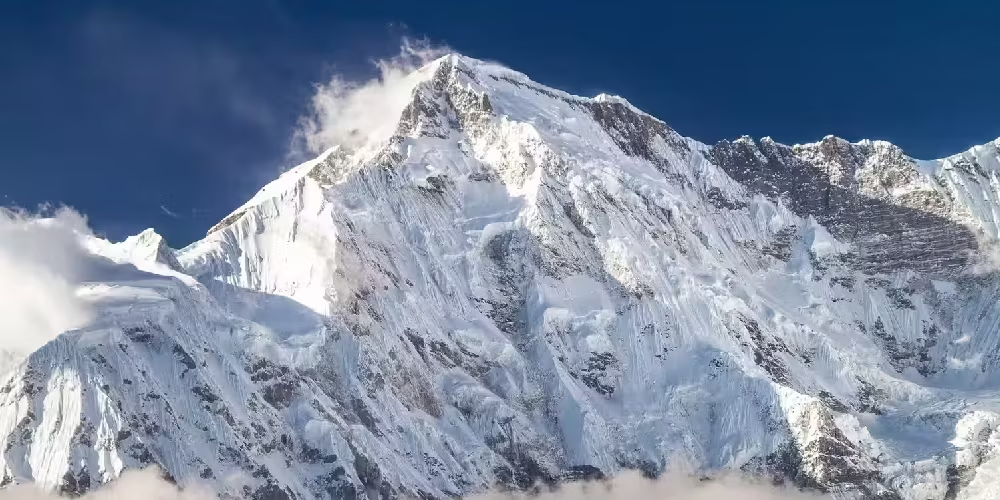
- Duration: 12–14 days
- Classic Route: Lukla → Phakding → Namche Bazaar → Tengboche → Dingboche → Lobuche → Gorakshep/Gorak Shep → Everest Base Camp → Kala Patthar → Lukla
- Difficulty: Moderate to challenging
- Maximum Altitude: 5,545m | 18,192ft at Kala Patthar
- Best Season: March–May, October–November
- Permits and Guide Requirements: Sagarmatha National Park Permit + Khumbu Pasang Lhamu Rural Municipality Permit + agency-issued TIMS Card + licensed trekking guide
- Best For: Trekkers who dream of standing beneath Everest, walking through the Sherpa heartland, and experiencing one of the world’s most iconic high-altitude journeys.
2. Annapurna Base Camp
Annapurna Base Camp feels like walking into the heart of the Annapurna range. The trail enters a natural mountain sanctuary where snowy peaks rise close from every side. Terraced farmland, bamboo forests, Gurung villages, and the hot springs at Jhinu Danda add warmth to the journey without making the trek feel too long.
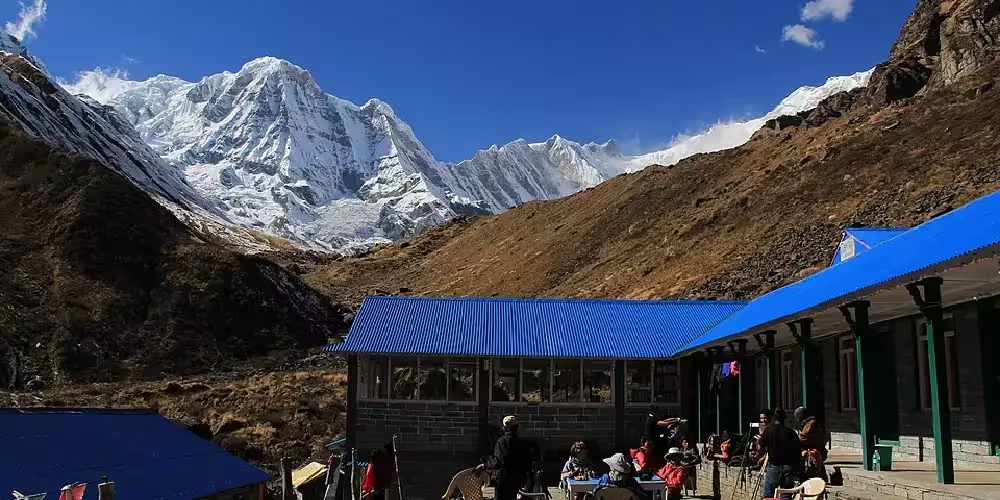
- Duration: 7–12 days
- Standard Route: Pokhara → Ghandruk/Chhomrong → Bamboo → Deurali → Machhapuchhre Base Camp → Annapurna Base Camp → Jhinu Danda → Pokhara
- Difficulty: Moderate
- Maximum Altitude: 4,130m | 13,550ft at Annapurna Base Camp
- Best Season: March–May, October–November
- Permits and Guide Requirements: Annapurna Conservation Area Permit + agency-issued TIMS Card + licensed trekking guide
- Ideal for: First-time travelers looking for a shorter base camp trek with close Himalayan views and moderate altitude.
3. Manaslu Circuit
Manaslu Circuit feels wilder and more private than Nepal’s classic trekking corridors. Circling Mount Manaslu, the journey follows the Budhi Gandaki Valley through steep river gorges, pine forests, and highland settlements where Buddhist culture runs deep. Samagaon adds one of the trek’s most memorable pauses, with a centuries-old monastery and a powerful mountain backdrop beneath Manaslu’s south face.
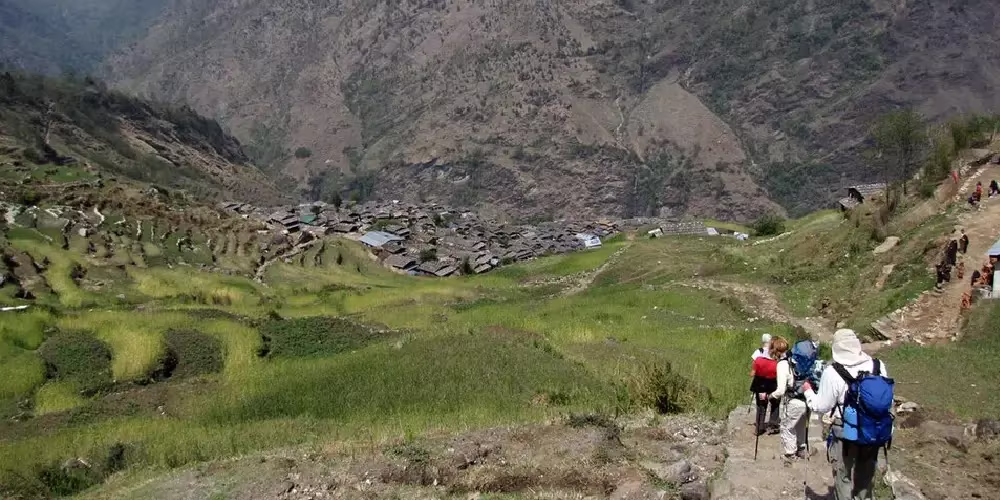
- Duration: 14–18 days
- Standard Route: Soti Khola → Jagat → Deng → Namrung → Samagaon → Samdo → Larkya La Pass → Bimthang
- Difficulty: Moderate to challenging
- Maximum Altitude: 5,106m | 16,752ft at Larkya La Pass
- Best Season: March–May, September–November
- Permits and Guide Requirements: Manaslu Restricted Area Permit + Manaslu Conservation Area Permit + Annapurna Conservation Area Permit + agency-issued TIMS Card + licensed trekking guide
- Best For: Hikers seeking quieter valleys, Tibetan-influenced culture, remote mountain scenery, and a serious high-pass crossing.
4. Langtang Valley
Langtang Valley is consistently listed among the top treks in Nepal, and it begins just a day’s drive from Kathmandu. The trail moves from forested lower sections into Tamang villages, yak pastures, and wide glacial scenery near the Tibetan border. Langtang village also gives the trek a deeper human story, as the rebuilt settlement reflects the strength of the local community after the 2015 earthquake.
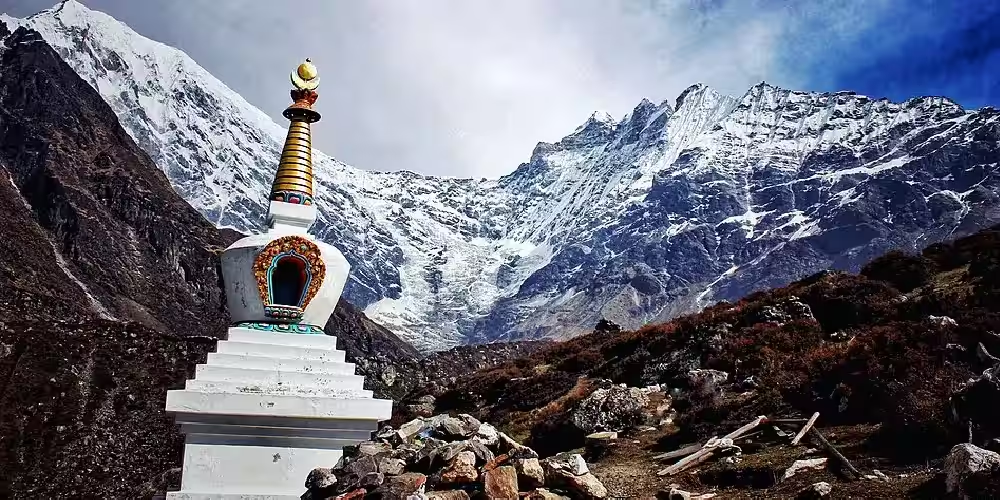
- Duration: 7–10 days
- Standard Route: Syabrubesi → Lama Hotel → Langtang Village → Kyanjin Gompa → Tserko Ri → Syabrubesi
- Difficulty: Easy to moderate
- Maximum Altitude: 4,984m | 16,351ft at Tserko Ri
- Best Season: March–May, October–November
- Permits and Guide Requirements: Langtang National Park Permit + agency-issued TIMS Card + licensed trekking guide
- Best For: Travelers seeking an accessible Himalayan trek with Tamang culture, glacial scenery, and no domestic flight.
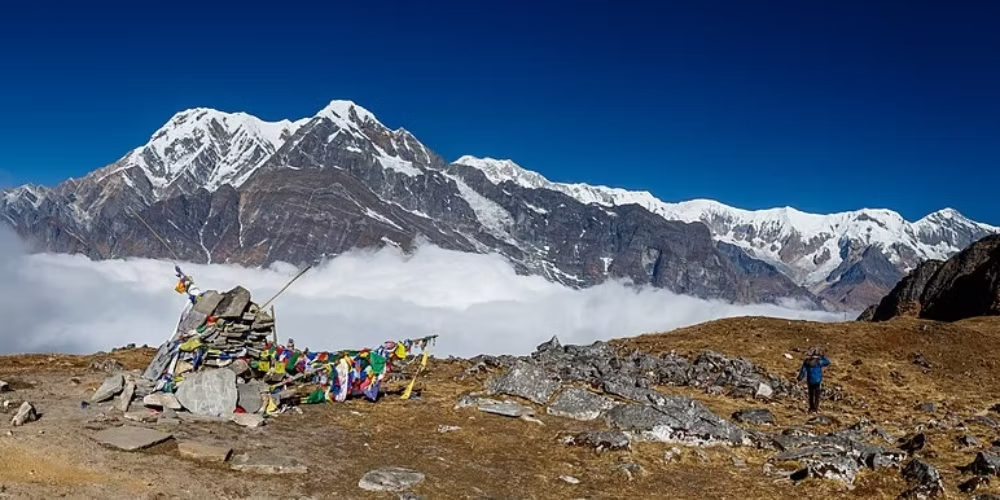
5. Mardi Himal
Officially opened to trekkers only in 2012, Mardi Himal is still finding its audience, and that is its biggest advantage right now. The trail follows a sharp eastern ridge of the Annapurna massif, with quiet lower forests, exposed upper sections, and unusually close views of Machhapuchhre. Above High Camp, the landscape opens quickly, giving a front-row Himalayan perspective that feels much bigger than the trek’s short duration.
- Duration: 5–7 days
- Classic Route: Pokhara → Australian Camp → Forest Camp → Low Camp → High Camp → Mardi Himal Base Camp viewpoint → Pokhara
- Difficulty: Easy to moderate
- Maximum Altitude: 4,500m | 14,763ft at Mardi Himal Base Camp Viewpoint
- Best Season: March–May, October–November
- Permits and Guide Requirements: Annapurna Conservation Area Permit + agency-issued TIMS Card + licensed trekking guide
- Best For: Trekkers seeking a short Annapurna route with quiet forests, narrow ridgelines, and close views of Machhapuchhre.
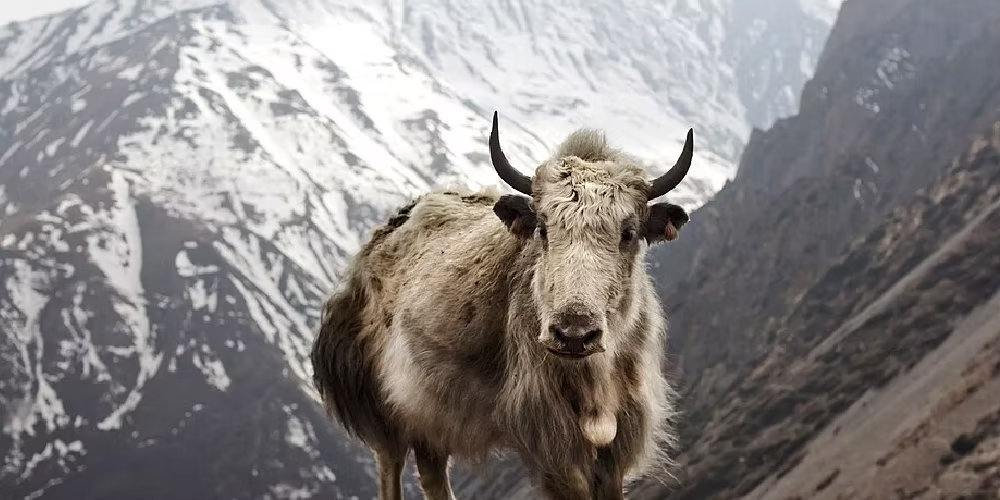
6. Annapurna Circuit
No trek in Nepal shows changing landscapes quite like the Annapurna Circuit. The trail moves from lower hills and terraced fields into forests, river valleys, dry mountain terrain, and finally the high crossing of Thorong La Pass. After the pass, the journey drops toward Muktinath, where the experience shifts from a mountain challenge to a more cultural and spiritual journey.
- Duration: 12–18 days
- Standard Route: Besisahar → Chame → Pisang → Manang → Thorong La Pass → Muktinath → Jomsom → Pokhara
- Difficulty: Moderate to challenging
- Maximum Altitude: 5,416m | 17,769ft at Thorong La Pass
- Best Season: March–May, October–November
- Permits and Guide Requirements: Annapurna Conservation Area Permit + agency-issued TIMS Card + licensed trekking guide
- Best For: Trekkers who want a long Himalayan journey with changing landscapes, a dramatic high-pass crossing, and a strong mix of adventure and culture.
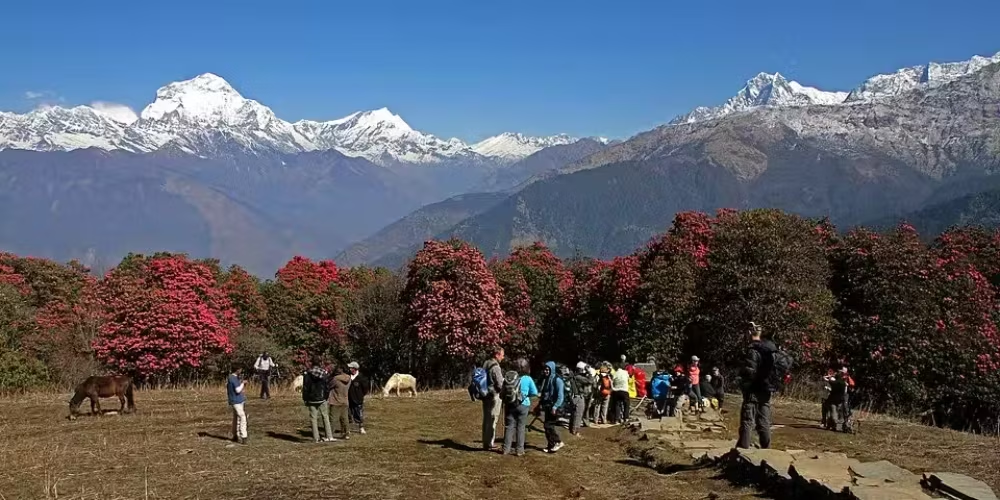
7. Ghorepani Poon Hill
For a short trek, Ghorepani Poon Hill ranks among the most popular treks in Nepal. It delivers a surprisingly complete Himalayan experience. The climb toward Ulleri adds a real physical challenge early on, while forests, hillside villages, and open ridges keep the journey varied. By the time trekkers reach the sunrise viewpoint, the route feels more rewarding than its short length suggests.
- Duration: 4–5 days
- Classic Route: Nayapul → Tikhedhunga → Ulleri → Ghorepani → Poon Hill → Tadapani → Ghandruk → Pokhara
- Difficulty: Easy to moderate
- Maximum Altitude: 3,210m | 10,531ft at Poon Hill
- Best Season: March–May, October–November
- Permits Required: Annapurna Conservation Area Permit + e-TIMS Card
- Best For: First-time trekkers looking for sunrise views, village culture, and a shorter Himalayan route with manageable altitude.
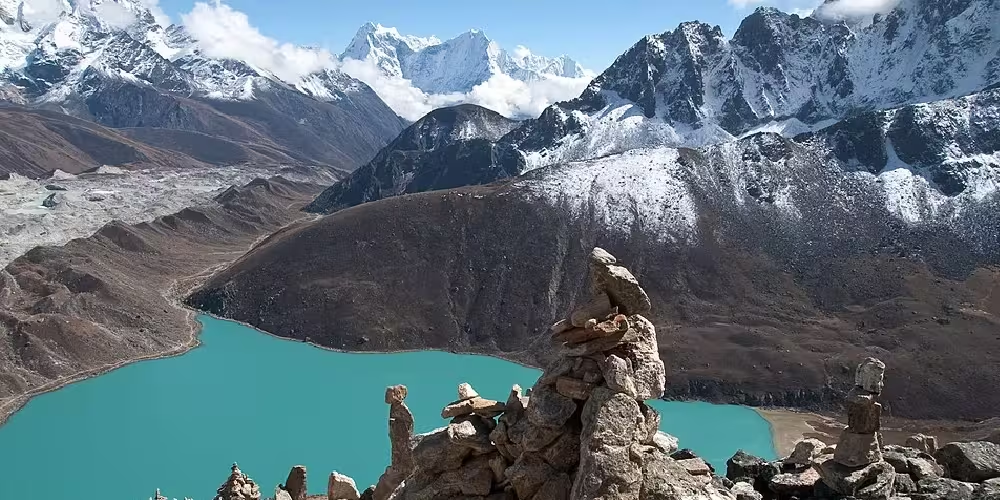
8. Gokyo Lakes
One detail makes Gokyo Lakes stand out immediately: many consider it the best trek in Nepal for panoramic Everest views, rather than the standard base camp route. From Gokyo Ri, Everest appears alongside Lhotse, Makalu, and Cho Oyu in one broad skyline. Below the viewpoint, the Gokyo Valley holds six sacred glacial lakes, including Dudh Pokhari beside the main village, while the Ngozumpa Glacier adds a quiet, rugged feel to the upper valley.
- Duration: 10–14 days
- Classic Route: Lukla → Phakding → Namche Bazaar → Dole → Machhermo → Gokyo → Gokyo Ri → return via same route → Lukla
- Difficulty: Moderate to challenging
- Maximum Altitude: 5,357m | 17,575ft at Gokyo Ri
- Best Season: March–May, October–November
- Permits and Guide Requirements: Sagarmatha National Park Permit + Khumbu Pasang Lhamu Rural Municipality Permit + agency-issued TIMS Card + licensed trekking guide
- Best For: Trekkers seeking Everest-region scenery, glacial lakes, and a quieter alternative to the standard Everest Base Camp route.
9. Upper Mustang
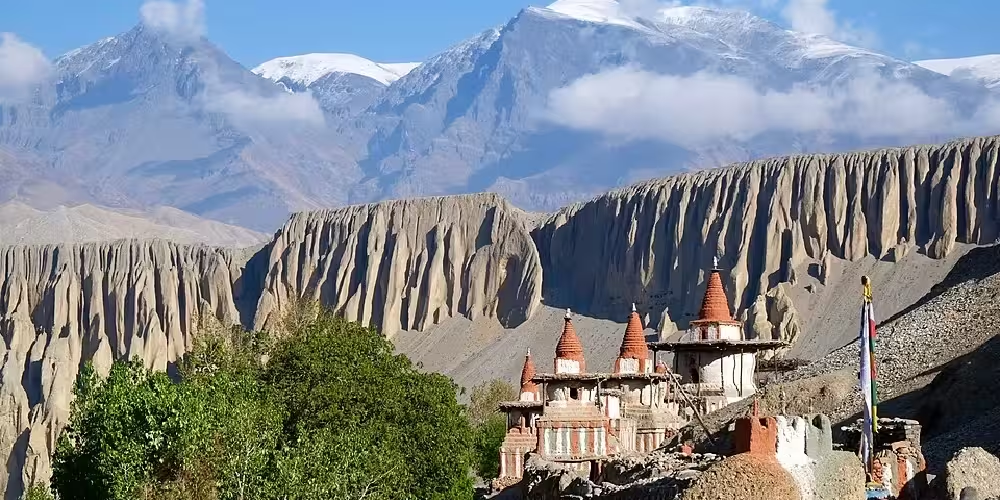
Upper Mustang opened to outside visitors only in 1992. The region was once the Kingdom of Lo, and Lo Manthang still remains its main highlight with ancient temples, whitewashed houses, and a walled city setting. Dry cliffs, cave dwellings, wind-carved canyons, and wide valleys make the landscape feel closer to the Tibetan plateau.
- Duration: 12–17 days
- Standard Route: Kagbeni → Chele → Syangboche → Ghami → Tsarang → Lo Manthang → Chhoser Caves → return via Drakmar/Kagbeni
- Difficulty: Moderate
- Maximum Altitude: 4,210m | 13,812ft at Syangboche Pass
- Best Season: May–October
- Permits and Guide Requirements: Upper Mustang Restricted Area Permit + Annapurna Conservation Area Permit + agency-issued TIMS Card + licensed trekking guide
- Best For: Trekkers seeking ancient Tibetan culture, dramatic desert landscapes, and a monsoon-friendly trek outside Nepal’s standard hiking seasons.
10. Everest Three Passes
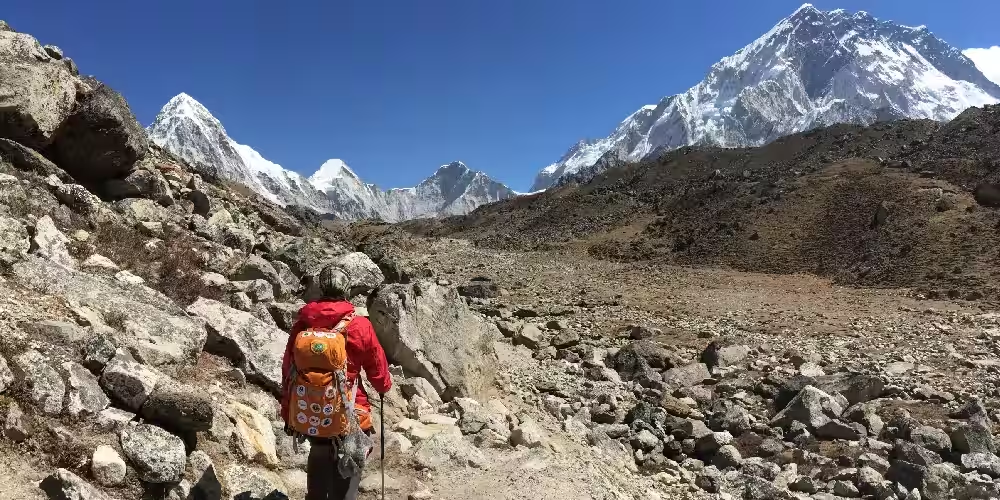
Everest Base Camp is only one part of the Everest Three Passes Trek. Unlike the standard EBC trail that follows the same path in and out, the Everest Three Passes Trek turns the entire Khumbu region into a high-altitude circuit by crossing Kongma La, Cho La, and Renjo La. Every pass opens a new valley, glacier, or ridgeline, so the scenery constantly changes throughout the journey.
- Duration: 18–20 days
- Standard Route: Lukla → Namche Bazaar → Kongma La Pass → Everest Base Camp → Kala Patthar → Cho La Pass → Gokyo Lakes → Gokyo Ri → Renjo La Pass → Thame → Namche → Lukla
- Difficulty: Strenuous
- Maximum Altitude: 5,545m | 18,192ft at Kala Patthar
- Best Season: March–May, October–November
- Permits and Guide Requirements: Sagarmatha National Park Permit + Khumbu Pasang Lhamu Rural Municipality Permit + agency-issued TIMS Card + licensed trekking guide
- Best For: Experienced trekkers who want the complete Khumbu circuit, combining EBC, Gokyo Lakes, and three high passes in a single route.
11. Kanchenjunga Base Camp
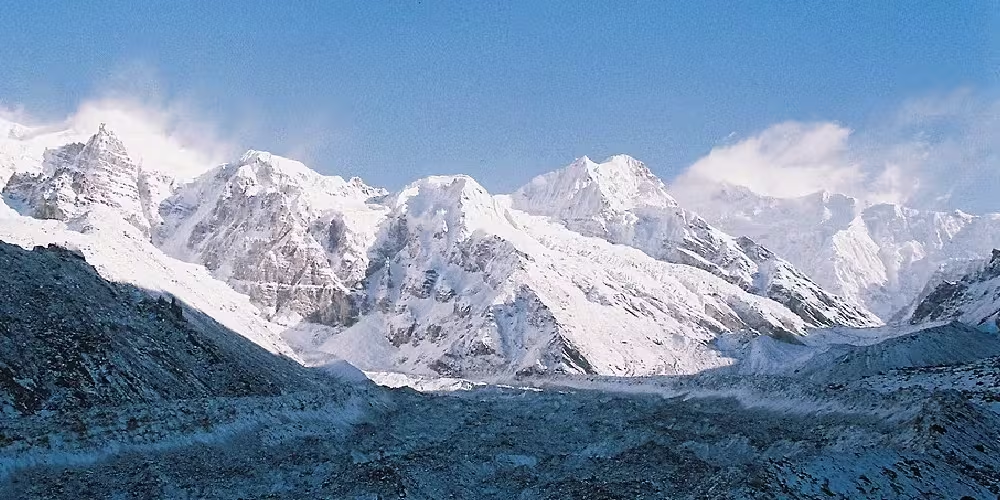
Far eastern Nepal feels very different from the country’s busier trekking regions. Kanchenjunga Base Camp sits near the Nepal-India border, and the long approach keeps the trail quiet even in peak season. Forests, remote villages, high valleys, and wide alpine terrain make the journey feel more like a wilderness expedition than a standard tea house trek.
- Duration: 20–26 days
- Standard Route: Kathmandu → Bhadrapur/Taplejung → Sekathum → Ghunsa → Pangpema → Sele La Pass → Tseram → Oktang → Taplejung
- Difficulty: Strenuous
- Maximum Altitude: 5,143m, Pangpema, North Base Camp
- Best Season: March–May, October–November
- Permits and Guide Requirements: Special Restricted Area Permit + Kanchenjunga Conservation Area Permit + agency-issued TIMS Card + licensed trekking guide
- Best For: Experienced trekkers who want a remote base camp journey, quiet trails, wild landscapes, and one of Nepal’s least crowded 8,000-meter peak regions.
12. Tsum Valley
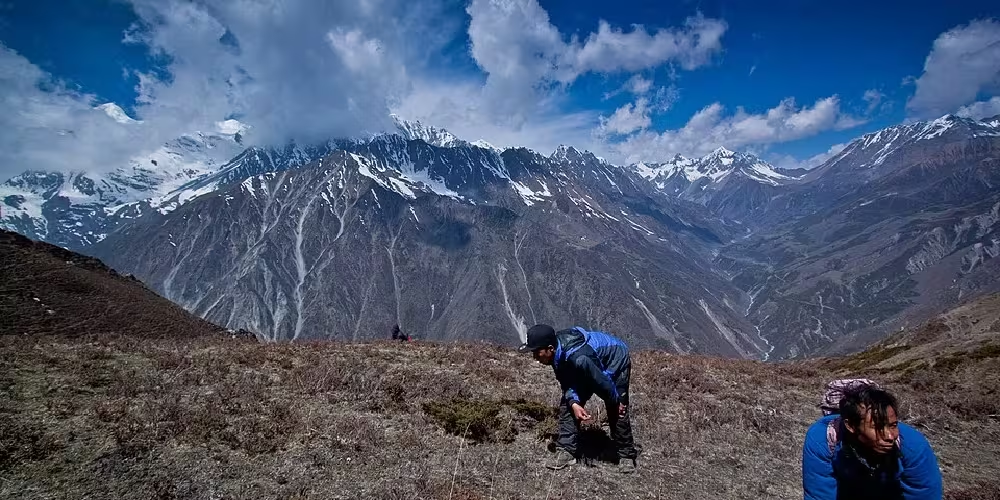
Tsum Valley is one of the most rewarding spiritual treks in Nepal. The word “Tsum” comes from the Tibetan word “Tsombo,” often understood as vivid. Hidden near the Tibetan border inside the Manaslu Conservation Area, Tsum Valley opened to foreign trekkers only in 2008. Here, it still feels deeply rooted in Tibetan Buddhist life, with ancient chortens, mani walls, stone villages, and Mu Gompa giving the journey a quiet spiritual character.
- Duration: 14–18 days
- Classic Route: Machha Khola → Jagat → Lokpa → Chumling → Chhokang Paro → Nile → Mu Gompa → return via Lokpa and Jagat
- Difficulty: Moderate
- Maximum Altitude: 4,200m | 13,779ft at Ganesh Himal Base Camp side trip
- Best Season: March–May, September–November
- Permits and Guide Requirements: Tsum Valley Restricted Area Permit + Manaslu Conservation Area Permit + agency-issued TIMS Card + licensed trekking guide
- Best For: Spiritual trek in Nepal with Tibetan Buddhist culture, quiet villages, ancient monasteries, and remote Himalayan atmosphere.
13. Helambu
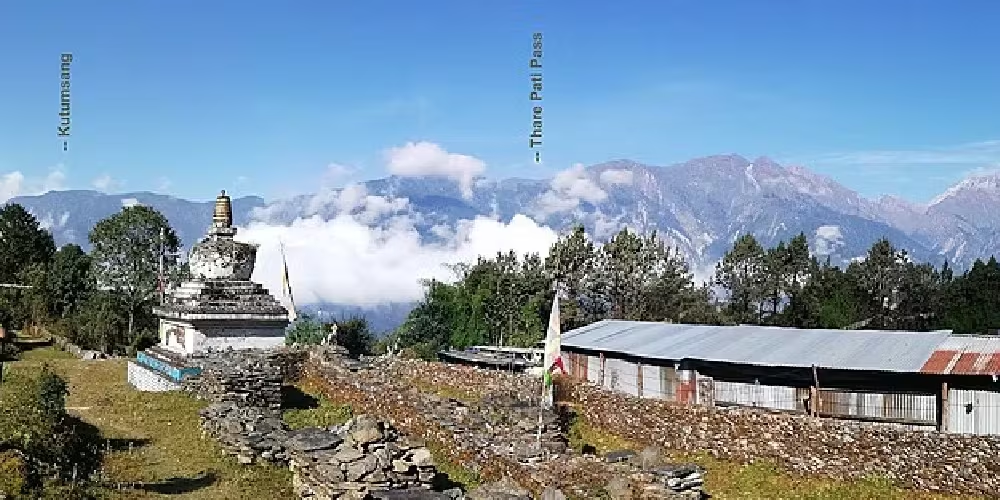
Just 30 km north of Kathmandu, Helambu is the trek many people overlook, and that is exactly what keeps it good. The circuit crosses Shivapuri Nagarjun and Langtang National Parks, moving through oak and rhododendron forests and traditional Hyolmo Buddhist villages. On clear mornings, the Langtang, Ganesh Himal, and Manaslu ranges stretch across the horizon.
- Duration: 7–10 days
- Classic Route: Kathmandu → Sundarijal → Chisapani → Kutumsang → Tharepati → Tarke Gyang → Sermathang → Melamchi Pul Bazaar → Kathmandu
- Difficulty: Easy to moderate
- Maximum Altitude: 3,771m | 12,372ft at Ama Yangri
- Best Season: March–May, September–November
- Permits and Guide Requirements: Langtang National Park Permit + Shivapuri Nagarjun National Park Permit + agency-issued TIMS Card + licensed trekking guide
- Best For: Trekkers who want a quiet trek near Kathmandu with forest trails, Buddhist culture, panoramic ridgelines, and a lower altitude.
14. Makalu Base Camp
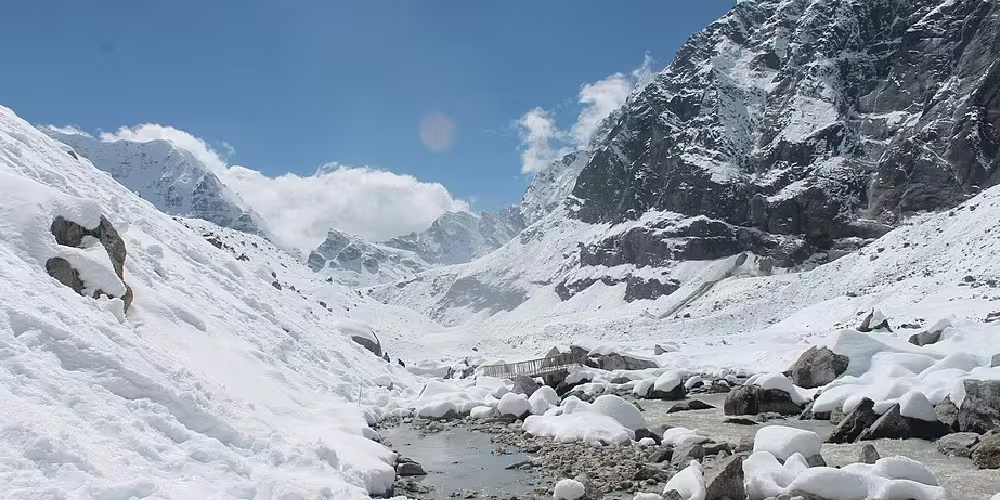
Mt. Makalu is the world’s fifth-highest mountain, yet its base camp offers a quieter and more adventurous trekking experience than Nepal’s busier regions. Spring and autumn remain the best seasons to trek in the Makalu region, when the journey through Makalu-Barun National Park and the Barun Valley rewards trekkers with wild scenery, high passes, and rich biodiversity.
- Duration: 18–22 days
- Difficulty: Strenuous
- Classic Route: Kathmandu → Tumlingtar → Num → Seduwa → Tashigaon → Khongma → Makalu Base Camp → return via same route → Kathmandu
- Maximum Altitude: 4,870m | 15,977ft at Makalu Base Camp
- Best Season: March–May, October–November
- Permits and Guide Requirements: Makalu-Barun National Park Permit + agency-issued TIMS Card + licensed trekking guide
- Best For: Trekkers with previous high-altitude experience who want a remote base camp trek with wild scenery, quiet trails, and a tougher alternative to Nepal’s busier routes.
15. Khopra Danda
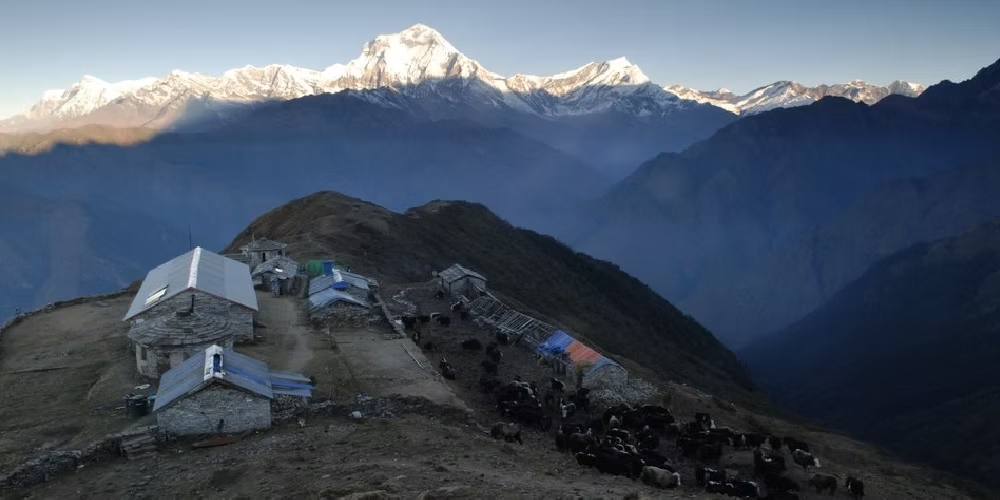
Khopra Danda delivers many of the same Himalayan views as Poon Hill but with far fewer trekkers on the trail. Wide panoramas of Dhaulagiri, Annapurna I, Nilgiri, and Machhapuchhre dominate the ridge, while the optional hike to Khayer Lake adds a sacred glacial setting beneath Annapurna South that most trekkers in the region never reach.
- Duration: 7–10 days
- Standard Route: Pokhara → Ghandruk → Tadapani → Dobato → Khopra Danda → Khayer Lake → Swanta → Ghorepani → Nayapul → Pokhara
- Difficulty: Moderate
- Maximum Altitude: 4,500m | 14,763ft at Khayer Lake (optional side hike)
- Best Season: March–May, September–November
- Permits Required: Annapurna Conservation Area Permit, ACAP
- Best For: Trekkers who want a quieter Annapurna route with ridge views, sacred lake scenery, village trails, and fewer crowds than Poon Hill.
Other Popular Treks in Nepal Worth Considering
Beyond the fifteen routes covered above, there are dozens of equally rewarding journeys that see far fewer trekkers, cover entirely different landscapes, and suit a much wider range of travel styles. The trails listed below range from easy short walks near Kathmandu to demanding high-altitude circuits in the remote west and far east of the country.
| S.N. | Trek Name | Duration (Days) | Difficulty | Max Altitude | Crowd Level | Best For |
|---|---|---|---|---|---|---|
| 16 | Tamang Heritage Trail | 7–10 Days | Easy–Moderate | 3,165 m (10,383 ft) at Nagthali | Low | Cultural travelers and beginners looking for village-based trekking experiences |
| 17 | Langtang Gosaikunda Trek | 10–12 Days | Moderate | 4,380 m (14,370 ft) at Gosaikunda Lake | Low–Moderate | Spiritual travelers and trekkers who enjoy alpine lakes and mountain scenery |
| 18 | Everest Base Camp via Jiri | 20–24 Days | Strenuous | 5,545 m (18,192 ft) at Kala Patthar | Very Low | Seasoned trekkers interested in the original Everest approach route |
| 19 | Pikey Peak Trek | 5–7 Days | Easy–Moderate | 4,065 m (13,336 ft) at Pikey Peak | Low | Short-trek travelers wanting Everest views without heavy crowds |
| 20 | Nar Phu Valley Trek | 13–15 Days | Strenuous | 5,320 m (17,454 ft) at Kang La Pass | Very Low | Adventure travelers interested in remote Tibetan-influenced valleys |
| 21 | Dhaulagiri Circuit Trek | 18–21 Days | Very Strenuous | 5,360 m (17,585 ft) at French Pass | Very Low | Experienced trekkers looking for demanding wilderness routes |
| 22 | Upper Dolpo Trek | 25–28 Days | Very Strenuous | 5,190 m (17,027 ft) at Numala Pass | Very Low | Experienced trekkers interested in remote culture and isolated landscapes |
| 23 | Lower Dolpo Trek | 15–18 Days | Strenuous | 3,611 m (11,847 ft) at Phoksundo Lake | Low | Nature lovers and trekkers seeking remote western Nepal scenery |
| 24 | Rara Lake Trek | 12–15 Days | Moderate | 3,062 m (10,045 ft) at Rara Lake | Low | Travelers wanting peaceful lake scenery and off-beat trails |
| 25 | Rolwaling Valley Trek | 16–20 Days | Very Strenuous | 5,755 m (18,881 ft) at Tashi Lapcha Pass | Very Low | Expert trekkers and climbers seeking technical high-pass routes |
| 26 | Numbur Cheese Circuit Trek | 15–18 Days | Moderate | 4,570 m (14,993 ft) at Lasiya Bhanjyang | Very Low | Off-beat trekkers interested in rural villages and alpine scenery |
| 27 | Ruby Valley Trek | 10–12 Days | Moderate | 3,850 m (12,631 ft) at Pangsang Pass | Very Low | Travelers seeking cultural villages and less crowded routes |
| 28 | Ganesh Himal Trek | 12–15 Days | Moderate | 4,800 m (15,748 ft) at Single La Pass | Very Low | Nature lovers looking for remote ridge trails and mountain views |
| 29 | Chisapani Nagarkot Trek | 3–5 Days | Easy | 2,175 m (7,135 ft) at Nagarkot | Moderate | Beginners and short-hike travelers near Kathmandu |
| 30 | Mohare Danda Trek | 7–9 Days | Moderate | 3,300 m (10,826 ft) at Mohare Danda | Low | Community-based trekking and quieter Annapurna ridge trails |
| 31 | Khaptad National Park Trek | 8–10 Days | Easy–Moderate | 3,300 m (10,826 ft) at Khaptad Plateau | Very Low | Spiritual travelers and nature lovers seeking peaceful landscapes |
| 32 | Tilicho Lake Trek | 10–14 Days | Moderate–Strenuous | 4,919 m (16,138 ft) at Tilicho Lake | Moderate | Trekkers wanting to see the high-altitude alpine lake in the Annapurna region |
| 33 | Arun Valley Trek | 14–18 Days | Moderate–Strenuous | 4,000m+ | 13,123ft+ depending on route | Very Low | Off-beat trekkers looking for deep valleys and varied terrain |
Things to Consider Before Choosing a Trek in Nepal
Consider trek duration, altitude, difficulty, season, permits, budget, and crowd level before choosing a trek in Nepal. Understanding these factors before booking helps you choose a route that matches your time, fitness, comfort level, and travel style.
Trek Duration
Nepal has short routes that take only a few days and longer journeys that continue over a week or more. A short itinerary works well for travelers with limited time, while an extended route allows a slower pace, better acclimatization, and deeper access into mountain regions.
What to do: Count your actual travel window before choosing a trail. Include arrival time, road transfers, domestic flights, rest days, acclimatization stops, and buffer days for weather or delays. Build the itinerary around the time you truly have, not the time you hope to have.
Difficulty Level
Difficulty depends on more than physical strength. Daily walking hours, steep climbs, uneven paths, weather, altitude gain, and basic facilities make a trek feel harder than expected.
What to do: Match the route with your current fitness and previous hiking experience. Choose a lower-altitude or moderate trail for your first Himalayan trip. Save high passes, remote regions, and longer walking days for a later adventure if you are still new to hiking.
Maximum Altitude
Altitude affects both comfort and safety during a trek. Higher routes often bring wider mountain views, but thinner air can slow your pace and increase the risk of altitude sickness. Fitness helps, but it does not guarantee safe adjustment at high elevations.
What to do: Check the highest point before booking. For routes above 3,500m | 11,483ft, choose an itinerary with proper acclimatization days. Avoid rapid ascents, listen to your guide, and never treat rest days as optional.
Best Season
Spring and autumn are the main trekking seasons in Nepal. Spring brings warmer days and blooming forests, while autumn often offers clear skies and sharp mountain views. Winter suits lower routes, and monsoon travel works better in selected rain-shadow regions.
What to do: Choose the season based on the route. Pick autumn for visibility, spring for warmer trails and rhododendrons, winter for quieter low-altitude trips, and rain-shadow areas if traveling during the monsoon.
Required Permits
Permit rules depend on the trekking region. Standard routes need conservation area, national park, or local entry permits. Restricted areas require special permits and licensed guide arrangements.
What to do: Confirm all permit requirements before booking. Ask your trekking agency which documents are included, where they are issued, and whether the selected region requires a licensed guide. Rules change, so check updated information before departure.
Budget
Hiking in Nepal fits different budgets, and total costs vary by permits, transport, guide support, accommodation style, and route remoteness. Restricted areas and flight-based itineraries usually cost more.
What to do: Plan the full budget, not only food and lodging. Include permits, guide, porter, transport, travel insurance, tips, and emergency backup. Avoid saving money by skipping safety support, legal paperwork, or proper coverage.
Crowd Level
The crowd level completely changes the atmosphere of a trek. Popular routes usually have better tea houses and easier logistics, while quieter trails offer more solitude and open viewpoints.
What to do: Choose well-known routes if comfort, social energy, and regular services matter most. Pick quieter trails or shoulder-season dates if peaceful walking, open viewpoints, and fewer people are more important.
Conclusion
Nepal has more trekking routes than most travelers realize. From the well-known corridors of Everest and Annapurna to the quieter trails of Helambu, Khopra Danda, and Tsum Valley, there is a route here for almost every type of traveler. Whether you have four days or four weeks, whether this is your first mountain trail or your fifth, Nepal meets you where you are.
The most important thing is choosing a route that matches your time, fitness, and travel style rather than simply picking the most famous option. A well-matched trek will always feel more rewarding than one that looks impressive on paper but does not suit the reality of your trip. Take your time going through the routes above and let the details guide your decision.
Knowing the right trail is only the first step. Getting there safely and comfortably takes reliable local support, including the right guide, correct permits, a realistic itinerary, and someone who knows the trail beyond what any guidebook says. That is exactly what Joyful Eco Treks provides.
Our service helps with licensed local guides, porter support, permits, airport transfers, and customized itineraries. We take care of the details so you can focus on the trek itself. Feel free to reach out to us anytime. Plan the right trek for you from start to finish!
Frequently Asked Questions
The Everest Three Passes Trek, Manaslu Circuit, Kanchenjunga Base Camp, and Dhaulagiri Circuit are considered the best adventure treks in Nepal. Each involves high passes, remote terrain, and several days of demanding walking at altitude.
Yes, trekking in Nepal is generally safe when planned properly. Choosing a licensed guide, following acclimatization guidelines, carrying appropriate gear, and holding valid travel insurance with emergency evacuation coverage significantly reduces risk on the trail. Rapid altitude gain, inadequate acclimatization, unsuitable itineraries, changing trail conditions, and insufficient preparation can increase risk.
For a trek in Nepal, pack sturdy trekking boots, layered clothing, a down jacket, rain gear, a headlamp, a reusable water bottle with purification tablets, sunscreen, and a basic first aid kit. Keep your bag light, and confirm the porter load limit with your trekking agency before packing because limits vary by operator and route.
Yes, there are plenty of spiritual treks in Nepal. The Tsum Valley Trek, Langtang Gosaikunda Trek, and Lower Mustang Trek through Muktinath are among the most spiritually significant trekking routes. These trails pass through ancient monasteries, sacred lakes, and pilgrimage sites that hold deep meaning in both Hindu and Buddhist traditions.
Autumn (September to November) and spring (March to May) are the best seasons to trek in Nepal. Autumn offers the clearest skies and sharpest mountain views, while spring brings warmer temperatures and blooming rhododendron forests. Rain-shadow regions like Upper Mustang and Lower Dolpo can also be trekked during the monsoon months of June to August.
The Chisapani Nagarkot Trek is one of the shortest multi-day treks near Kathmandu and is commonly completed in three to four days. Similarly, Ghorepani Poon Hill at four to five days and Mardi Himal at five to seven days are also among the shortest rewarding routes available.
As a general estimate, a standard guided trek in Nepal may cost between $50 and $100 per day, depending on the route, accommodation style, season, and level of support. Restricted-area treks such as Upper Mustang and Manaslu carry additional permit costs. Request a current quotation that clearly states whether permits, transport or flights, guide and porter services, accommodation, meals, and emergency arrangements are included.
Yes, you can trek in Nepal without previous experience. Several trails in Nepal are well-suited for first-time trekkers, including Ghorepani Poon Hill, Langtang Valley, Mardi Himal, and Annapurna Base Camp. These routes have well-maintained tea houses, clear trails, and manageable altitudes. Preparation, a reasonable fitness level, and a licensed guide make a significant difference for anyone trekking in Nepal for the first time.