Whenever someone hears the word trekking, they often imagine long days of walking, steep climbs, freezing nights, heavy backpacks, and difficult high-altitude trails. For many first-time hikers, the idea can feel exciting but also a little scary.
The good news is that trekking in Nepal is not only for experienced trekkers. You do not always need to walk for weeks or cross high mountain passes to enjoy the Himalayas. Nepal has many short, scenic, and beginner-friendly treks that let you enjoy mountain views, local villages, forests, rivers, and peaceful trails at a comfortable pace.
Still, choosing the right trail is confusing. There are too many routes, different difficulty levels, changing altitudes, and mixed information online. You may wonder which trek is safe, which one fits your fitness level, and which route gives you the best experience without making the journey too hard.
To make your decision easier, we have listed the 30 best treks in Nepal for beginners. This guide helps you compare duration, altitude, difficulty, highlights, and travel style so you can choose a trek that feels right for you.
Methodology: To list these 30 best beginner-friendly treks in Nepal, we focused on altitude, daily walking distance, total duration, trail difficulty, and accessibility. We prioritized routes that stay mostly below 4,000 meters (13,123 ft) or allow gradual acclimatization, have manageable walking hours, follow clear trails, and offer easy access to teahouses (a mountain guesthouse providing meals and accommodation for trekkers ) or lodges.
- Nepal has many beginner-friendly treks that offer Himalayan views, village culture, forest trails, sunrise viewpoints, and comfortable teahouse stays without requiring advanced trekking experience.
- Balthali Village Loop, Chisapani Nagarkot, Australian Camp, Ghandruk, Royal Trek, and Panchase are among the best treks in Nepal for beginners.
- Short treks near Kathmandu and Pokhara are ideal for beginners with limited time, while routes like Mardi Himal, Pikey Peak, Khopra Ridge, and Everest View suit travelers who want a slightly stronger Himalayan experience.
- Before choosing a beginner trek in Nepal, explore the total duration, daily walking hours, maximum altitude, and trail difficulty. Also, know the best season to visit, availability of accommodations, starting points, and required permits to find a route that matches your fitness level and travel style.
What are the Top Beginner-Friendly Treks in Nepal?
Balthali Village Loop, Panchase Wilderness, Chisapani Nagarkot, Kapuche Glacier Lake, Kalinchowk Trek, and Astam Eco Village Trek are among the best treks in Nepal for beginners.
| SN | Trek Name | Difficulty | Duration (Days) | Walking Distance | Starting Point | Best For |
| 1 | Balthali Village Loop | Very Easy | 2–3 | 35–55 km (22–34 mi) | Dhulikhel or Panauti | Families and beginnersCultural experiencesShort escapes near Kathmandu |
| 2 | Chisapani Nagarkot | Easy | 2–3 | 30–40 km (19–25 mi) | Sundarijal | Weekend trekkingForest walksSunrise view |
| 3 | Kalinchowk Trek | Easy | 2–3 | 20–25 km (12–15 mi) | Dolakha | Winter snow experiencesReligious temple visitMountain range views |
| 4 | Astam Eco Village Trek | Easy | 3 | 9–12 km (5.6–7.5 mi) | Pokhara | Eco-village homestays360-degree panoramasAbsolute beginners |
| 5 | Dhampus to Sarangkot Ridge Trek | Easy | 3 | 10–12 km (6.2–7.5 mi) | Phedi or Kande | Sunrise and sunset viewsTerraced field walksClose mountain views |
| 6 | Barahachhetra to Dhankuta Foothill Trek | Moderate | 3 | 25–35 km (15–21 mi) | Sunsari | Unexplored trailsRiver confluence viewsEastern foothill culture |
| 7 | Ghandruk Trek | Easy | 2–4 | 18–22 km (11–14 mi) | Nayapul or Kimche | First Himalayan trekGurung cultureMountain views in a short time |
| 8 | Australian Camp Trek | Easy | 3–4 | 20–30 km (12–19 mi) | Phedi or Kande | Easy mountain viewsFamiliesShort Annapurna experience |
| 9 | Kapuche Glacier Lake | Easy | 3–4 | 40–45 km (25–28 mi) | Pokhara / Sikles | Glacier Lake experienceGurung villagesLower-altitude trekking |
| 10 | Royal Trek | Easy | 3–4 | 35–38 km (22–24 mi) | Bijayapur Khola | Easy countryside trekkingVillage cultureQuiet trails |
| 11 | Panchase Wilderness | Easy | 3–4 | 33–35 km (21–22 mi) | Pokhara / Phewa Lake | Peaceful trekkingMountain sunrisesLess-crowded trails |
| 12 | Sirubari Village Circuit | Easy | 3–4 | 15–20 km (9.3–12.4 mi) | Syangja | Village homestaysGurung heritageClean country lifestyle |
| 13 | Gurung Heritage Trail | Easy | 3–4 | 25–35 km (15–21 mi) | Lamjung | Local ethnic traditionsTraditional architectureQuiet pathways |
| 14 | Ghalegaun Short Circuit | Easy to Moderate | 3–4 | 20–30 km (12–19 mi) | Lamjung | Community cultureLamjung Himal viewsIndigenous village experience |
| 15 | Sikles Trek | Moderate | 3–4 | 22–26 km (13.6–16.1 mi) | Kaski | Large Gurung settlementsRhododendron forestsWilderness landscapes |
1. Balthali Village Loop
As per our research, the Balthali Village Loop is the easiest trek in Nepal for beginners, especially if you want a short trek near Kathmandu. Located in the Kavrepalanchok district, this soft trek passes through traditional villages, terraced rice fields, forests, monasteries, and quiet hill trails. Since it stays at a lower altitude, beginners do not need to worry much about altitude sickness.
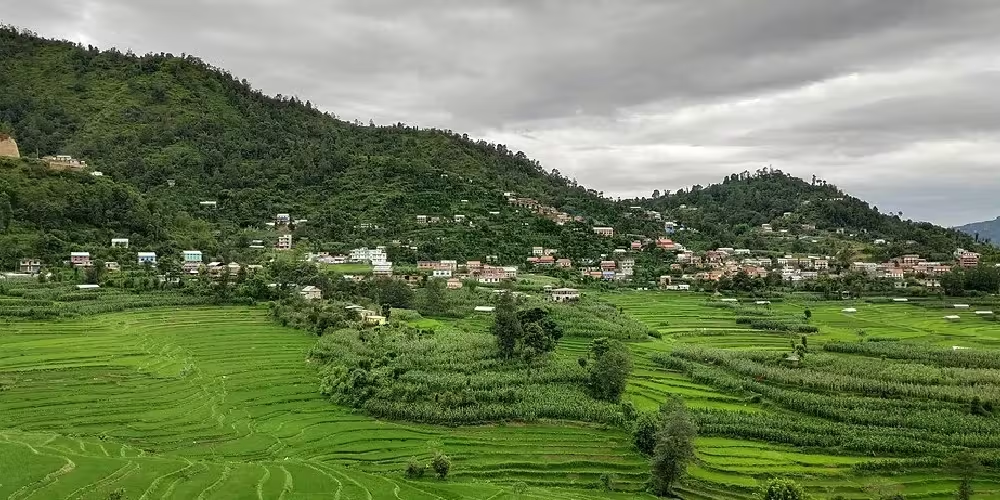
Photo Source: Wikimedia Commons
Most itineraries start from Changu Narayan or Dhulikhel and continue through Nagarkot, Namobuddha, and Balthali before ending at Panauti. Here, you enjoy views of Langtang, Ganesh Himal, Dorje Lakpa, Gaurishankar, and even distant Everest during clear weather.
The trail stays relatively close to the settlements, unlike other treks. Local homestays, eco-resorts, and village lodges make the route comfortable for first-time trekkers, while Buddhist monasteries, Newari communities, and green countryside landscapes give the journey a strong cultural feel.
Required Permit: Usually, no major trekking permit is required.
2. Chisapani Nagarkot Loop
Another short trek around Kathmandu is the Chisapani Nagarkot Trek, which is a short three-day hike along the rim of the Kathmandu Valley. You start from Sundarijal and enter the forested trails of Shivapuri National Park, making it a good option for travelers who want mountain air, village walks, and Himalayan views in Kathmandu.
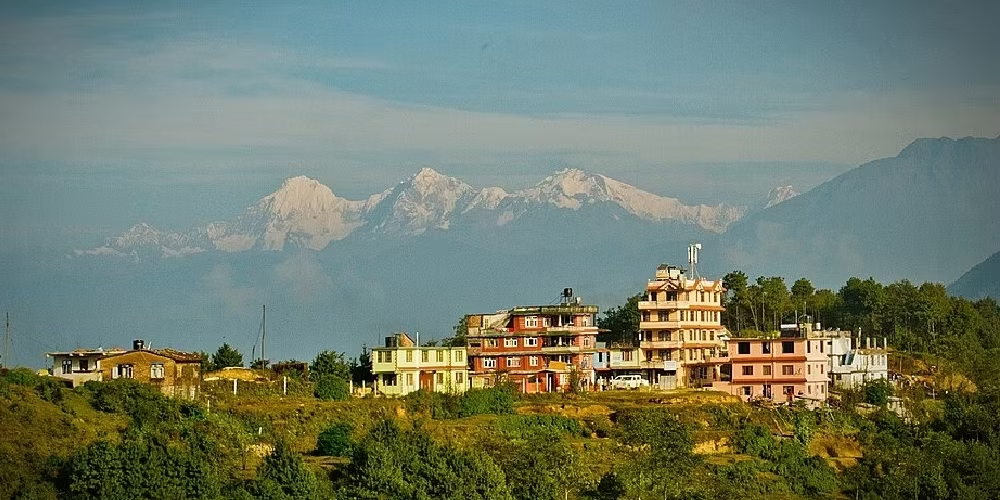
Photo Source: Wikimedia Commons
The trail leads to Chisapani and Nagarkot, two ridge settlements known for sunrise and sunset views. On clear days, you see Langtang, Ganesh Himal, Dorje Lakpa, and even distant views of Everest. The route also crosses Borlang Bhanjyang at 2,425 meters (7,956 ft) and passes Tamang, Gurung, and Newar villages with traditional hillside homes.
Since the trek stays at a lower altitude, it is suitable for most seasons. Autumn offers clear skies and sharp mountain views, while spring brings wildflowers and rhododendron blooms along the forest trail.
Required Permit: Shivapuri Nagarjun National Park Entry Permit
3. Kalinchowk Trek
The Kalinchowk Trek is a highly popular short trek that offers a brilliant mix of high-altitude Himalayan scenery and cultural pilgrimage without requiring an extended itinerary. Located in the Dolakha district, the journey centers around the sacred Kalinchowk Bhagwati Temple, which rests dramatically on a high ridge.
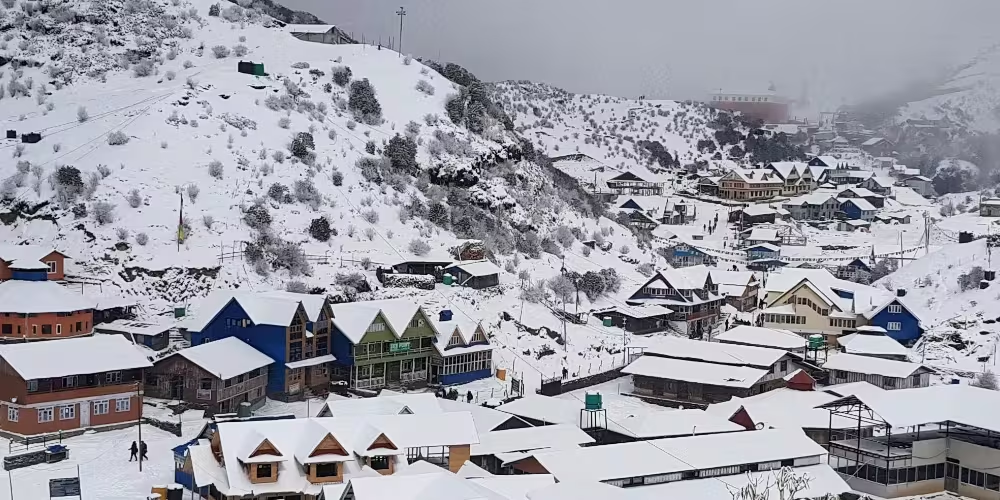
Photo Source: Pixel
The trail begins from the historic town of Dolakha or Kuri Village after a scenic drive from the capital. Walking is relatively short but includes steady uphill climbs through beautiful rhododendron and pine forests. At its maximum elevation of 3,842 meters (12,605 ft), trekkers are treated to sweeping panoramic views of the Langtang range, Ganesh Himal, Shisha Pangma, and Gauri Shankar.
It is an incredibly versatile trail; during spring, the hills are vibrant with blooming wildflowers, while winter transforms Kuri Village and the surrounding ridges into a snow-covered wonderland. The availability of well-equipped local lodges and a cable car option makes it remarkably accessible for beginners looking to reach higher elevations safely.
Required Permit: No major trekking permit is required (local community entry fees may apply).
4. Astam Eco Village Trek
The Astam Eco Village Trek is a gentle, low-altitude journey perfectly suited for absolute beginners, families, or travelers seeking an authentic look into sustainable Nepalese country life. Situated on a ridge just outside Pokhara, the trek is designed to be slow-paced and highly relaxing.
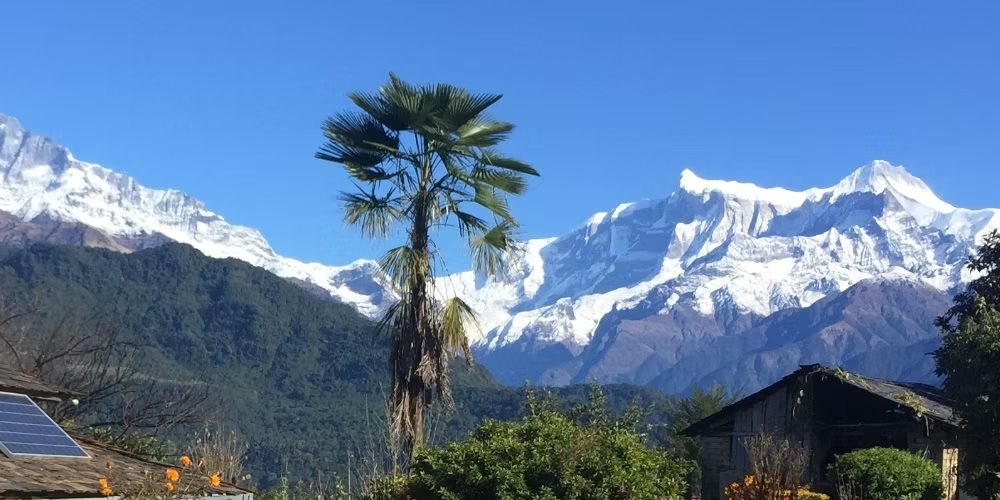
The trek typically starts with a short drive from Pokhara to Milanchowk, followed by a light, gradual climb through lush green hills and traditional farmlands. The highlight of the route is staying in Astam village itself, which translates to “Sunset Village.” True to its name, the ridge provides stunning 360-degree views of both sunrise and sunset bouncing off the Annapurna range and Machhapuchhre.
Because the village is dedicated to eco-tourism, travelers stay in community-run homestays and organic farm lodges. You will get to see traditional mud houses, bio-gas systems, and organic vegetable gardens firsthand. It is an excellent choice for a peaceful, crowd-free alternative to the busiest foothill trails.
Required Permit: No major permits required.
5. Dhampus to Sarangkot Ridge Trek
The Dhampus to Sarangkot Ridge Trek is a classic short loop near Pokhara that pieces together two of the finest mountain viewing ridges in the entire Annapurna region. This trek requires minimal physical strain but delivers massive rewards in terms of classic Himalayan landscapes.
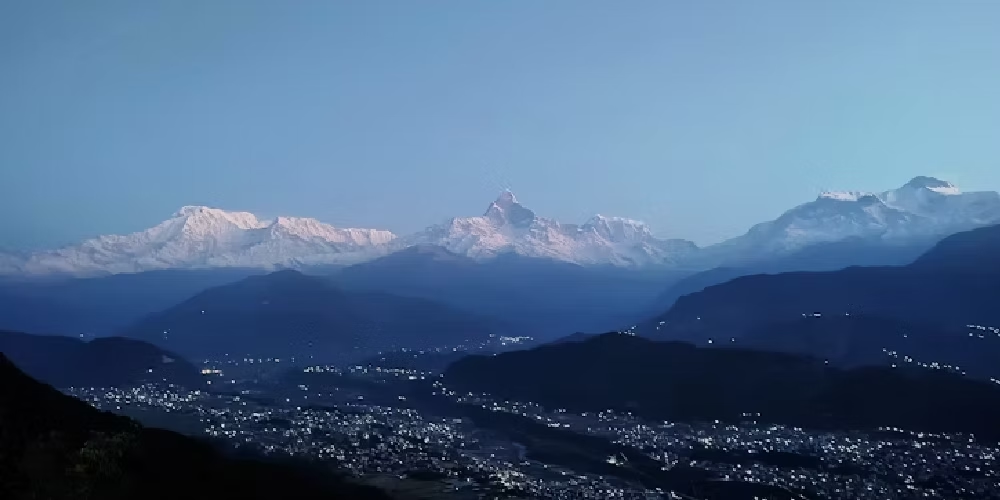
Photo Source: Unsplash
The hike usually starts from Phedi or Kande, climbing steadily up stone steps to the beautiful Gurung village of Dhampus. From Dhampus, the trail follows a spectacular ridgeline through small forests and terraced farming fields before concluding at the famous hilltop of Sarangkot. Throughout the walk, the giant walls of Annapurna South, Hiunchuli, and the iconic pyramid of Machhapuchhre feel close enough to touch.
Sarangkot serves as the grand finale of the journey, globally renowned for its early morning golden hour view over the Pokhara Valley and the snowcapped peaks. Since the trail is heavily developed with comfortable guesthouses and teahouses, it provides an easy, low-risk trek for anyone looking to sample the lower Annapurna foothills.
Required Permit: Annapurna Conservation Area Permit (ACAP) and Trekkers’ Information Management System (TIMS) card
6. Barahachhetra to Dhankuta Foothill Trek
For travelers who want to skip the busy commercial trails entirely, the Barahachhetra to Dhankuta Foothill Trek offers an off-the-beaten-path alternative in eastern Nepal. This moderate foothill trek combines ancient spiritual heritage with the lush, sub-tropical geography of the Koshi river basin.
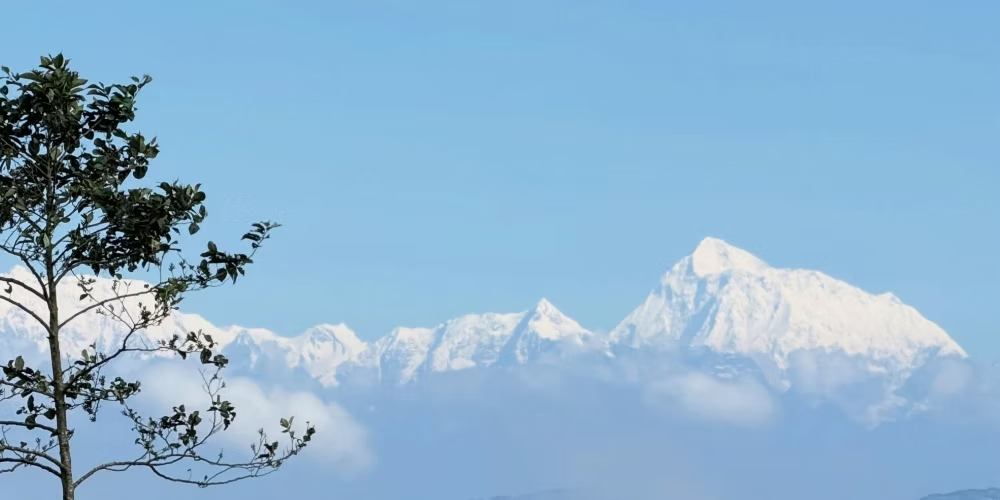
Photo Source: Unsplash
The journey starts at Barahachhetra in the Sunsari district, one of Nepal’s most sacred Hindu pilgrimage sites, situated at the dramatic merging of the Sapta Koshi and Koka rivers. From the river valley, the trail climbs steadily upward into the green foothills of Dhankuta. The path cuts through dense sub-tropical forests, small ethnic Rai and Limbu villages, and orange orchards.
Because this trail is rarely visited by international tourists, the experience remains deeply authentic. Trekkers get a raw view of rural eastern hill lifestyles while enjoying unique views of the sweeping river plains below and the distant eastern Himalayan peaks on clear days. Accommodation is simple, consisting of basic local tea shops and authentic village homestays.
Required Permit: Local Government Registration
7. Ghandruk Trek
The Ghandruk trek is another short trek for beginners with a good combination of mountain views, local culture, and easy trail access. Located in the Annapurna region near Pokhara, this trek usually takes around 3 days and leads you through the culturally rich village of Ghandruk.
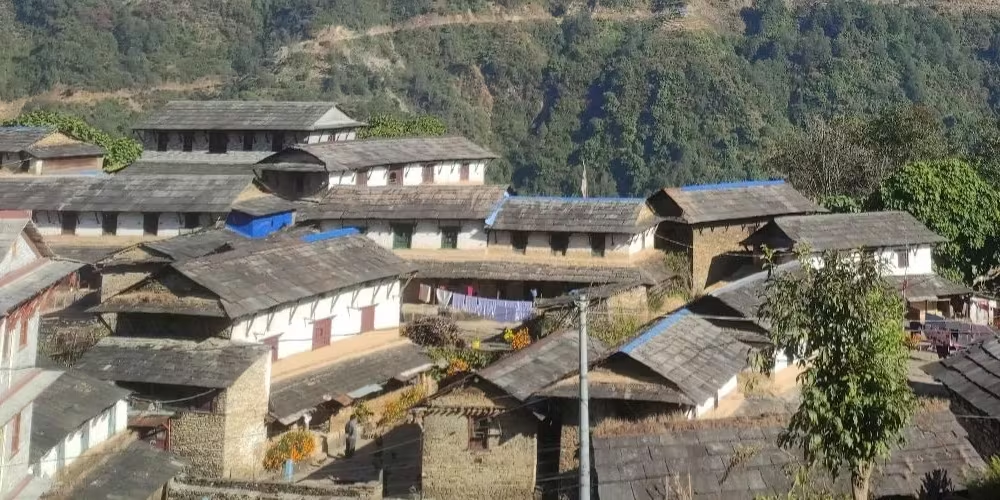
Photo Source: Pexels
The trail typically starts from Nayapul or further up at Kimche, both easily accessible by a short drive from Pokhara. With a daily walking time of just 4 to 5 hours on well-marked paths, this trek is suitable for anyone with basic fitness. Plus, the risk of altitude sickness is exceptionally low as the trek stays around 2,012 meters (6,601 ft), and there is no technical terrain to navigate.
Along the route, you can enjoy views of Annapurna South (7,219m/23,684 ft), Machhapuchhre/Fishtail (6,993m/22,946 ft), Hiunchuli (6,441m/21,132 ft), and Gangapurna. The trail passes through terraced farms, stone staircases, forests, rivers, suspension bridges, and peaceful hillside villages, giving beginners a balanced mix of nature and culture.
Required Permit: ACAP + TIMS Card
8. Australian Camp Trek
The Australian Camp Trek is a short trek near Pokhara in the Annapurna region on the way to Mardi. It takes around 3 to 4 days, and you reach 2,060 meters (6,758 ft) at Australian Camp. It’s low altitude, has short walking hours, and is easily accessible from Pokhara.
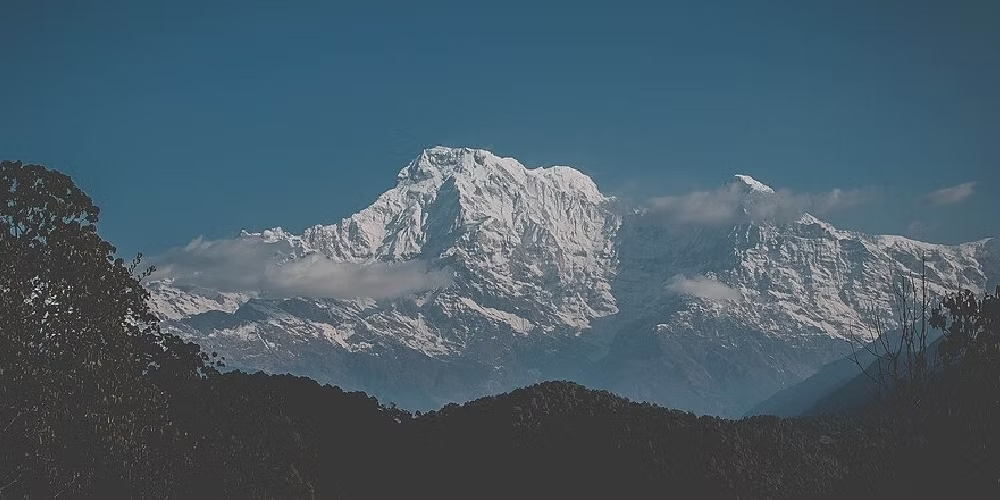
Photo Source: Wikimedia Commons
The trek starts from Phedi or Kande after a short drive from Pokhara and follows scenic ridge trails through terraced farms, dense forests, and traditional Gurung villages like Dhampus and Landruk. The sunrise view from Australian Camp is the biggest highlight of the trek, with close panoramic views of Machhapuchhre, Annapurna South, Hiunchuli, Annapurna I, and Dhaulagiri.
Since the trails are well-marked and walking hours are shorter, the trek feels easier compared to longer Himalayan routes. Moreover, teahouses and lodges are available throughout the trail, and the low altitude means there is very little risk of altitude sickness, making it a safe, beginner-friendly trek in Nepal.
Required Permit: ACAP + TIMS Card
9. Kapuche Glacier Lake
Kapuche is a beginner’s rare chance to see a glacier lake without trekking to extreme altitude. This is the lowest-altitude glacier lake in the world, at around 2,546 meters (8,353 ft) near Sikles village in Kaski.
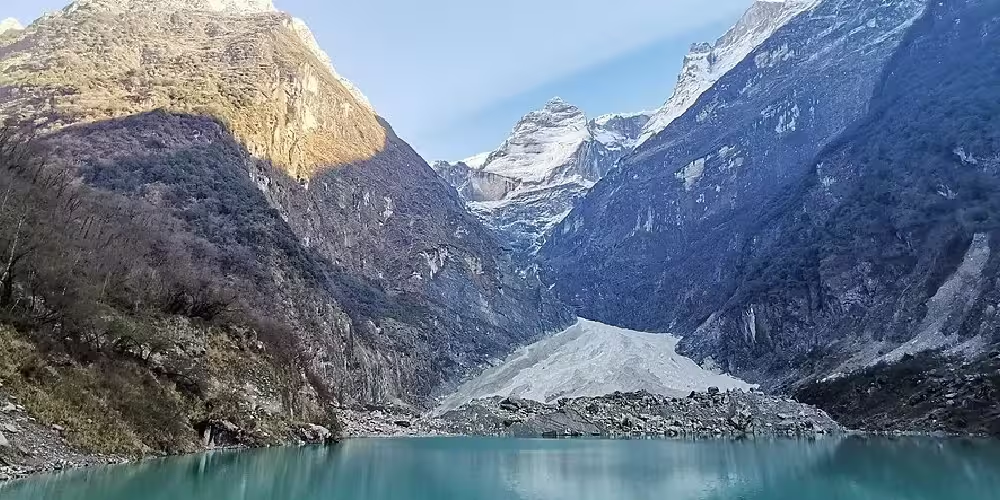
Photo Source: Wikimedia Commons
The journey usually starts from Pokhara and passes through Sikles, a traditional Gurung village in the Annapurna region. From there, the trail crosses rhododendron forests, terraced farms, suspension bridges, streams, and quiet village paths. During the journey, you can see peaks like Annapurna II, Annapurna IV, Lamjung Himal, and Machhapuchhre.
The lake is the main reward. Its cold blue water sits below snowy slopes, and in winter, parts of the surface freeze into beautiful ice patterns. Also, you can find warm homestays and guesthouses in Sikles and nearby villages.
Required Permit: ACAP
10. Royal Trek
Mohare Danda Circuit is a quiet alternative to the busy Poon Hill route in the Annapurna region. The trek usually takes 4 to 5 days and reaches 3,300 meters (10,826 ft) at Mohare Danda viewpoint. It suits beginners who want a less crowded trail, close Himalayan views, and a moderate challenge without technical climbing.
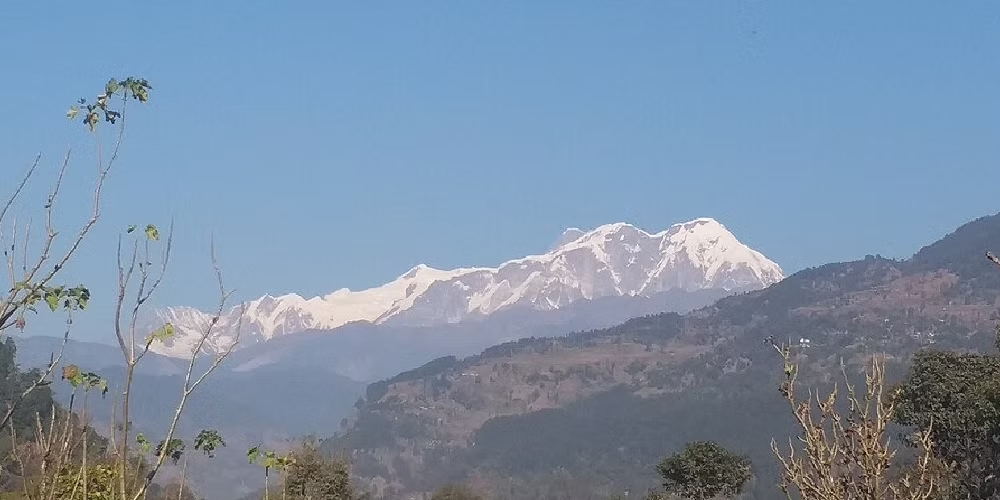
Photo Source: Wikimedia Commons
This route became known as the Royal Trek after King Charles (then Prince) walked here with a large group in the early 1980s. Today, it remains quieter than the Annapurna Base Camp and Annapurna Circuit trails, making it a good choice for beginners who prefer peaceful village routes. You walk around 4-5 hours per day through Gurung and Magar villages such as Kalikasthan, Syaklung, and Chisapani, where you get a close look at local farming life, traditional homes, and village paths.
The trek also offers beautiful views of Annapurna, Machapuchhre, and Lamjung Himal above green hills and rice terraces. The journey ends near Begnas Lake, giving the route a calm and scenic finish.
Required Permit: ACAP + TIMS Card
11. Panchase Wilderness
Panchase is another easy trek in Nepal for first-time trekkers, a hidden gem near Pokhara. The journey often begins with a boat ride across Phewa Lake before climbing past the World Peace Pagoda toward the quiet hills of Panchase. This is a 3-day plan with daily walks of usually 4 to 6 hours, and local teahouses or homestays.
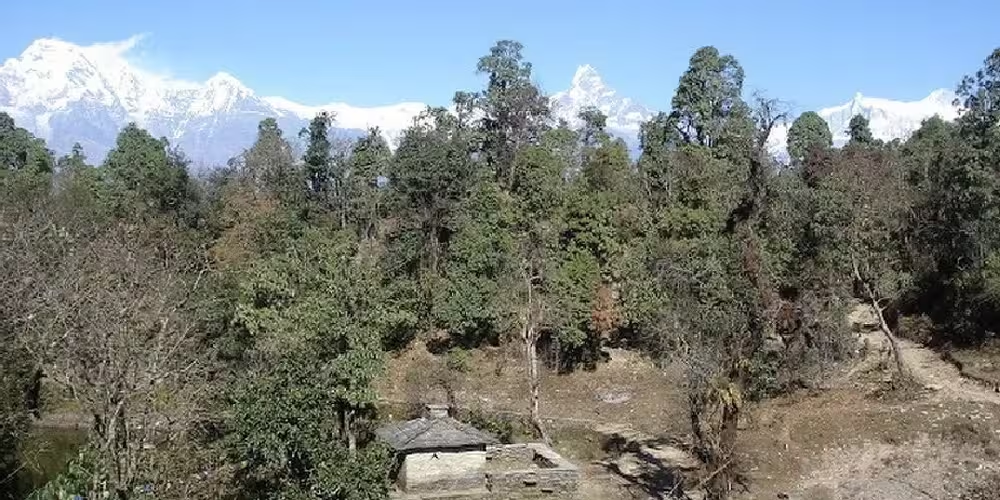
Photo Source: Wikimedia Commons
The route leads deeper into quiet forest trails, pine-covered hills, terraced farms, and Gurung and Brahmin villages before reaching Panchase Bhanjyang. The path stays calm and uncrowded, so the trek feels more personal than the busy Annapurna routes.
The best time to trek Panchase is during spring and autumn. The trail is lined with colorful rhododendron forests in spring, while autumn brings crystal-clear views of Annapurna, Dhaulagiri, Machhapuchhre, and Manaslu from the ridge and summit area.
Required Permit: Permit requirements may vary by route; check ACAP requirements before trekking.
12. Sirubari Village Circuit
The Sirubari Village Circuit is a cultural gem located in the Syangja district, south of Pokhara. It is widely celebrated as the birthplace of organized village tourism and community homestays in Nepal, making it the premier choice for travelers focused on heritage and human connection.
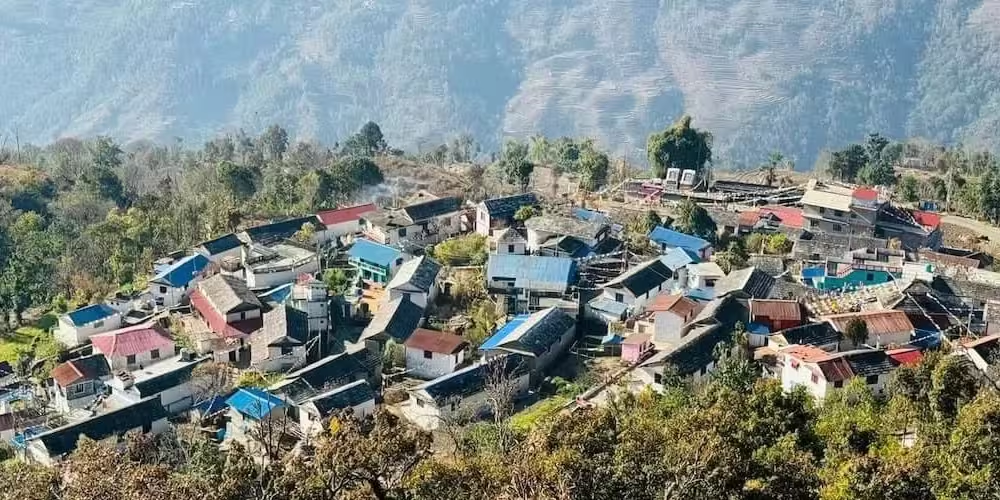
Photo Source: Media App
The trek begins with a scenic drive from Pokhara toward Syangja, where the walking trail guides you along neat stone-paved pathways up through pristine green hills. The village of Sirubari itself is exceptionally well-preserved; the houses are uniformly built from local stone and slate, and the entire community prides itself on keeping the village clean and beautiful.
Rather than staying in standard commercial lodges, visitors are welcomed into individual family homes. Guests eat traditional meals with their hosts, learn about Gurung heritage, and experience daily farming routines. A short morning hike up to the nearby viewpoint at Thumro Jayan offers clear, uncrowded views of the Annapurna and Dhaulagiri ranges, balancing the rich cultural journey with great scenery.
Required Permit: Local Community Entry Fee
13. Gurung Heritage Trail
Deep in the Lamjung district lies the Gurung Heritage Trail, a scenic lower-elevation trek specifically mapped to showcase the proud history, customs, and daily lives of the region’s indigenous Gurung people.
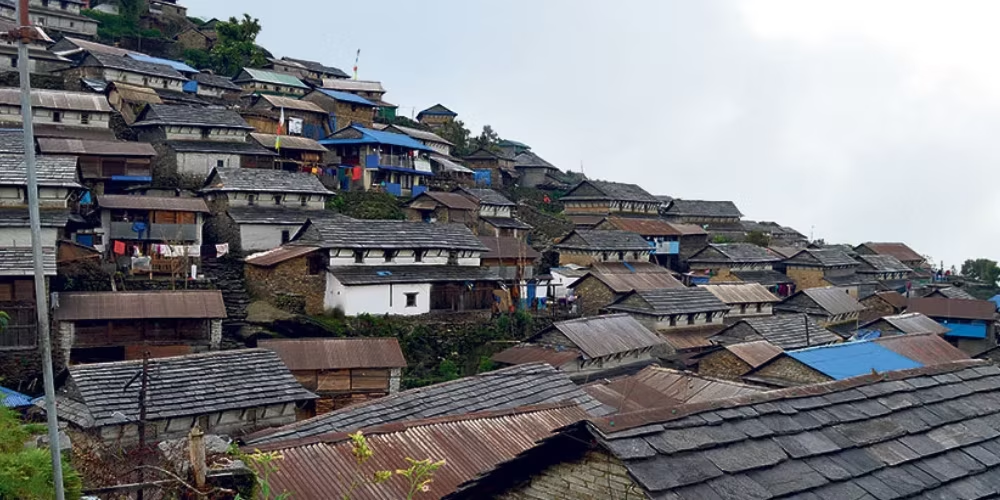
Photo Source: Republican Nagarik News CDN
The route generally begins from Besisahar (the traditional starting node of the Annapurna Circuit) and winds its way through ancestral villages like Khudi, Bhujung, and Pasgaon. The paths are made of age-old stone staircases that cut through dramatic river canyons, terraced rice paddies, and dense rhododendron forests.
What makes this trail distinct is the architecture and preservation of community spaces. Villages like Bhujung are dense clusters of traditional houses sharing compact stone courtyards. Along the way, travelers can visit local cultural museums, watch traditional cultural dances, and enjoy home-cooked meals. It offers a quieter, deeply cultural alternative to the nearby Ghorepani routes.
Required Permit: ACAP Permit
14. Ghalegaun Short Circuit
The Ghalegaun Short Circuit is a beautiful eco-trek that takes you up to a pristine smart-village perched on a prominent ridge in Lamjung. At an altitude of 2,100 meters (6,889 ft), Ghalegaun is famous for its stunning front-row views of the mountains and its community hospitality.
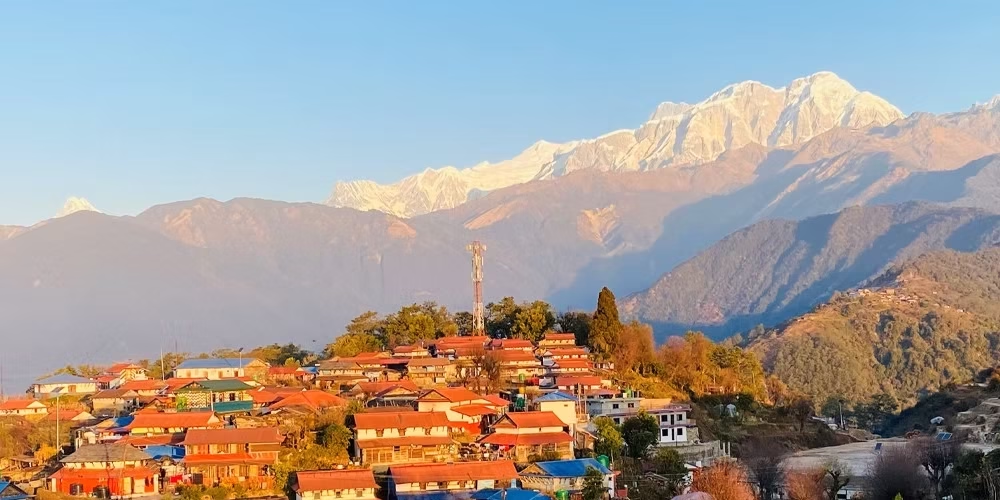
Photo Source: Media App
The trek kicks off from Khudi or Besisahar, climbing through a changing landscape of sub-tropical forests and terraced slopes. Upon arrival, trekkers are greeted with traditional organic food, marigold garlands, and authentic hospitality. The village acts as a natural viewing deck, offering wide, open views of Machhapuchhre, Annapurna I, Annapurna II, Annapurna IV, and Lamjung Himal.
If you time your trek correctly, you can catch glimpses of the ancient and daring art of wild honey hunting on the surrounding cliffs. The short circuit loops back through neighboring ethnic villages like Ghanapokhara, making it an excellent multi-day cultural escape.
Required Permit: ACAP Permit
15. Sikles Trek
The Sikles Trek leads you into one of the largest and most well-preserved traditional Gurung settlements in all of Nepal. Located directly north of Pokhara in the shadow of the massive Annapurna II peak, this trek offers a deep dive into rustic wilderness and mountain valley life.
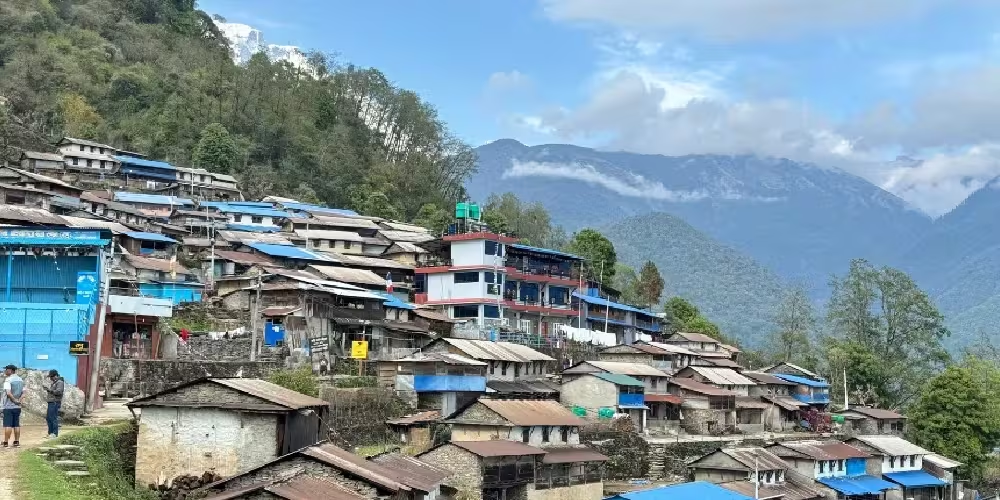
Photo Source: Himalayan Masters
The trail snakes upwards along the edge of the Madkyu Khola river valley, crossing long suspension bridges and passing through small farms before entering a dense, beautiful canopy of rhododendron forest. The village of Sikles itself sits on a giant hillside shelf, characterized by its tightly grouped stone houses and narrow alleys.
From the ridges around Sikles, the icy walls of Annapurna II and Lamjung Himal look staggeringly massive. The village features a local cultural museum that details the history of the region and the famed Gurkha soldiers born here. Because it sits lower down in the valley system, it provides a dramatic mountain setting with all the comfort of warm village lodges.
Required Permit: ACAP Permit
Some Other Trekking Destinations in Nepal for New Trekkers
These additional treks give you more options beyond the main beginner routes. Some are short village walks or easy ridge hikes that work well if you want a quick escape, while others take more days but still have well-marked trails with manageable walking hours. A few routes are slightly more challenging because of altitude or terrain, with shorter walking hours, so choose them only if you have better fitness and enough time.
| SN | Trek Name | Typical Duration (Days) | Difficulty Level | Max Altitude | Location |
| 16 | Kori Danda Trek | 3–4 | Moderate | 3,800 m (12,467 ft) | Kaski |
| 17 | Helambu Trek | 3-4 | Easy to Moderate | 3,650 m (11,975 ft) | Sundarijal or Kutumsang |
| 18 | Lower Mustang Eco-Trail | 4 | Moderate | 3,800 m (12,467 ft) | Mustang |
| 19 | Ghorepani Poon Hill Trek | 4–5 | Easy to Moderate | 3,210 m (10,531 ft) | Nayapul |
| 20 | Mohare Danda Circuit | 4–5 | Moderate | 3,300 m (10,826 ft) | Galeshwor / Banskharka |
| 21 | Mulde Peak (Dobato Loop) | 4–5 | Moderate | 3,637 m (11,932 ft) | Pokhara / Ghandruk |
| 22 | Mardi Himal Trek | 4–5 | Moderate | 4,500 m (14,764 ft) | Kande or Dhampus |
| 23 | Tamang Heritage Trail | 4–5 | Moderate | 3,139 m (10,298 ft) | Rasuwa |
| 24 | Gosaikunda Lake | 4–5 | Moderate-Challenging | 4,380 m (14,370 ft) | Langtang |
| 25 | Chepang Heritage Trail | 4–5 | Easy to Moderate | 1,940 m (6,364 ft) | Chitwan |
| 26 | Indigenous Peoples Trail | 5 | Moderate | 3,146 m (10,321 ft) | Ramechhap |
| 27 | Pikey Peak Trek | 5–6 | Moderate | 4,065 m (13,336 ft) | Dhap or Jhapre |
| 28 | Everest View Trek | 5–7 | Moderate | 3,880 m (12,730 ft) | Lukla |
| 29 | Khopra Ridge Trek | 5–8 | Moderate | 4,500 m (14,763 ft) | Nayapul or Ghandruk |
| 30 | Langtang Valley Trek | 8 | Moderate to Challenging | 3,870 m (12,696 ft) | Rasuwa District |
Things to Consider Before Choosing a Beginner Trek in Nepal
Before choosing your first trek as a beginner, consider the duration, walking distance, and daily walking hours. Review the itinerary, altitude, elevation gain, acclimatization time, and best season, as these factors directly affect safety and comfort. Also, check accommodation options, estimated budget, and required permits so you can plan the trek without last-minute problems.
- Trek Duration: If you are trekking for the first time, ensure to choose an easier and shorter trail to adjust more easily to walking in the mountains. This way, you can enjoy the journey without feeling rushed or exhausted.
- Maximum Altitude: For your first trek, avoid choosing a route that goes too high too quickly. It is safer to stay below 4,000 meters (13,123ft) or choose a trek with gradual acclimatization, as altitude sickness can affect anyone, regardless of fitness level.
- Trail Difficulty: Some trails are smooth and gradual, while others include steep stone steps, uphill climbs, forest paths, or rocky sections. Check whether the trail difficulty level and elevation feel manageable for your current fitness level.
- Accommodation and Food: Ensure your destination has easy access to teahouses or lodges along the route. This allows you to travel light without needing to carry heavy camping gear or food supplies.
- Access from Kathmandu or Pokhara: Many beginner treks start close to Kathmandu or Pokhara, while others need longer drives or flights. If you have limited time, consider a trek with easy access so you spend more time walking and less time traveling.
- Best Season: Spring (March to May) and autumn (September to November) are generally the best seasons for trekking in Nepal, offering stable weather, clearer mountain views, and safe travel. Avoid monsoon and extreme winter conditions unless the trail is confirmed to be safe.
- Fitness Level: You do not need to be very athletic, but you should be ready to walk for a few hours a day. Prepare your body before the trek, even if the route is beginner-friendly. Start with regular walking, stair climbing, or light hiking to make your first trek easier and less tiring.
- Budget: Check the estimated budget before choosing a trek. including permits, transportation, guide, porter, food, accommodation, and small trail expenses. Remember to carry enough cash, with a little extra for emergencies, because ATMs are rarely available on the route and most teahouses do not accept card payments.
- Permits: Check whether your chosen trek needs permits before you finalize the route. Most trekking areas in Nepal require conservation area, national park, or local entry permits, so confirm the documents in advance to avoid delays.
Major required permits and their cost:
| Permit Name | Nepali Citizens (NRs.) | SAARC Nationals | Others |
| Trekker’s Information Management System (TIMS) Card | – | Nrs. 1,000 (~$7) | Nrs. 2,000 ( ~$15) |
| Annapurna Conservation Area | – | Nrs. 1,000 (~$7) | Nrs. 3,000 (~$22) |
| Sagarmatha National Park | 100 | Nrs. 1,500 (~$11) | Nrs. 3,000 (~$22) |
| Shivapuri National Park Entry (per day/per person/per entry) | 100 | Nrs. 600 (~$5) | Nrs. 1,000 (~$7) |
| Khumbu Pasang Lhamu Rural Municipality Permit | – | Nrs. 2,000 (~$15) | Nrs. 2,000 (~$15) |
| Langtang National Park | 100 | Nrs. 1,500 (~$11) | Nrs. 3,000 (~$22) |
*Note: Free for children under 10 years
A 13% Value Added Tax (VAT) is added to the National Park entry fees at the checkpoint counter if not bought in Kathmandu.
What Should You Pack as a Beginner for Trekking in Nepal?
As a beginner trekker in Nepal, pack comfortable trekking clothes, sturdy shoes, warm layers, rain protection, personal medicine, and basic essentials like toilet paper. You should also bring a reusable water bottle, headlamp, trekking poles, sunscreen, and a small first-aid kit. Pack light, but be prepared for changing mountain weather.
Essential Packing List for Beginner Trekkers
| Category | What to Pack |
| Bags | 20–30L daypack and rain cover |
| Footwear | Waterproof trekking boots, camp shoes or sandals, 3–4 pairs of wool or synthetic hiking socks |
| Clothing | Moisture-wicking base layers, trekking shirts, hiking trousers, fleece jacket, down jacket, waterproof jacket and pants |
| Head & Hands | Sun hat, warm beanie, buff or neck gaiter, lightweight gloves, warm gloves |
| Trekking Gear | Sleeping bag, sleeping bag liner, trekking poles, headlamp, water bottle, water purification tablets |
| Personal Items | Sunscreen, lip balm, sunglasses, quick-dry towel, toiletries, wet wipes |
| First Aid | Blister plasters, pain relievers, altitude medicine if advised, rehydration salts and personal medication |
| Electronics | Power bank, charger, camera or phone, extra batteries |
Which Trek Should Beginners Choose in Nepal?
Choose the trek depending on total duration, altitude, and the level of difficulty. Consider the destination that feels realistic for you, prepare properly, and, moreover, trek at your own pace. This ensures your first trek in Nepal is safe, scenic, and memorable with the right preparation and destination choice that fits you.
- Near Kathmandu Valley: For a short trek close to Kathmandu, Balthali Village Loop and Chisapani Nagarkot Loop offer forests, villages, monasteries, and easy access.
- Shortest and Easiest Treks: If you want low altitude and short walking days, Australian Camp, Royal Trek, Ghandruk, and Panchase make the first trekking experience easier.
- Classic Himalayan Experience: Choose Ghorepani Poon Hill, Ghandruk, Panchase, or Everest View Trek if you want sunrise viewpoints, mountain villages, and classic Himalayan scenery.
- Less Crowded and Offbeat Treks: Travelers who prefer quieter trails should visit Mohare Danda, Mulde Peak, Kapuche Glacier Lake, and Pikey Peak.
- Adventure-Focused Beginner Treks: For a stronger mountain experience and a bit longer trekking journey, Mardi Himal, Langtang Valley, Khopra Ridge, and Kori Danda suit beginners with better fitness and more preparation.
Conclusion
Nepal has many trekking routes that suit beginners, from short village trails to scenic routes in Annapurna, Helambu, and the lower Everest region. You do not need to start with a difficult expedition to enjoy mountain views, local culture, forests, and teahouses.
The right trek in Nepal for beginners depends on your fitness level, altitude comfort, and travel style. A shorter route like Australian Camp, Royal Trek, or Balthali works well for an easy start, while Mardi Himal, Pikey Peak, Khopra Ridge, and Everest View Trek suit those who want a deeper Himalayan experience.
However, choosing the trek is only one part of the journey. You need clear permits, a realistic pace, reliable guides, and support from people who know the trail in real life. Joyful Eco Treks handles those details for you, including guides, porters, permits, transfers, and customized itineraries. So you enjoy your trek in Nepal with more confidence and less confusion.
Feel free to reach out and plan your first trek with us!
FAQs
Are treks safe for beginners in Nepal?
Yes, treks in Nepal are generally safe for beginners if you choose an easy route, trek in the right season, and prepare properly. However, altitude sickness can still affect anyone, so walk slowly, stay hydrated, and avoid routes that go too high too quickly. For your first trek, it is safer to go with a licensed guide or porter, especially if you are unsure about the trail.
Which is the easiest trek in Nepal?
Balthali Village Loop, Chisapani Nagarkot Loop, Australian Camp Trek, Royal Trek, and Ghandruk Trek are among the easiest treks in Nepal. They have shorter durations, manageable walking hours, lower altitudes, comfortable teahouses, and well-managed trails.
How to prepare for your first trek in Nepal?
To prepare for your first trek, start walking regularly, climbing stairs, or hiking lightly. Remember to pack good trekking shoes, warm layers, rain protection, basic medicine, other trekking gear, and enough cash for the trail. Also, choose a beginner-friendly route, walk slowly, stay hydrated, and arrange permits, cash, and guide support if needed.
Can I hike without a guide?
No, a licensed guide is now mandatory for trekkers across most major trekking regions in Nepal, including the Annapurna, Langtang, and Manaslu regions.
0 Reviews