Everest Two Passes Trek 17 Days Joyful Eco Treks | Nepal’s Best Trek and Tours Packages

Everest Two Passes Trek: 17 Days via Gokyo, Cho La, and Everest Base Camp

Mount Everest, Solukhumbu District, Nepal

17 Days

Trek-region

Everest

Group Size

1-12 (Private & Small Group)

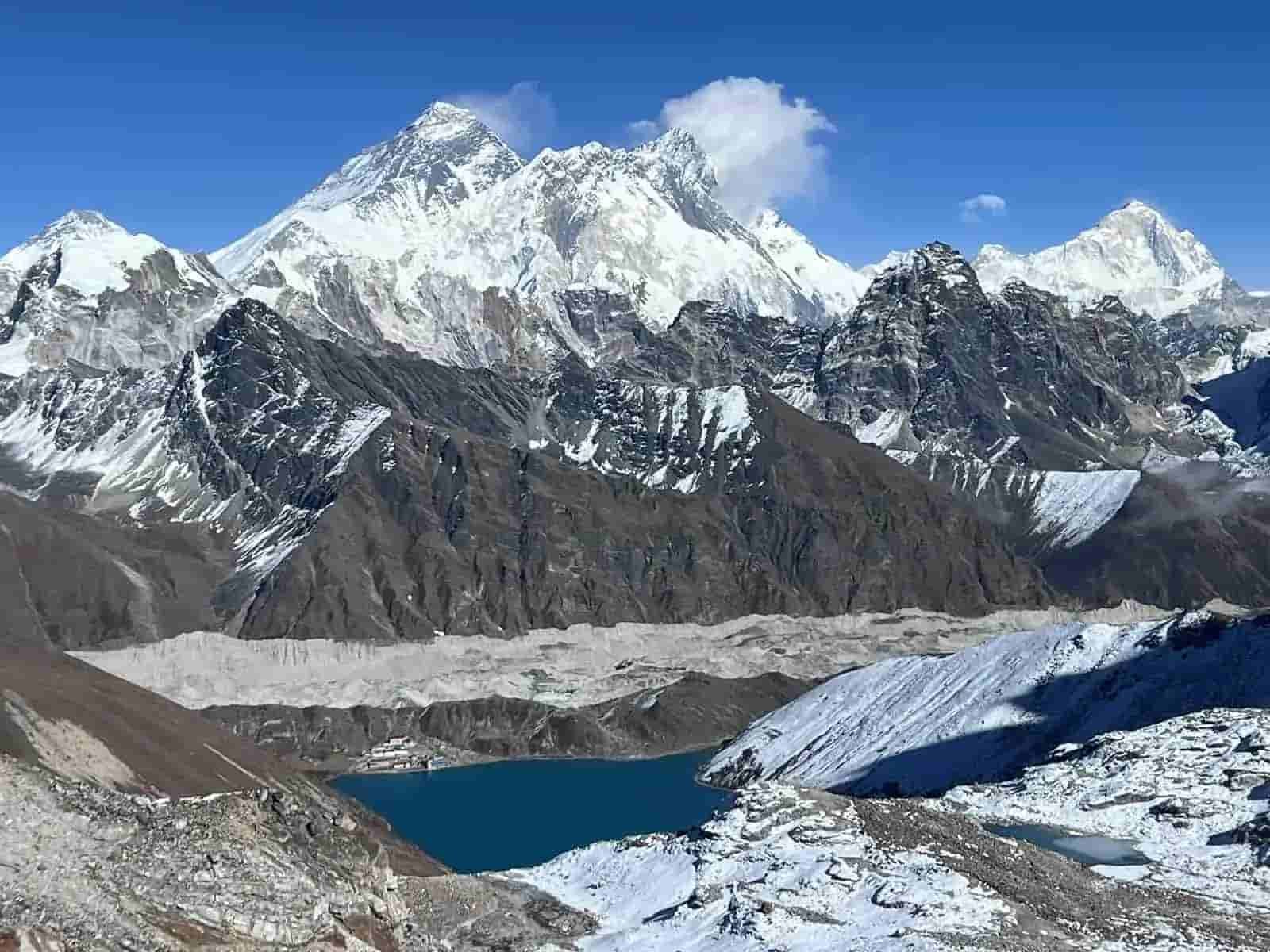
The Everest Two Passes Trek (Renjo La + Cho La) is a scenic, high-altitude route that combines the peaceful Gokyo Valley with the famed Everest trail. You cross two spectacular Himalayan passes (Renjo La and Cho La) and walk along the Gokyo Lakes, Everest Base Camp, and the sunrise viewpoint at Kala Patthar (5,555m / 18,225ft).

It’s a challenging but rewarding trek for those who want more variety, big mountain scenery, and a greater sense of accomplishment than the standard EBC trek.

Trip Info 

  • Lukla, after flying from Kathmandu or Manthali
  • Lukla, then fly back to Kathmandu or Manthali
  • Approx. 125 to 145 km / 78 to 90 miles, depending on side hikes and route conditions
  • Everest (Khumbu), Sagarmatha National Park
  • Trekking, hiking, cultural sightseeing, and scenic mountain flight
  • Challenging
  • March to May and September to November
  • Kala Patthar, 5,555m / 18,225ft
  • 3 to 8 hours
  • Sagarmatha National Park Entry Permit and Khumbu Pasang Lhamu Rural Municipality Entrance Permit
  • Hotel in Kathmandu and teahouses during the trek
  • Breakfast, lunch, and dinner during the trek

Why Choose the Everest Two Passes Trek

The Everest Two Passes Trek gives you a real mountain challenge without crossing all three high passes. You still visit famous places like Everest Base Camp and Kala Patthar. At the same time, the route takes you away from the busiest trail toward Gokyo Lakes, Renjo La, and Cho La. This makes the journey more rewarding.

Instead of walking the same trail back, you follow a wide loop through the Khumbu region. Each day brings new scenery, from blue lakes and huge glaciers to Sherpa villages and close views of Mount Everest. descending back to Lukla.

Trek Highlights 

  • Cross two iconic Himalayan passes, Renjo La (5,360m / 17,585ft) and Cho La (5,420m / 17,782ft).
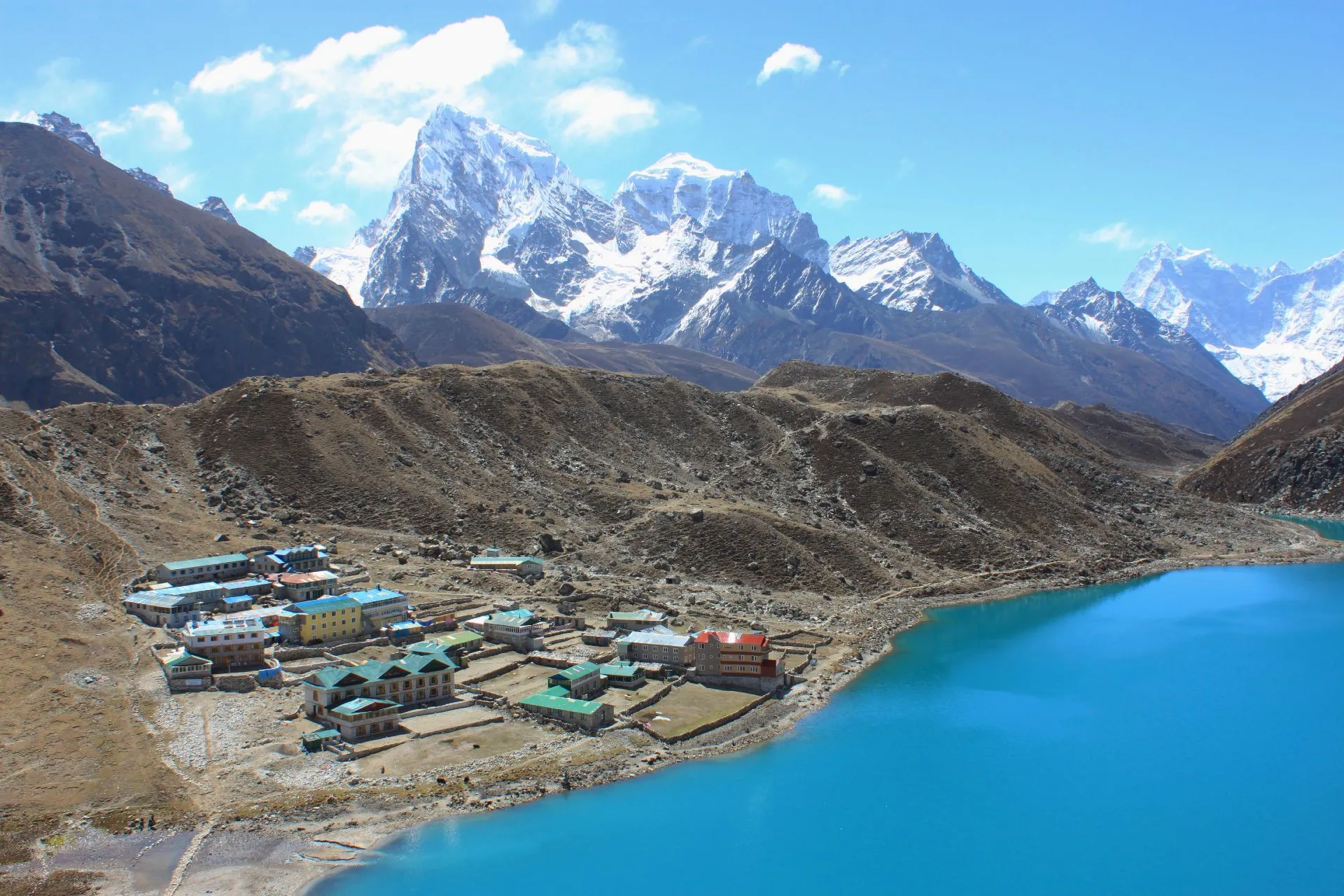
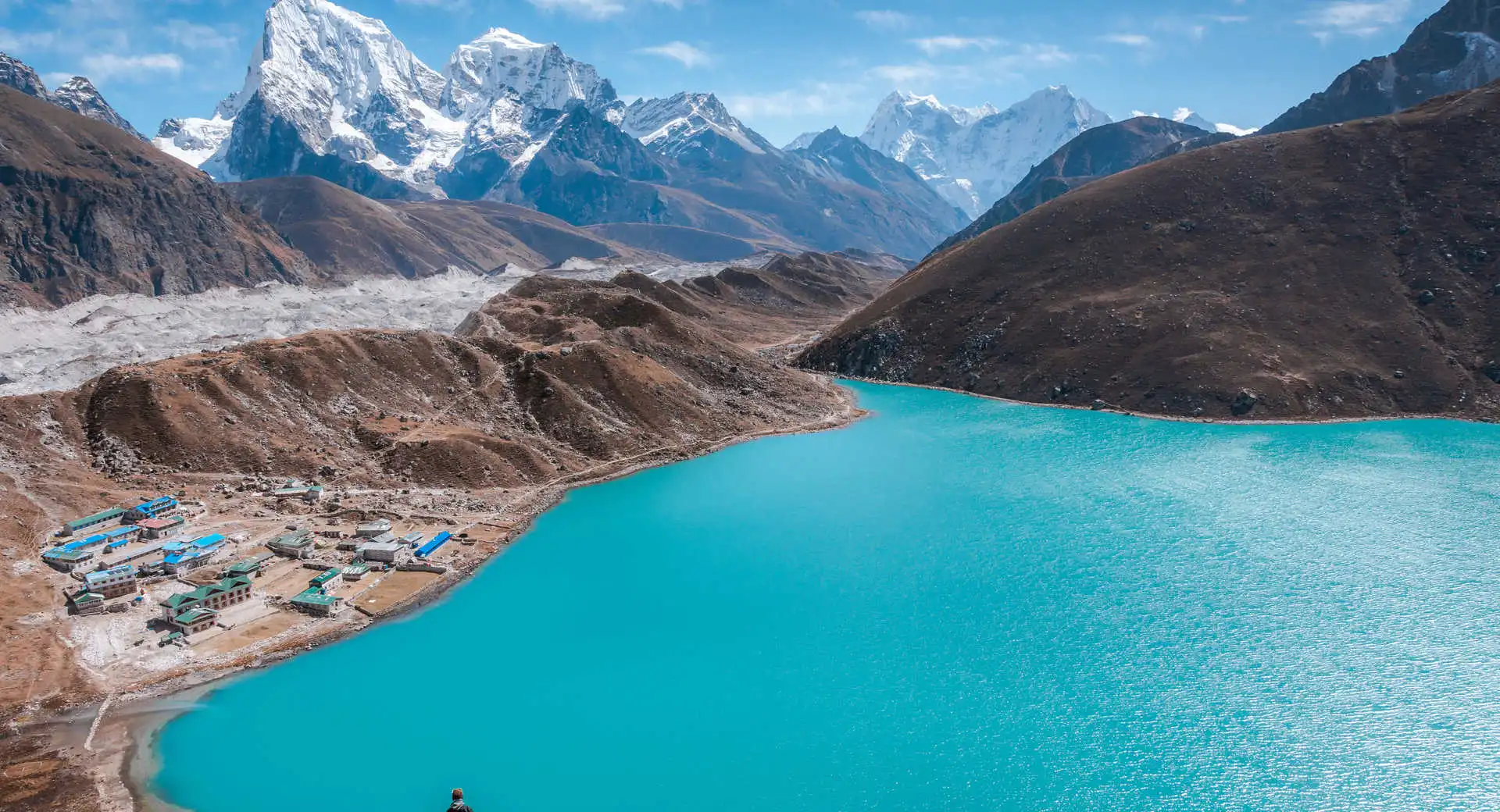
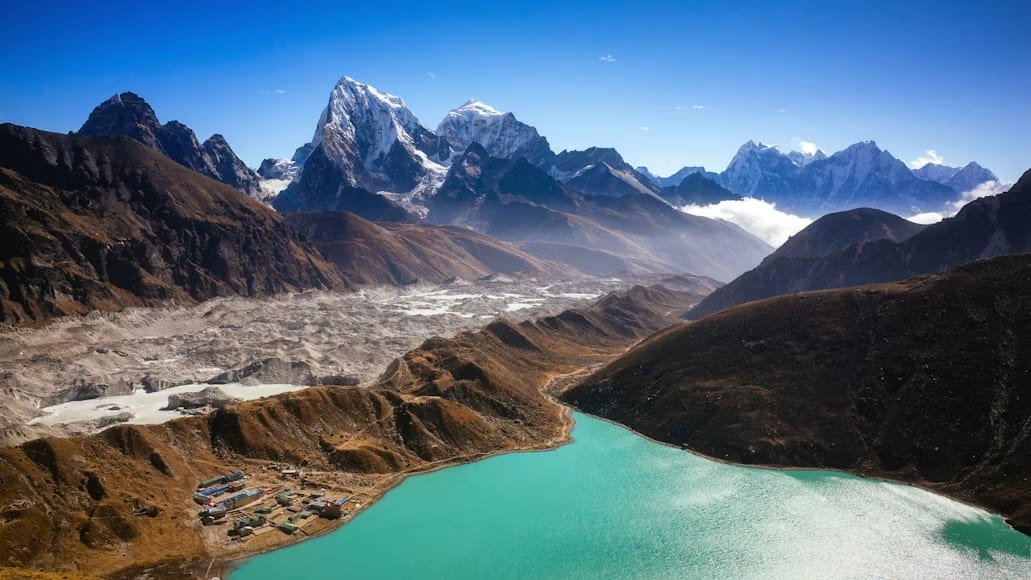
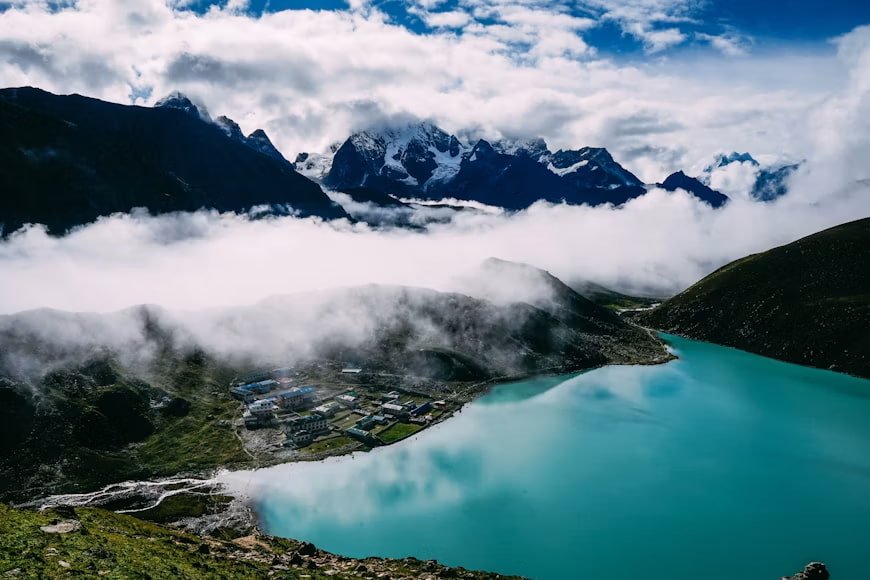
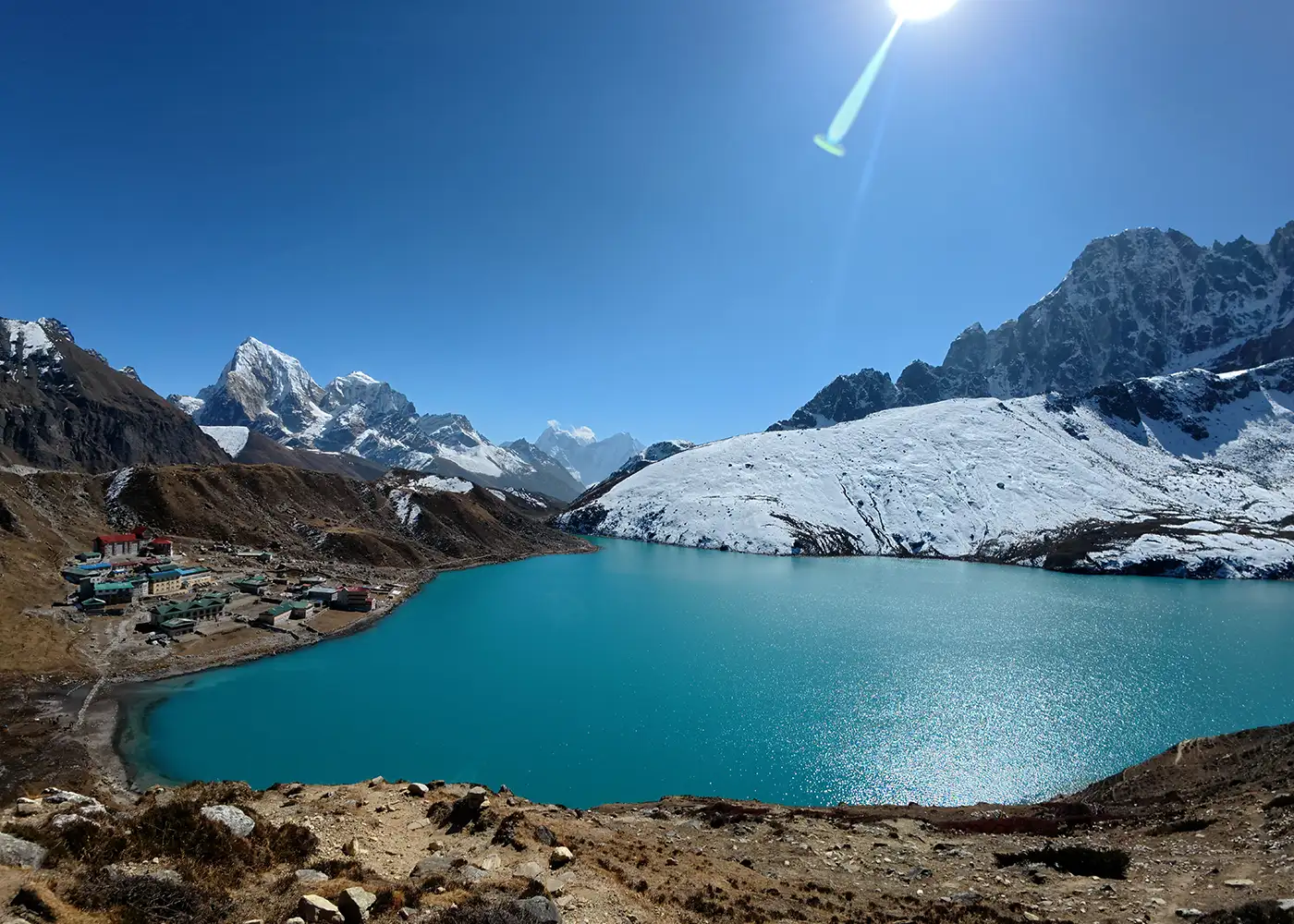
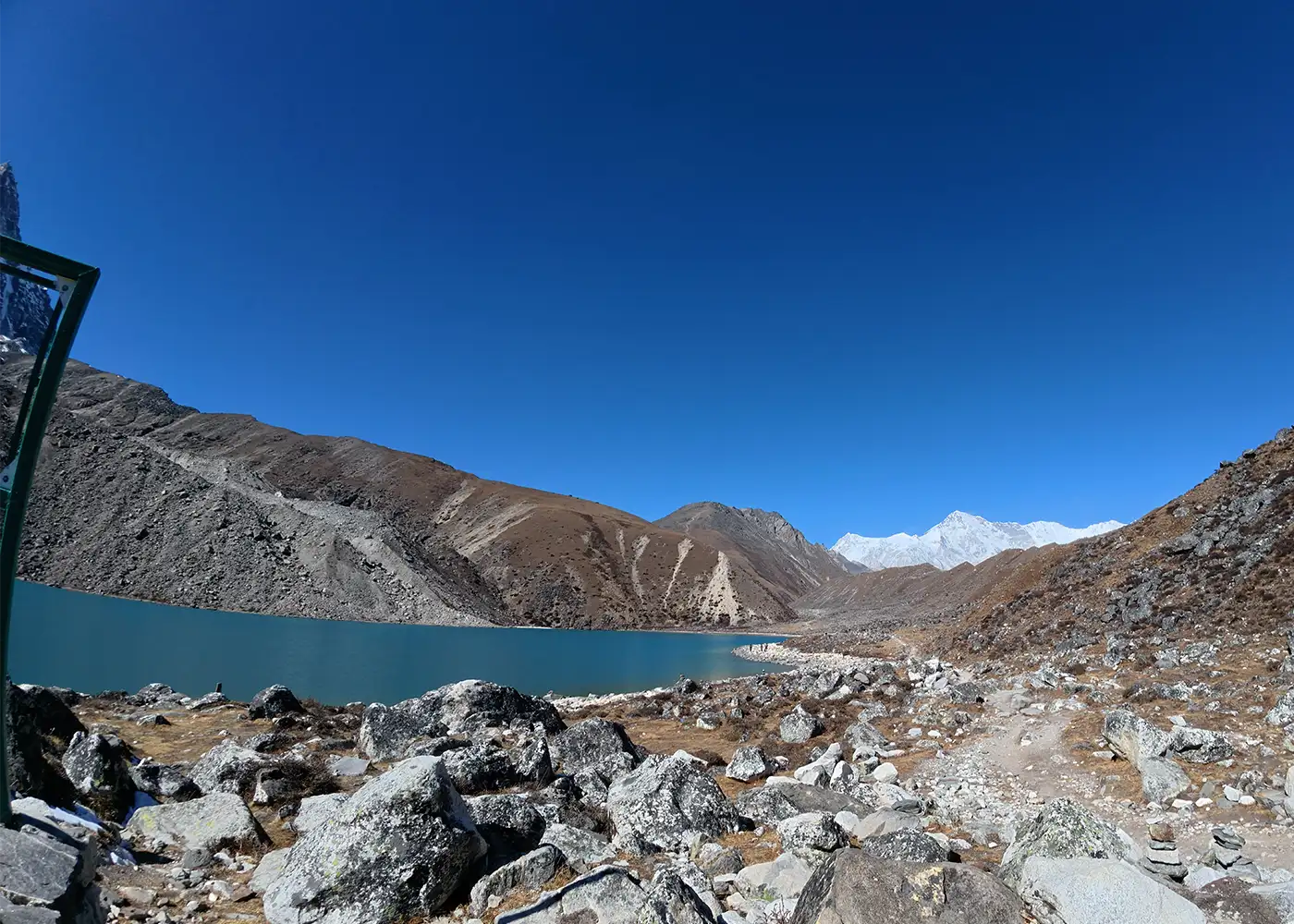
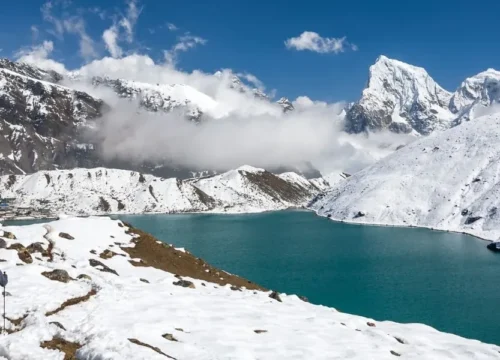
  • Enjoy the stunning turquoise views of the Gokyo Lakes and the surrounding glacial valley.
  • Hike to Gokyo Ri for wide panoramas of Everest and other (8,000m / 26,247ft) peaks.
  • Experience the legendary Everest classics, including Everest Base Camp (5,364m / 17,598ft).
  • Reach the famous sunrise viewpoint at Kala Patthar (5,555m / 18,225ft).
  • Trek through famous Sherpa hubs like Namche Bazaar with rich mountain culture.
  • Pass through high alpine landscapes, rugged ridgelines, and glacier terrain.
  • Stay in traditional teahouses and experience authentic Khumbu hospitality.

Tour Plan

You arrive at Tribhuvan International Airport in Kathmandu, where a member of our team welcomes you outside the arrival area and takes you to your hotel in a private vehicle. 

After check-in, you can rest from your flight or take a short walk around the hotel area. Later, your guide will brief you about the trek route, flights, permits, packing, weather, and the high-altitude days ahead.

  • Drive Duration30 to 45 minutes

Note: Keep your passport, travel insurance, and flight details ready for the trek preparation.
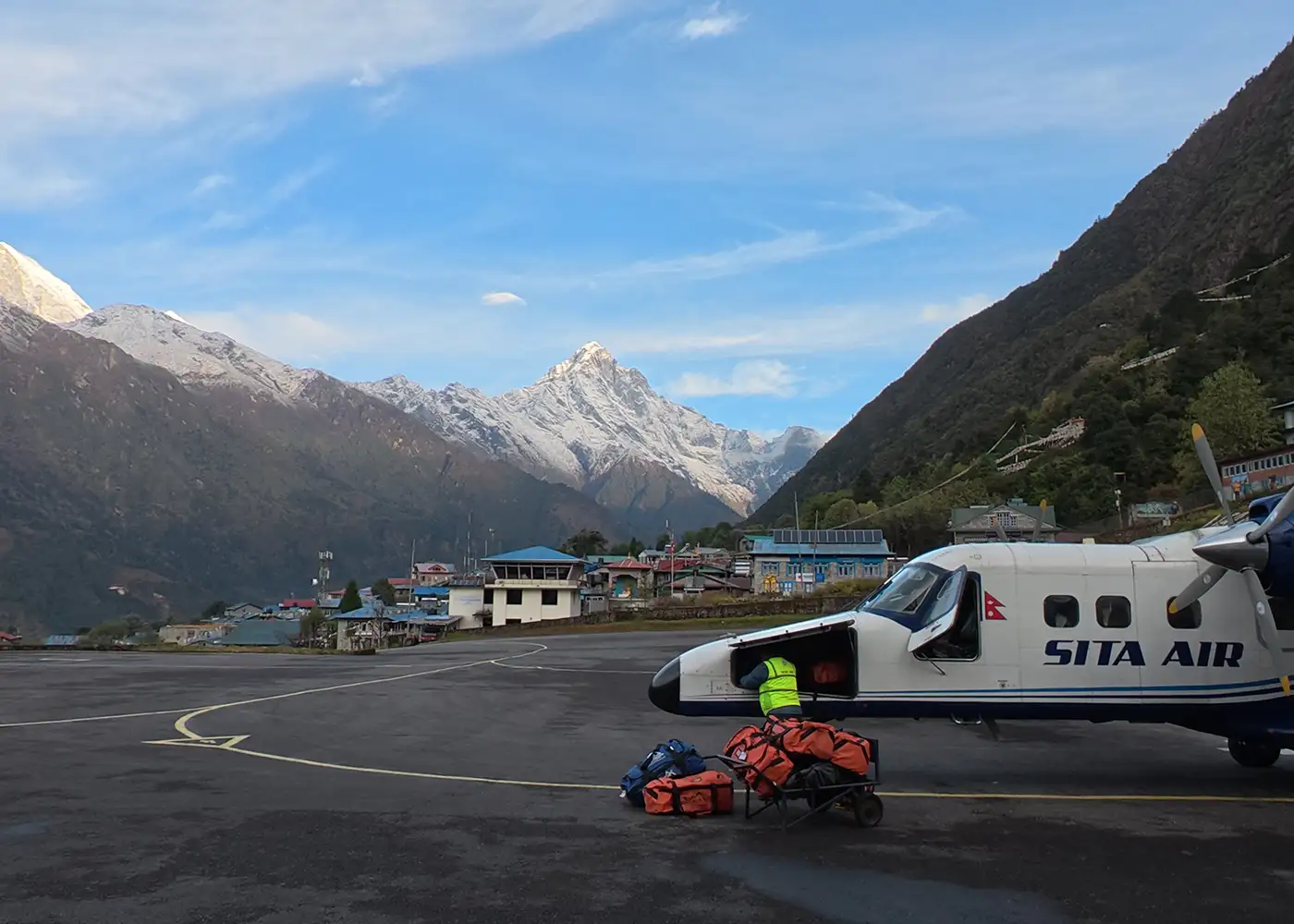
You take an early mountain flight to Lukla from Kathmandu. However, during the busy trekking season, direct Lukla flights from Kathmandu may not be available. In that case, you drive from Kathmandu to Manthali first and take a short flight to Lukla from there.

After landing in Lukla, the walk begins gently as the trail descends into the Dudh Koshi Valley. You move past riverside paths, mani stones, prayer wheels, and small Sherpa settlements before reaching Phakding and checking into your teahouse near the Dudh Koshi River.

  • Trek duration: 3 to 4 hours

  • Trek distance: Approx. 8 km / 5 miles

  • Starting altitude (Lukla): 2,850m / 9,350ft

  • Ending Altitude (Phakding): 2,650m / 8,694ft

  • Elevation loss: -200m / -656ft

Note: In peak time (Mar–May, Sep–Nov), the flight often operates to Manthali instead of Kathmandu. Flight time from Kathmandu is 40 minutes, and from Manthali is 20 minutes.

You wake up early in Phakding and start the walk toward higher ground. The trail becomes more active as you pass Benkar, Monjo, and Jorsalle. At Monjo, your guide completes the Sagarmatha National Park entry check before the route moves into forest paths, bridge crossings, and short uphill sections.

Beyond Jorsalle, you cross the Hillary Suspension Bridge and begin the steep climb toward Namche Bazaar. As you gain height, the first clear mountain views begin to appear. You reach Namche, the main Sherpa town of the Khumbu, with shops, bakeries, lodges, and mountain culture around you.

  • Trek duration: 5 to 6 hours

  • Trek distance: Approx. 10 to 11 km / 6 to 7 miles

  • Maximum altitude: 3,440m / 11,286ft

  • Elevation gain: +790m / +2,592ft

Note: The last climb to Namche is steep, so pace steadily and stay hydrated.

You spend the day acclimatizing in Namche Bazaar, so the overnight stay remains in the same town. Instead of resting all day, you take a short hike above Namche to help your body adjust to the altitude. The common route leads toward the Everest View Hotel, with clear views of Everest, Ama Dablam, Lhotse, and other Khumbu peaks.

Depending on the weather and your energy level, the hike can be extended toward Syangboche, Khumjung, or Khunde. Along the way, you see Sherpa villages, old monasteries, stone houses, and daily mountain life. After exploring these areas, you return to Namche Bazaar, spend some time around the market, and rest well before heading higher.

  • Hike duration: 3 to 4 hours

  • Hiking distance: Approx. 4 to 6 km / 2.5 to 4 miles

  • Maximum altitude: 3,880m / 12,730ft

  • Elevation gain: +440m / +1,444ft

Note: Follow the acclimatization rule: hike high and sleep low.

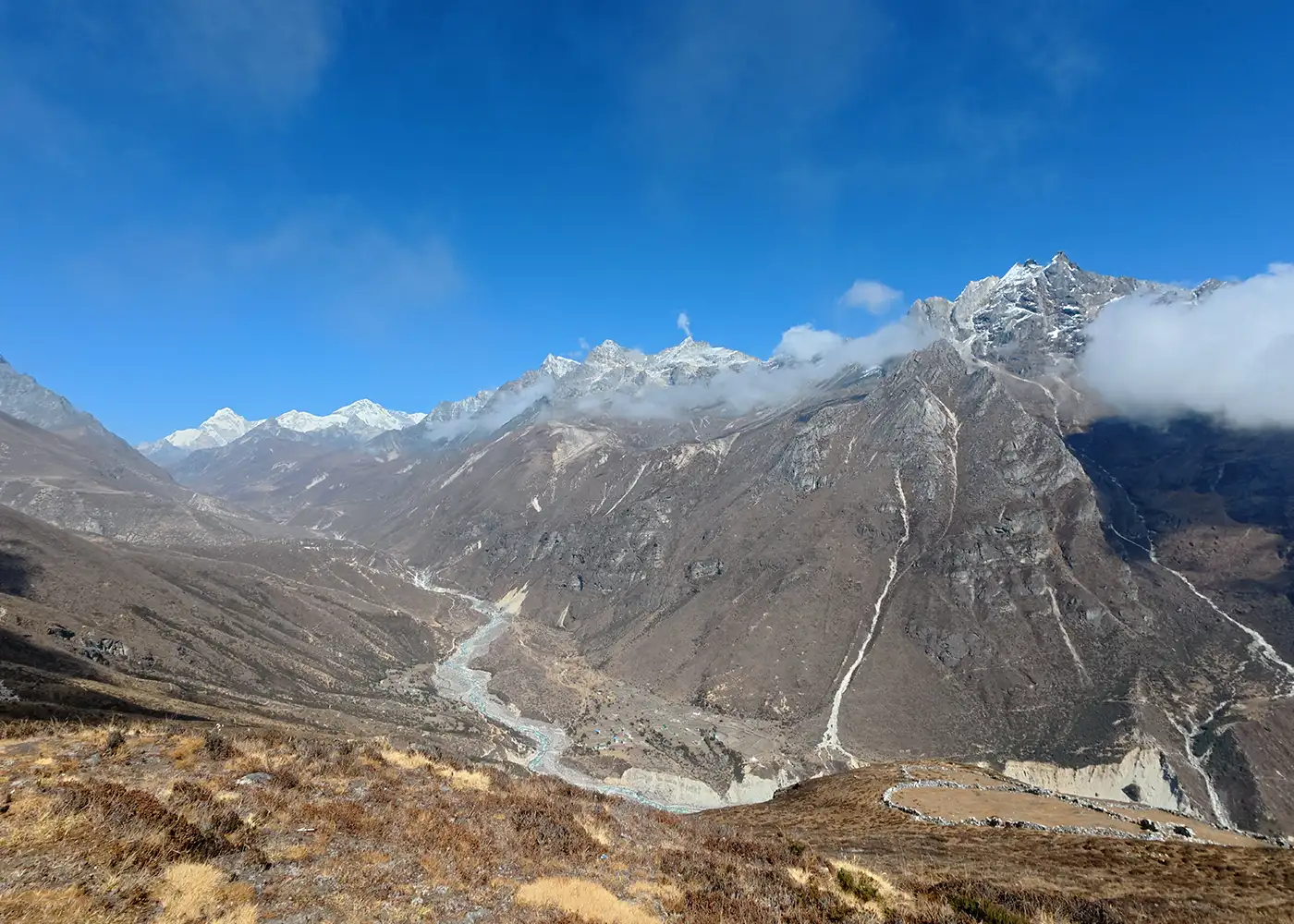
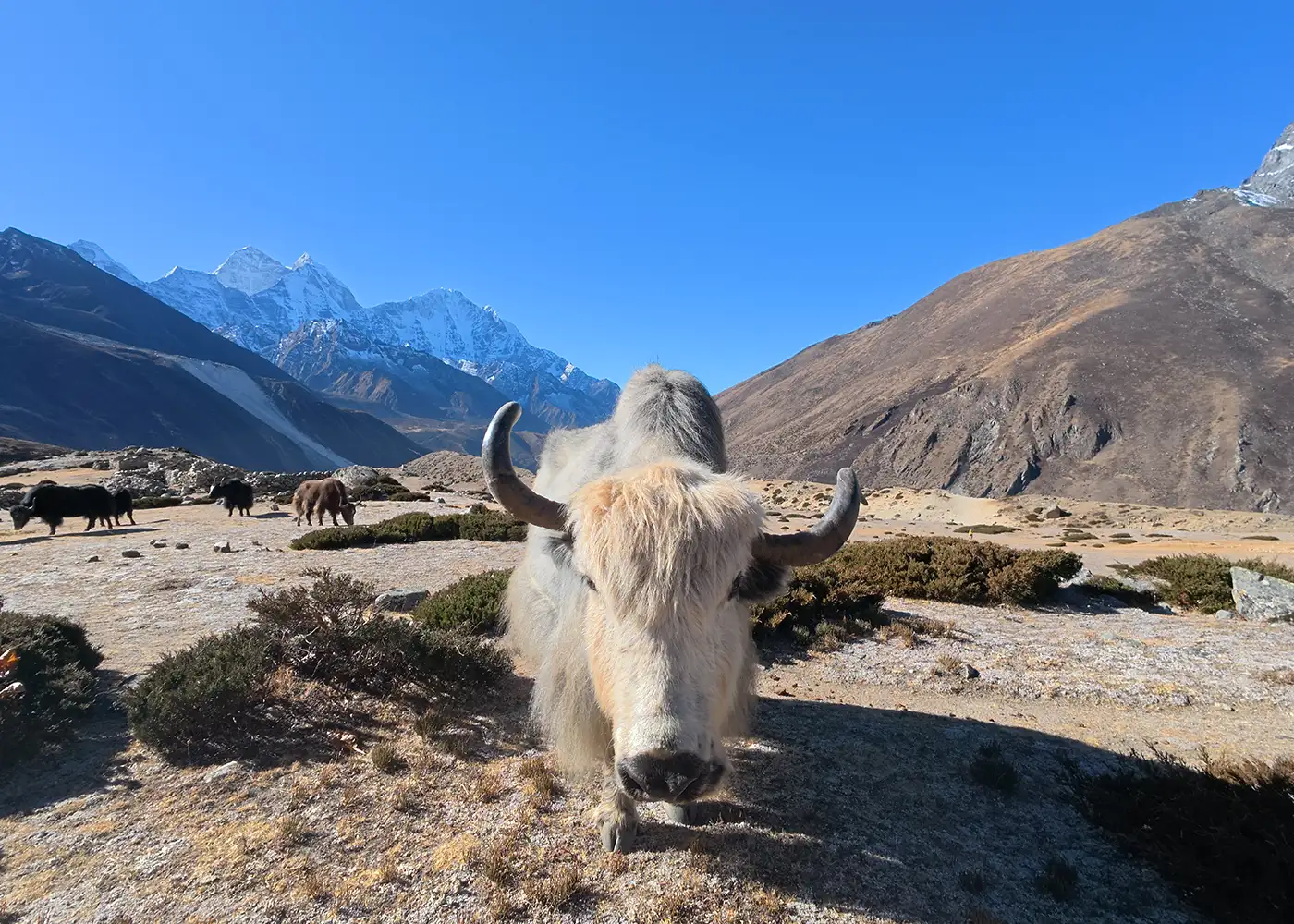
You trek deeper into the quieter Bhote Koshi valley, leaving the main Everest trail far behind. The landscape becomes drier and more open, with stone houses, yak pastures, mani walls, and long mountain views. The trail passes through Marlung, one of the larger settlements in the Thame valley, before continuing gradually upward.

As you gain altitude, the air feels thinner, and the pace naturally slows. You reach Lungden, a small high-altitude village, where you rest early and prepare for the demanding Renjo La Pass crossing the next day.

Trek duration: Approx. 6 hours

Accommodation: Teahouse in Lungden

Meals: Breakfast, Lunch & Dinner

Note: Walk steadily and hydrate well to support acclimatization.

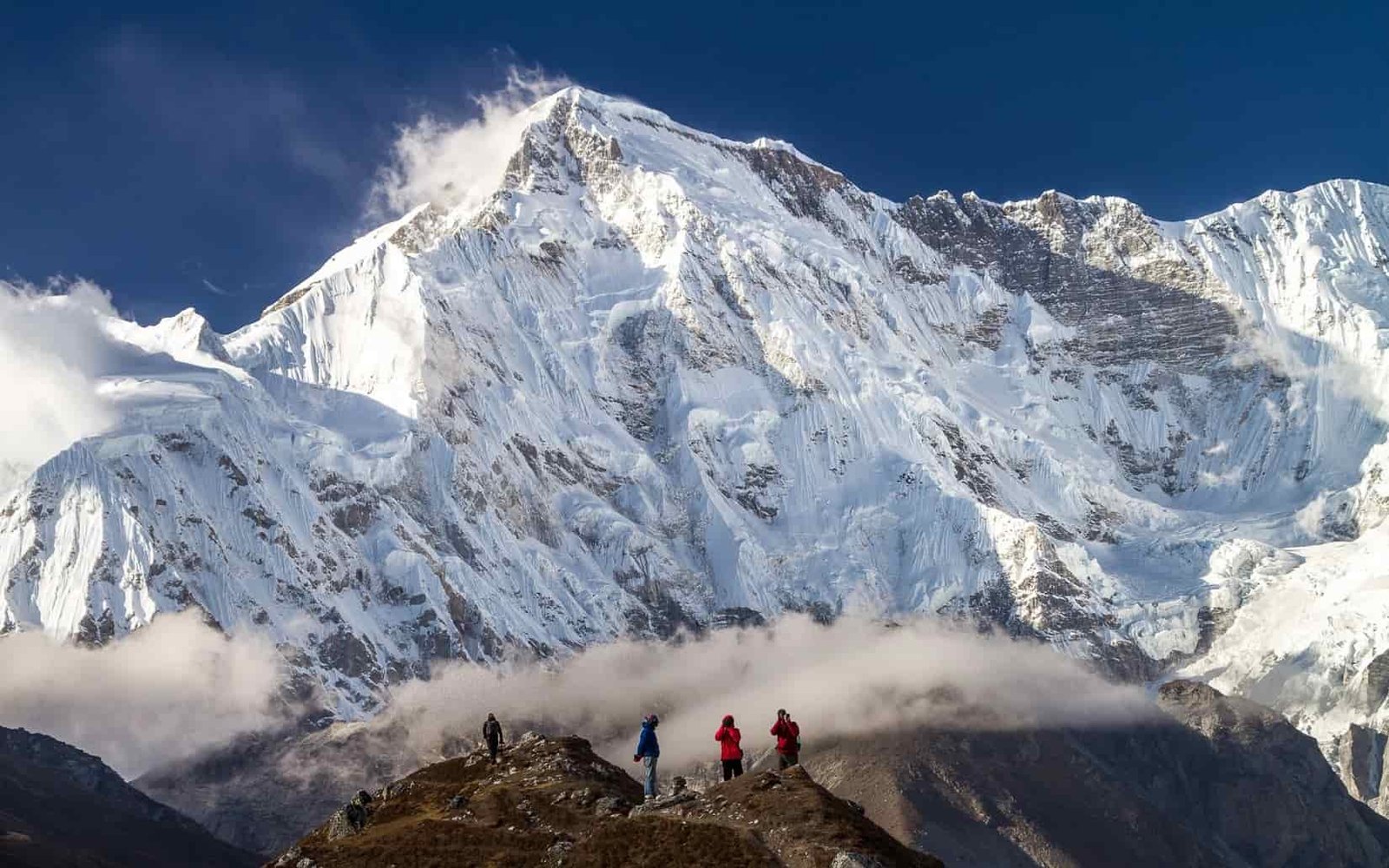
You start early for a challenging and rewarding day as the trail climbs above Lungden toward Renjo La Pass. The ascent is steep and rugged, with rocky sections and cold wind as you gain height. Reaching the prayer-flagged pass feels like a major achievement, with sweeping views of the Himalayan giants, including Everest, Lhotse, Makalu, and Cho Oyu.

From Renjo La, you descend carefully on rocky trails into the dramatic Gokyo basin. The route opens to the turquoise Gokyo Lakes and the impressive Ngozumpa Glacier before you arrive in Gokyo village for a well-earned rest at altitude.

  • Trek duration: Approx. 7 to 8 hours
  • Accommodation: Teahouse in Gokyo
  • Meals: Breakfast, Lunch & Dinner
  • Note: Carry warm layers and move carefully on the descent if conditions are icy.

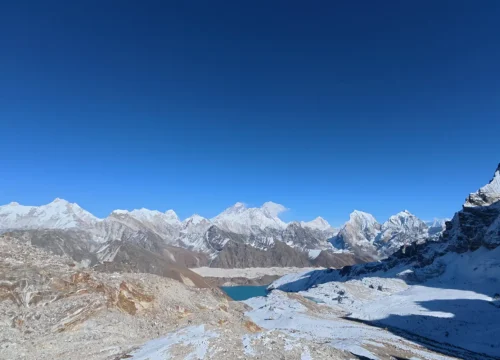
You take a well-planned acclimatization day in Gokyo, allowing your body to adjust before the next high pass. An early hike to Gokyo Ri is the highlight, offering some of the best panoramic views in the Khumbu, with sweeping mountain and glacier scenery.

After the hike, you return to Gokyo village and spend the rest of the day at a relaxed pace. You can explore the shores of the Gokyo Lakes, enjoy views of the Ngozumpa Glacier, and rest well for the upcoming crossing toward Cho La.

Preparation: Well prepared for the upcoming crossing toward Cho La.

Trek duration: Approx. 3 to 4 hours

Accommodation: Teahouse in Gokyo

Meals: Breakfast, Lunch & Dinner

Note: A slow pace and good hydration help acclimatization at this altitude.

You leave Gokyo and follow the valley trail alongside the dramatic Ngozumpa Glacier, walking through a stark alpine landscape of rock, moraine, and scattered yak pastures. The route stays quieter and feels more remote, with wide glacier views and surrounding peaks guiding the way.

The walk is shorter but still demanding due to the altitude. You reach Thangnak, a small settlement with a few teahouses, and rest early to prepare for the Cho La Pass crossing the next day.

  • Trek duration: Approx. 4 to 5 hours
  • Accommodation: Teahouse in Thangnak
  • Meals: Breakfast, Lunch & Dinner
  • Note: Rest well tonight since tomorrow is a high pass day.

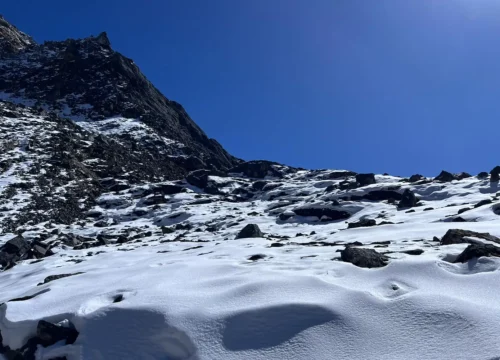
You start early for one of the toughest days of the trek as the trail climbs from Thangnak toward Cho La Pass. The ascent moves through rocky terrain and can include snow and ice, so careful footing and a steady pace matter. From the top of Cho La, you take in dramatic high-mountain views before beginning the descent.

The downhill section is steep at first and often the most technical part of the day. As the trail eases, you continue toward Dzongla, a quiet village set beneath towering peaks, where you rest after the long pass crossing.

Trek duration: Approx. 7 to 8 hours

Accommodation: Teahouse in Dzongla

Meals: Breakfast, Lunch & Dinner

Note: Microspikes can be helpful if the pass is icy.

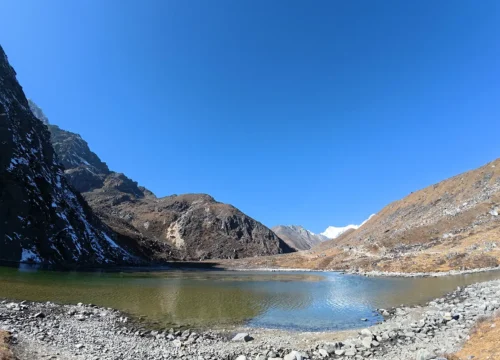
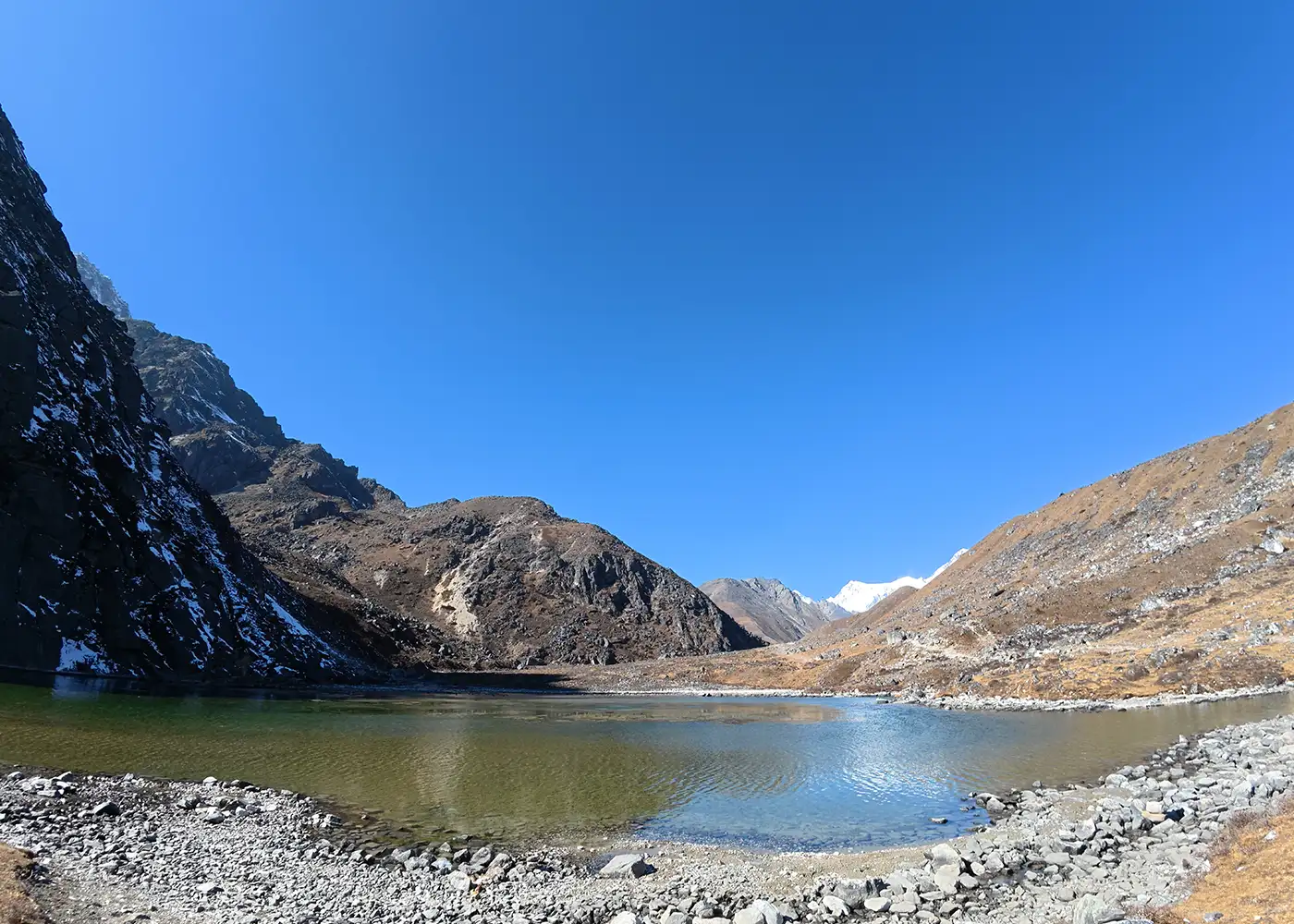
You leave Dzongla and follow a rugged high-altitude trail with wide mountain views and glacier scenery. The route passes the beautiful Chola Lake, then continues across moraine terrain as the landscape becomes more barren and dramatic. The air is thinner here, so the pace stays slow and steady.

As you approach Lobuche, you begin to feel the presence of the Khumbu Glacier and the Everest foothills around you. You arrive in Lobuche by afternoon, rest in the teahouse, and prepare for the Everest Base Camp day ahead.

  • Trek duration: Approx. 4 to 5 hours
  • Accommodation: Teahouse in Lobuche
  • Meals: Breakfast, Lunch & Dinner
  • Note: Keep warm in the evening as temperatures drop quickly at this altitude.

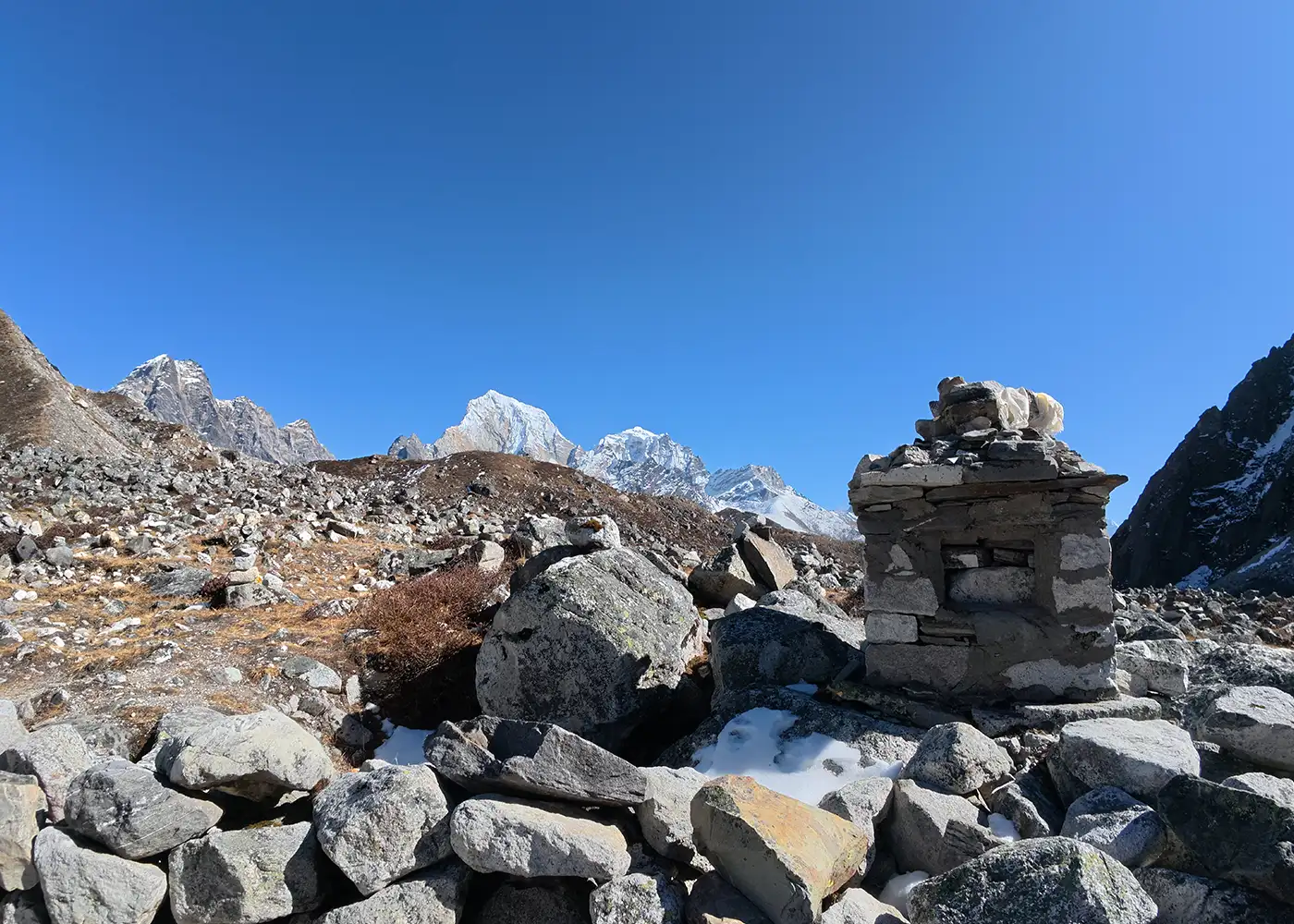
You follow the rocky moraine trail beside the Khumbu Glacier, passing memorials and glacier viewpoints as the scenery turns wild and icy. After reaching Gorak Shep, you take a short break, refuel, and prepare for the final push higher.

You continue to Everest Base Camp, walking across glacial terrain with close views of the Khumbu Icefall area and surrounding peaks. After time at Base Camp for photos and rest, you retrace the trail back to Gorak Shep for the night, ready for the early start to Kala Patthar.

Trek duration: Approx. 7 to 8 hours

Accommodation: Teahouse in Gorak Shep

Meals: Breakfast, Lunch & Dinner

Note: Walk steadily and dress in layers as wind and cold increase near Base Camp.

You start before dawn for the climb to Kala Patthar, the highest point of the trek and the best viewpoint for a close-up Everest sunrise. The trail is steep and cold, but the panoramic Himalayan scenery from the top makes the effort worth it.

After returning to Gorak Shep for breakfast, you begin a long descent through the upper Khumbu valley, passing familiar glacial landscapes and gradually returning to easier air. You reach Pheriche, a windswept settlement with wide valley views, and enjoy a more comfortable night at a lower altitude.

  • Trek duration: Approx. 6 to 7 hours
  • Accommodation: Teahouse in Pheriche
  • Meals: Breakfast, Lunch & Dinner
  • Note: Keep layers accessible for the cold sunrise hike, then adjust as temperatures rise on the descent.

You continue descending through the Khumbu valley, passing stone walls, yak pastures, and classic mountain scenery as the trail becomes greener again. The route leads through Pangboche and then toward Tengboche, where prayer flags and monastery views add a peaceful feel to the day.

After crossing the river and climbing briefly, the trail continues through forests and familiar villages on the way back to Namche Bazaar. You arrive in Namche with time to enjoy a warm meal, relax in cafes, and celebrate the hard days already completed.

Trek duration: Approx. 7 to 8 hours

Accommodation: Teahouse in Namche Bazaar

Meals: Breakfast, Lunch & Dinner

Note: Use trekking poles to reduce strain on knees during the long descent.

You leave Namche Bazaar and descend on familiar trails back into the Dudh Koshi valley. The route crosses suspension bridges and passes through pine forests and small villages, with a mix of steady descents and short uphill sections that keep the day active.

You continue past Phakding and follow the river trail toward Lukla, where the trek began. After arriving, you check into the teahouse, enjoy your final evening in the Khumbu, and celebrate the completion of the Everest Two Passes adventure.

  • Trek duration: Approx. 6 to 7 hours
  • Accommodation: Teahouse in Lukla
  • Meals: Breakfast, Lunch & Dinner
  • Note: Pack flight essentials separately since the next morning starts early.

You take a scenic flight out of Lukla, enjoying one last aerial view of the Khumbu valleys and Himalayan ridgelines. After landing, you transfer onward and wrap up the trek with time to relax and reflect on the journey.

In peak seasons, you often fly to Manthali/Ramechhap and then continue by road to Kathmandu. In other months, flights usually operate directly to Kathmandu, giving you a smoother return.

Flight time: 40 minutes (Kathmandu) or 20 minutes (Manthali)

Accommodation: Not included

Meals: Breakfast

Note: Peak seasons often use Manthali/Ramechhap for Lukla flights.

Cost Includes

Cost Excludes

Trekking Feasibility
Calculating...
Projections represent historical trends and general seasonal elevation conditions.
Route Stop & Elevation
Daytime (Sunny)
Nighttime (Cold)

Note: These temperatures represent the peak trekking seasons (Spring from March to May and Autumn from September to November). High-altitude weather can change rapidly.

The best time for the Everest Two Passes Trek is spring and autumn. Spring runs from March to May and brings warmer days, clear views, and blooming rhododendrons in the lower parts of the trail.

Autumn runs from September to November and is the most popular season. The weather is usually stable, the skies are clearer, and the mountain views are often better after the monsoon.

Winter is possible for experienced trekkers, but the trail becomes very cold around Gokyo, Cho La, Lobuche, and Gorak Shep. Snow can also make the high passes harder to cross. Monsoon is less ideal because clouds can block mountain views, and flights to Lukla may face delays. The lower trails can also become wet and slippery.

Accommodation is mainly in local teahouses during the trek. Rooms are simple and usually come with basic beds, blankets, and shared toilets. In places like Namche Bazaar, the lodges feel more comfortable, but facilities become more basic near Lungden, Gokyo, Thangnak, Dzongla, Lobuche, and Gorak Shep.

Hot showers, Wi-Fi, and battery charging are available in some villages for an extra cost. These services may not work every day because remote lodges often depend on solar power and local systems. Carry a power bank, enough cash, and warm layers for higher stops.

Meals are warm and filling. Common options include dal bhat, noodles, fried rice, soup, potatoes, pasta, pancakes, Tibetan bread, tea, and coffee. The menu becomes shorter in higher villages, so pack energy bars, nuts, chocolate, and electrolyte powder for long walking days and pass crossings.

The Everest Two Passes Trek is a challenging high-altitude trek. You do not need climbing skills, but you should have good fitness, strong legs, and previous multi-day hiking experience.

The main challenges are long walking days, cold weather, thin air, rocky trails, glacier sections, and two high passes: Renjo La and Cho La. The route also reaches Kala Patthar at 5,555m / 18,225ft, so proper acclimatization is very important.

This trek is best for trekkers who want a harder route than the normal Everest Base Camp trek. Fit beginners may complete it with training, guided support, slow pacing, and enough rest days.

The trail moves through warm valleys, cold villages, windy passes, and high glacier areas. Pack light, but choose good layers and reliable trekking gear.

Plan Your Everest Two Passes Trek

Ready to cross Renjo La and Cho La, visit Gokyo Lakes, reach Everest Base Camp, and see sunrise from Kala Patthar? Share your travel dates, group size, fitness level, and trekking experience. Joyful Eco Treks will help plan your trek with permits, guide support, teahouse stays, meals, flights, pacing, and full trip support from arrival to departure.

Frequently Asked Question

How difficult is the Everest Two Passes Trek?

The Everest Two Passes Trek is a challenging trek. You cross Renjo La and Cho La, walk at high altitude, and spend many days on rocky trails, glacier sections and steep climbs.

No, the Everest Two Passes Trek is not ideal for complete beginners. Fit beginners may do it with proper training, a slow pace, and guide support, but it is better for trekkers with previous hiking or multi-day trekking experience.

The best time to visit the Everest Two Passes Trek is during spring and autumn. March to May and September to November offer clearer skies, better mountain views, and safer high-pass conditions.

You need two main permits for the Everest Two Passes Trek: the Sagarmatha National Park Permit and the Khumbu Pasang Lhamu Rural Municipality Entrance Permit. 

Yes, a licensed guide is strongly recommended for this trek. The route includes high passes, glacier sections, changing weather, altitude risk, and remote trails, so guide support makes the journey safer.

The highest point is Kala Patthar at 5,555m / 18,225ft. It is widely considered the finest ground-level viewpoint for Mount Everest.

The highest point of the Nar Phu Valley Trek is Kang La Pass at 5,306 m (17,408 ft) above sea level. It lies between Nar village and Ngawal and is one of the most important highlights of the trek. From the top of the pass, you get wide mountain views of the surrounding Himalayan landscape, which is why many trekkers see it as a standout part of the route. Since it is the highest elevation on the trail, proper acclimatization is important before crossing it.

Cho La Pass is often the hardest part because the trail can include rock, snow, ice, and steep sections. Renjo La is also demanding, but many trekkers find Cho La more technical.

Yes, altitude sickness is a real risk because the trek goes above 5,000m several times. Walk slowly, drink enough water, avoid alcohol, and follow the acclimatization plan.

If Lukla flights are delayed, you may need to wait at the airport or fly the next day when the weather clears. In peak season, your flight may also operate to Manthali instead of Kathmandu. Extra hotel nights, road transfers, or flight changes may be needed, so keep at least one buffer day in your travel plan.

Ready to Trek the Everest Two Passes?

Share your travel dates, group size, and trekking experience, and our local team will recommend the best 17-day itinerary with clear details on pacing, permits, and logistics.