Gosaikunda Trek 8 Days | Itinerary, Cost & Map Joyful Eco Treks | Nepal’s Best Trek and Tours Packages

Gosaikunda Trek: 8 Days Complete Itinerary and Guide

Langtang Region, Bagmati Province, Nepal

8 Days

Trek Region

Langtang National Park

Group Size

1-12 trekkers (Private & Small Group)

The Gosaikunda Trek is a short high-altitude journey to a sacred alpine lake at 4,380m / 14,370ft inside Langtang National Park. The route begins from Dhunche and climbs through oak, pine, and rhododendron forests before reaching Chandanbari, Lauribinayak, and the rocky lake basin of Gosaikunda. This 8-day Gosaikunda Trek itinerary includes arrival and departure in Kathmandu, road travel to Dhunche, four trekking days, accommodation, meals, permits, guide support, and the return journey to Kathmandu.

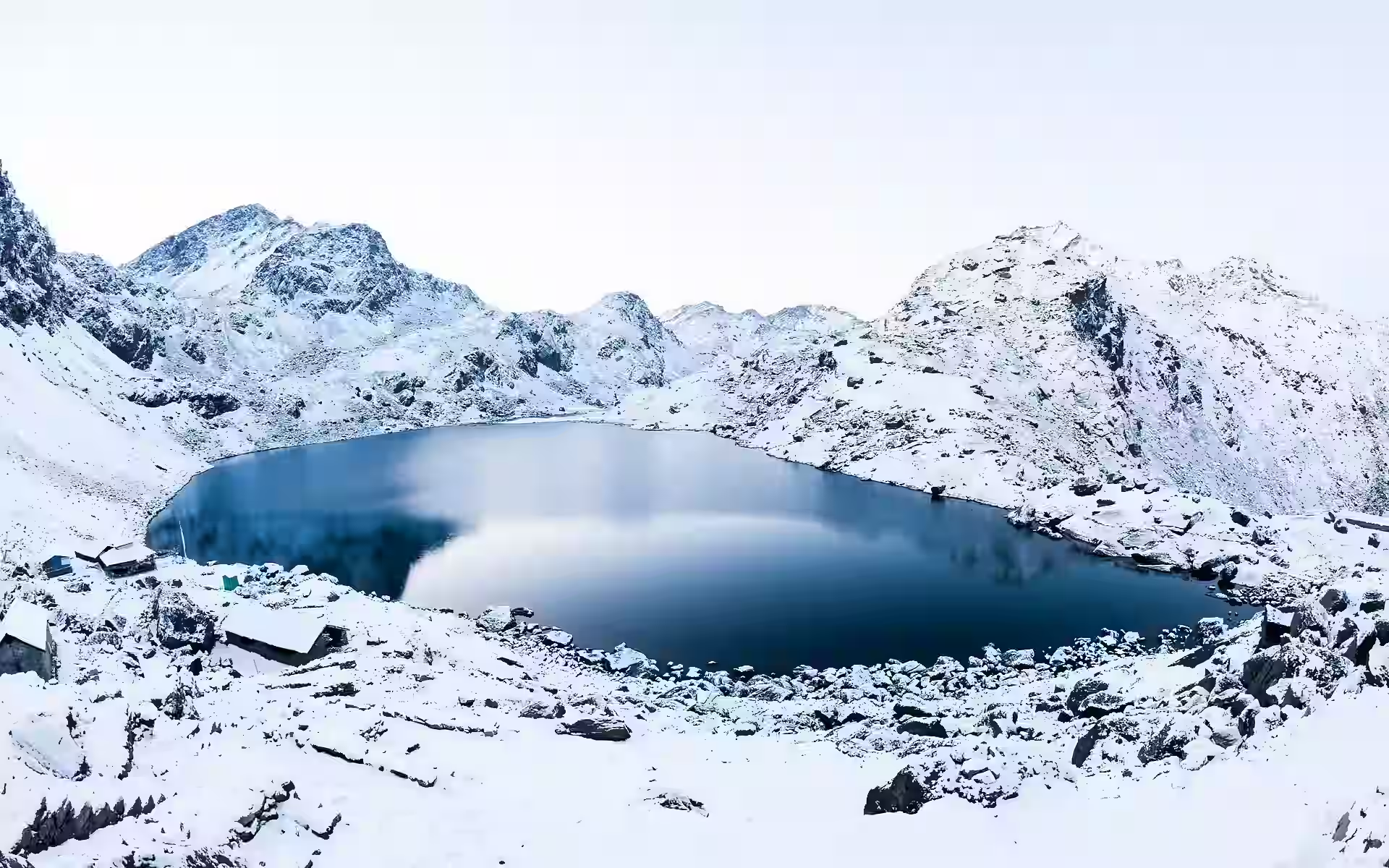
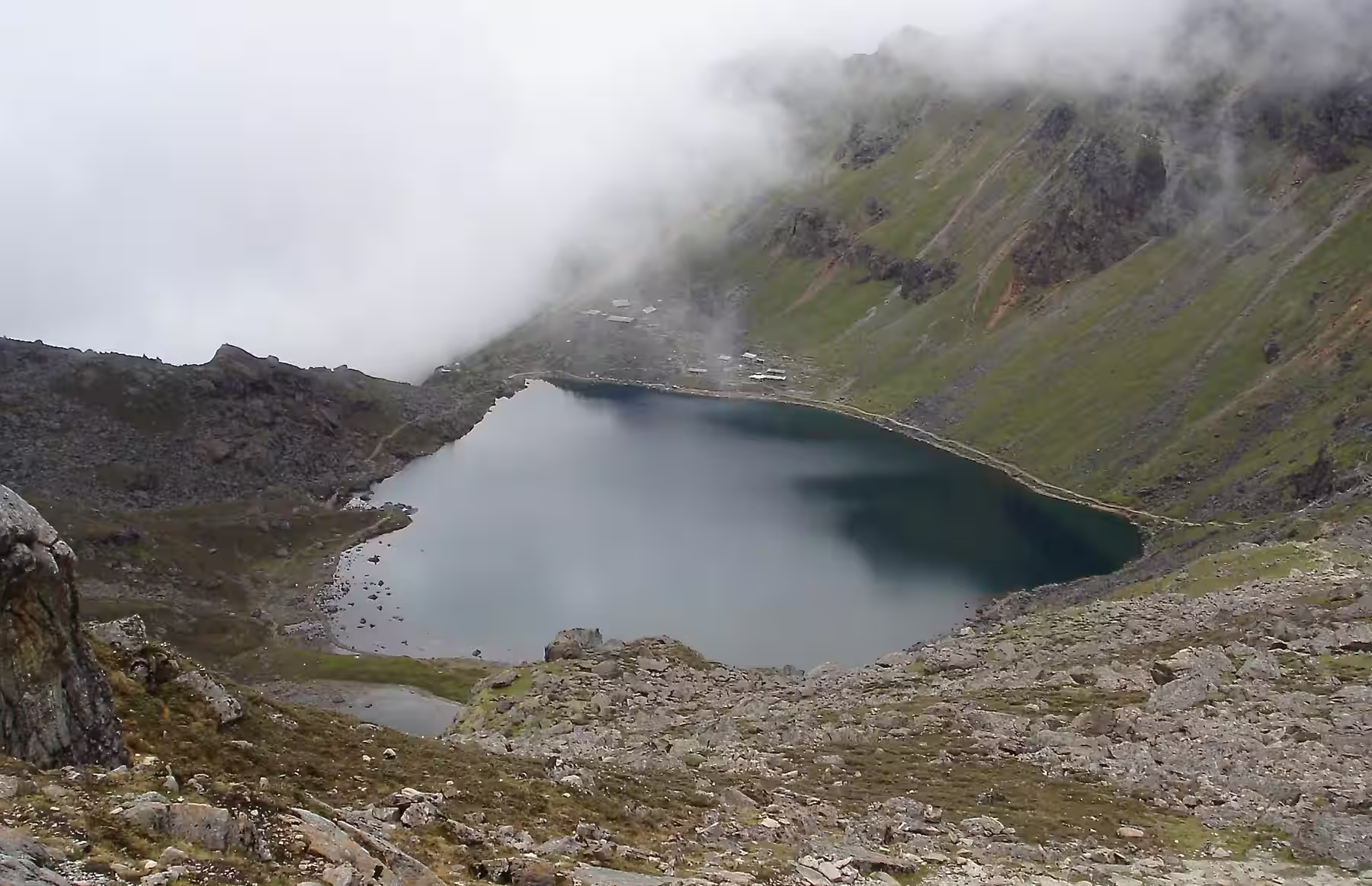
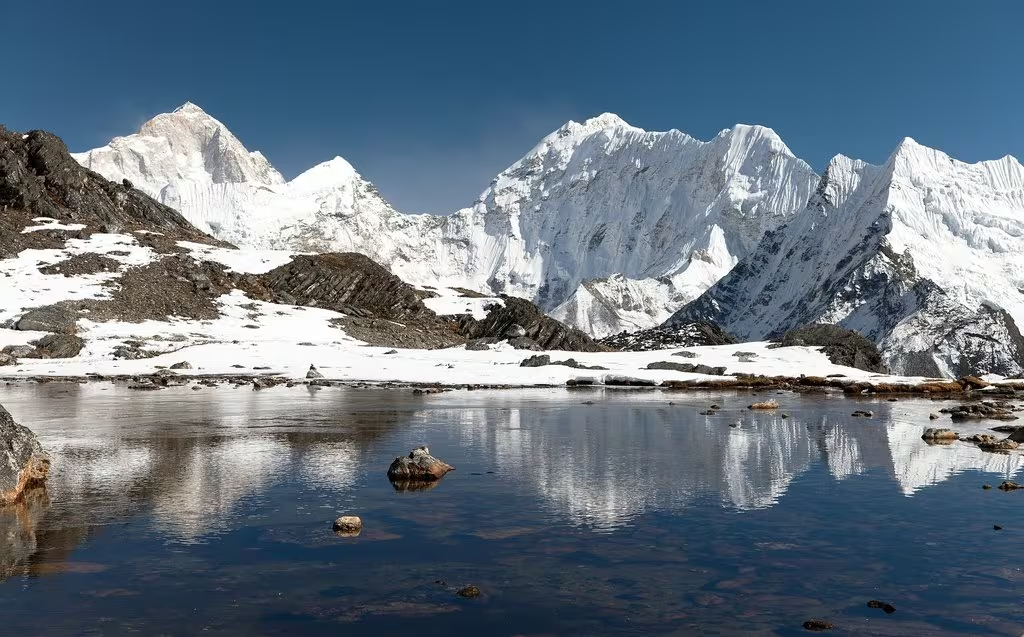
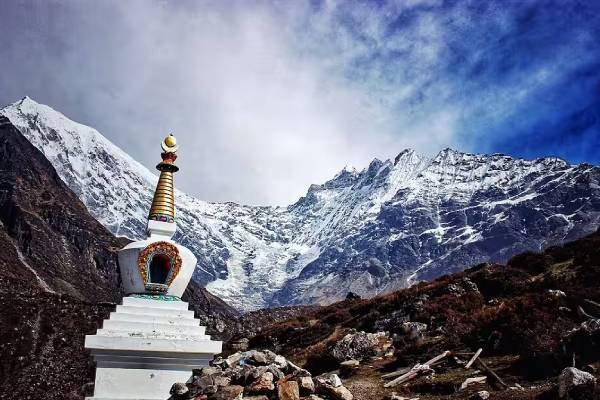
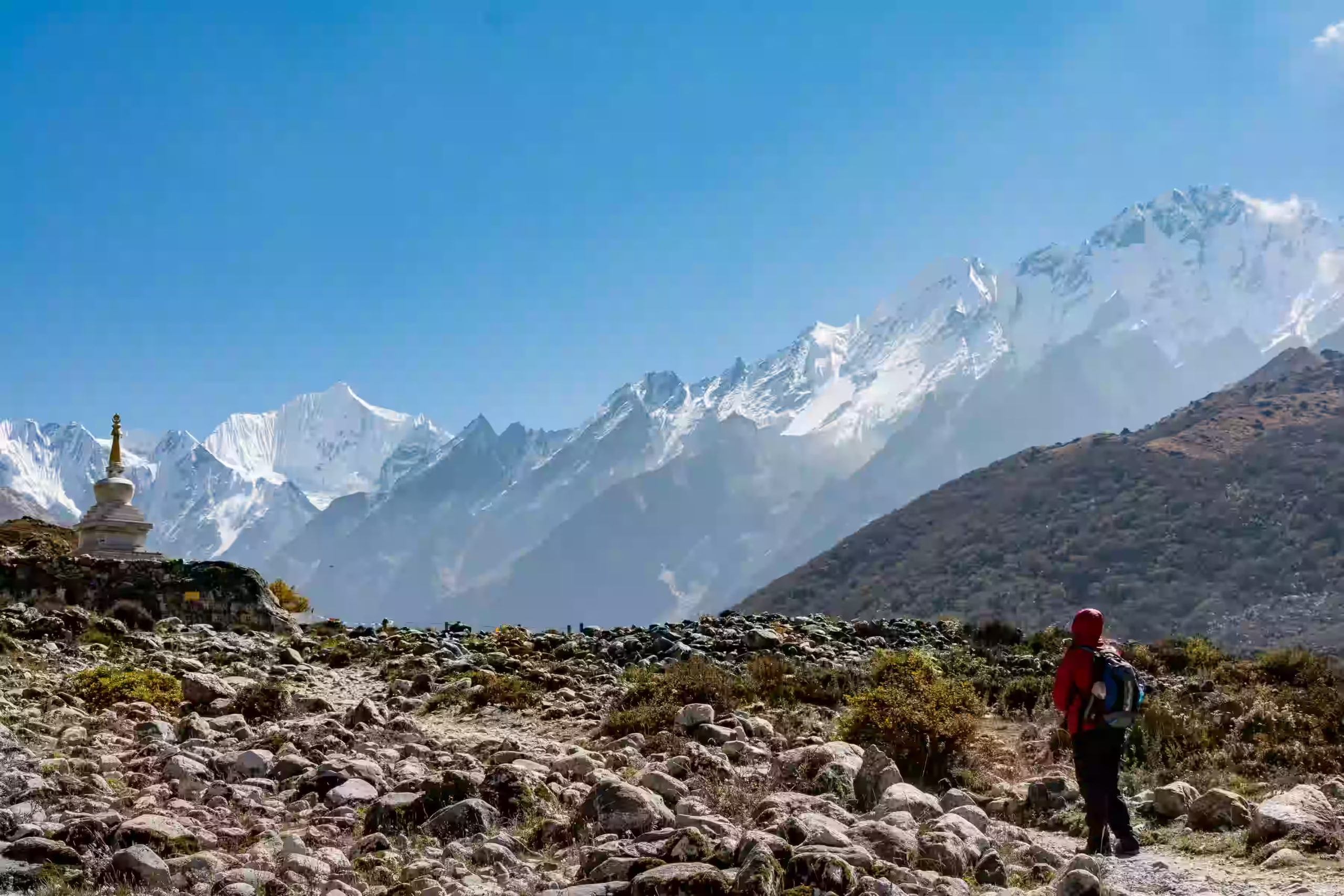
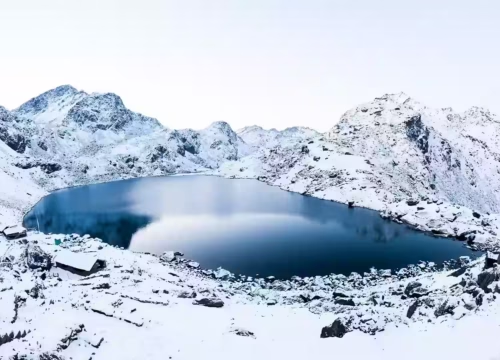
Gosaikunda Lake is respected by both Hindus and Buddhists. According to Hindu belief, Lord Shiva created the lake by striking the mountain with his trident to release cold water after swallowing poison during Samudra Manthan. Thousands of pilgrims visit during Janai Purnima for worship and ritual bathing. Along with its religious importance, the Gosaikunda lake trek offers views of Langtang Lirung, Ganesh Himal, Manaslu, Dorje Lakpa, and nearby mountain ranges.

Trip Info 

  • Dhunche, after driving from Kathmandu
  • Dhunche, followed by a drive to Kathmandu
  • Gosaikunda Lake, Langtang National Park
  • Approximately 34 to 36 km / 21 to 22 miles
  • Trekking, hiking, and scenic road travel
  • Moderate
  • March to May and September to November
  • Gosaikunda Lake, 4,380m / 14,370ft
  • 5 to 7 hours
  • Langtang National Park entry permit and TIMS card
  • Hotel in Kathmandu and local teahouses during the trek
  • Breakfast, lunch, and dinner during trekking days
  • Government-licensed trekking guide and porter service available; one porter shared by two trekkers

Why Choose the Gosaikunda Trek

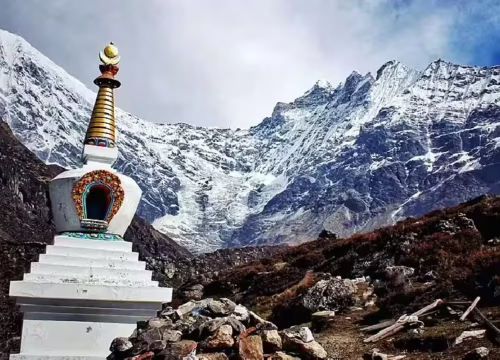
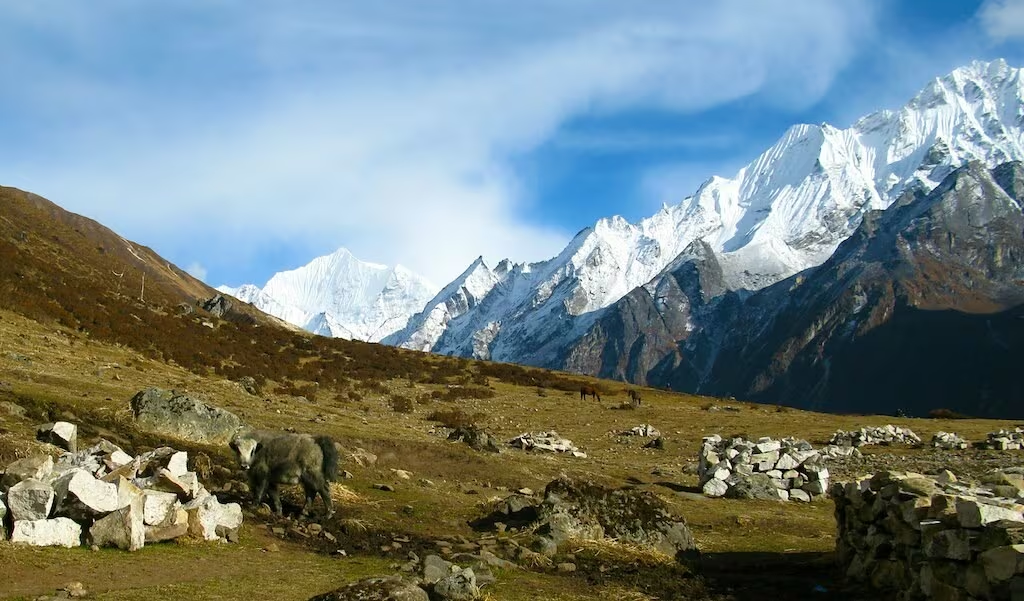
The Gosaikunda Trek is a suitable option for travelers who want to reach a high Himalayan lake within a short period. The trailhead at Dhunche is accessible by road from Kathmandu, allowing the walking section to begin without a domestic flight. The route combines forest trails, Tamang settlements, Buddhist sites, mountain viewpoints, and sacred lakes. Chandanbari, also known as Sing Gompa, is known for its monastery and local yak cheese, while Lauribinayak offers open views across the Langtang and Ganesh Himal ranges.

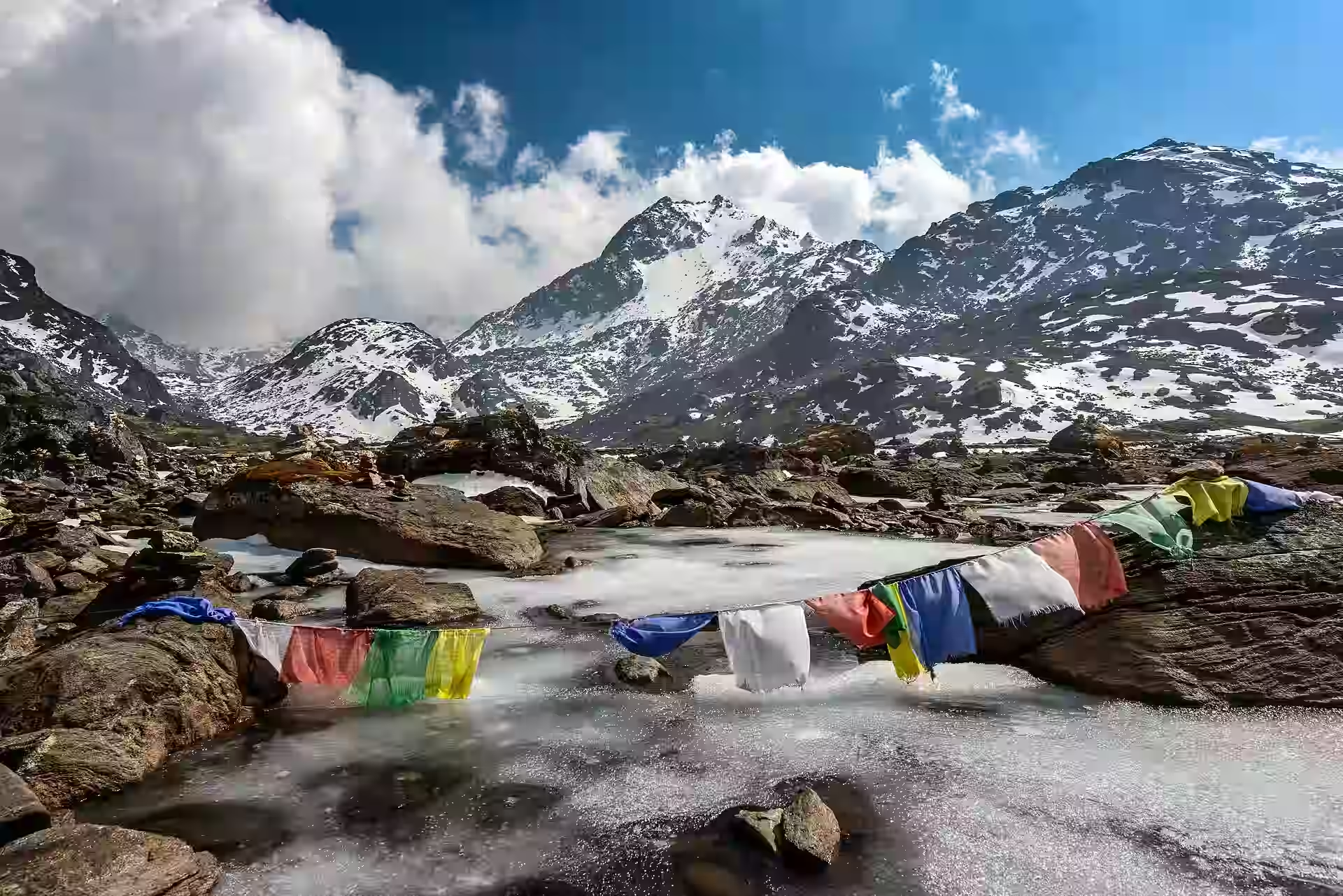
The trek also carries strong religious meaning because Gosaikunda is closely connected with Lord Shiva and becomes an important pilgrimage destination during Janai Purnima. Prayer flags, stone shrines, chortens, and nearby lakes add to the spiritual character of the area. Although the route is shorter than many Himalayan treks, it reaches 4,380m / 14,370ft, so proper pacing, hydration, warm clothing, and guide support remain important.

Trek Highlights 

  • Follow a direct Gosaikunda Trek route from Dhunche.
  • Walk through Langtang National Park.
  • Pass through oak, pine, and rhododendron forests.
  • Stay at Chandanbari, also known as Sing Gompa.
  • Visit the monastery and yak cheese area at Chandanbari.
  • Enjoy mountain views from Lauribinayak.
  • See Langtang Lirung, Ganesh Himal, Manaslu, and Dorje Lakpa.
  • Walk through the Tamang settlements and the Buddhist cultural sites.
  • See prayer flags, chortens, stone shrines, and sacred lakes.
  • Complete a short Himalayan trek close to Kathmandu.
  • Experience the religious importance of Gosaikunda Lake.
  • Follow an 8-day package with arrival, trekking, road transfers, and departure.

Tour Plan

You arrive at Tribhuvan International Airport in Kathmandu, where our team welcomes you and transfers you to a 3-star hotel. After checking in, you can rest from your international flight or walk around the nearby streets of Thamel.

Later, you meet your guide for a trek briefing. The guide explains the Gosaikunda Trek itinerary, road transfers, daily walking hours, permits, meals, teahouse accommodation, packing requirements, weather, and altitude safety.

  • Trip duration: 25 to 30 minutes by vehicle

  • Drive distance: Approx. 6 to 8 km / 3.7 to 5 miles (depending on your hotel's location)

Note: The drive can take longer due to traffic, roadwork, or weather, so keep water and light essentials in your day bag.
You leave Kathmandu in the morning and drive north toward Dhunche, the starting point of the Gosaikunda Trek from Kathmandu. The road passes through urban areas before entering hills, river valleys, terraced farms, roadside settlements, and rural sections. Much of the journey follows winding mountain roads near the Trishuli River, with the surroundings becoming quieter and more mountainous as you approach Dhunche.

Dhunche is the administrative center of Rasuwa District and an entry point for several Langtang trekking routes. After arriving, you check into a local lodge and prepare your daypack for the first walking day. Your guide may also complete the required permit checks before you enter the Langtang National Park trail.

  • Drive duration: 6 to 7 hours

  • Drive distance: Approx. 115 to 120 km / 71.5 to 74.5 miles

  • Maximum altitude: Dhunche, 1,960m / 6,430ft

  • Elevation gain: +560m / +1,837ft

Note: The road has rough and winding sections. Keep water, snacks, warm clothing, money, and personal documents in your daypack.

Your first trekking day begins with a steady climb from Dhunche. The trail follows stone paths through Deurali, Dimsa, and other small settlements while passing through oak, pine, and rhododendron forests. Although the walking distance is not very long, the continuous ascent and large elevation gain make the day physically demanding, so maintain a steady pace and take regular breaks.

You eventually reach Chandanbari, also known as Sing Gompa. The village is known for its Buddhist monastery, peaceful mountain setting, and locally produced yak cheese. From here, you can see the higher ridges that continue toward Lauribinayak and Gosaikunda Lake.

  • Trek duration: 5 to 6 hours

  • Trek distance: Approx. 9 km / 5.6 miles

  • Maximum altitude: 3,330m / 10,925ft

  • Elevation gain/ loss: +1,370m / +4,495ft

Note: Today you cross the 3,000m threshold and gain +1,370m of elevation. This is double the recommended daily limit for altitude safety. You must walk at a slow, conversational pace, drink plenty of water, and immediately inform your guide if you feel a headache or nausea.

You leave Chandanbari and continue through forested slopes toward Cholangpati. As the trail climbs, the trees become thinner, and the views of Ganesh Himal, Langtang Lirung, Manaslu, and nearby peaks open up. The route then reaches Lauribinayak, one of the main viewpoints on the Gosaikunda Trek, before continuing along a steeper and more exposed hillside trail. The terrain gradually changes from forest paths to open alpine slopes, stone steps, and rocky sections.

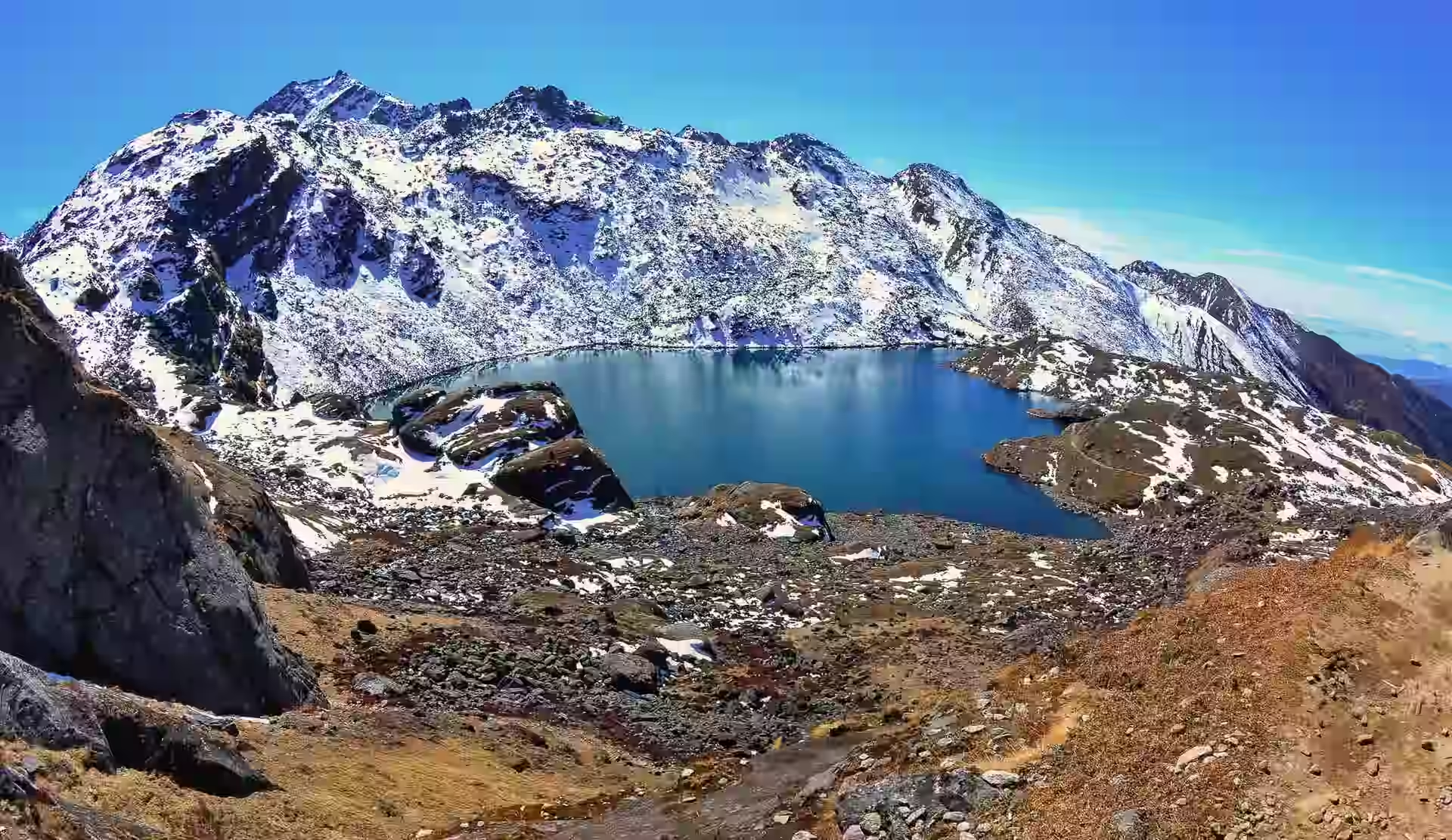
Before reaching the main lake, you pass smaller lakes and sacred sites around the upper basin. You then arrive at Gosaikunda Lake at 4,380m / 14,370ft, where prayer flags, shrines, rocky ridges, and still mountain water shape the setting. After checking into the teahouse, you can walk around the lake if the weather and your physical condition allow, but the temperature drops quickly in the evening.

  • Trek duration: 5 to 7 hours

  • Trek distance: Approx. 8.5 km / 5.3 miles

  • Maximum altitude: Gosaikunda Lake, 4,380m / 14,370ft

  • Elevation gain: +1,050m / +3,445ft

Note: This is the hardest uphill day. Tell your guide immediately if you experience a headache, nausea, dizziness, poor balance, shortness of breath at rest, or unusual tiredness.

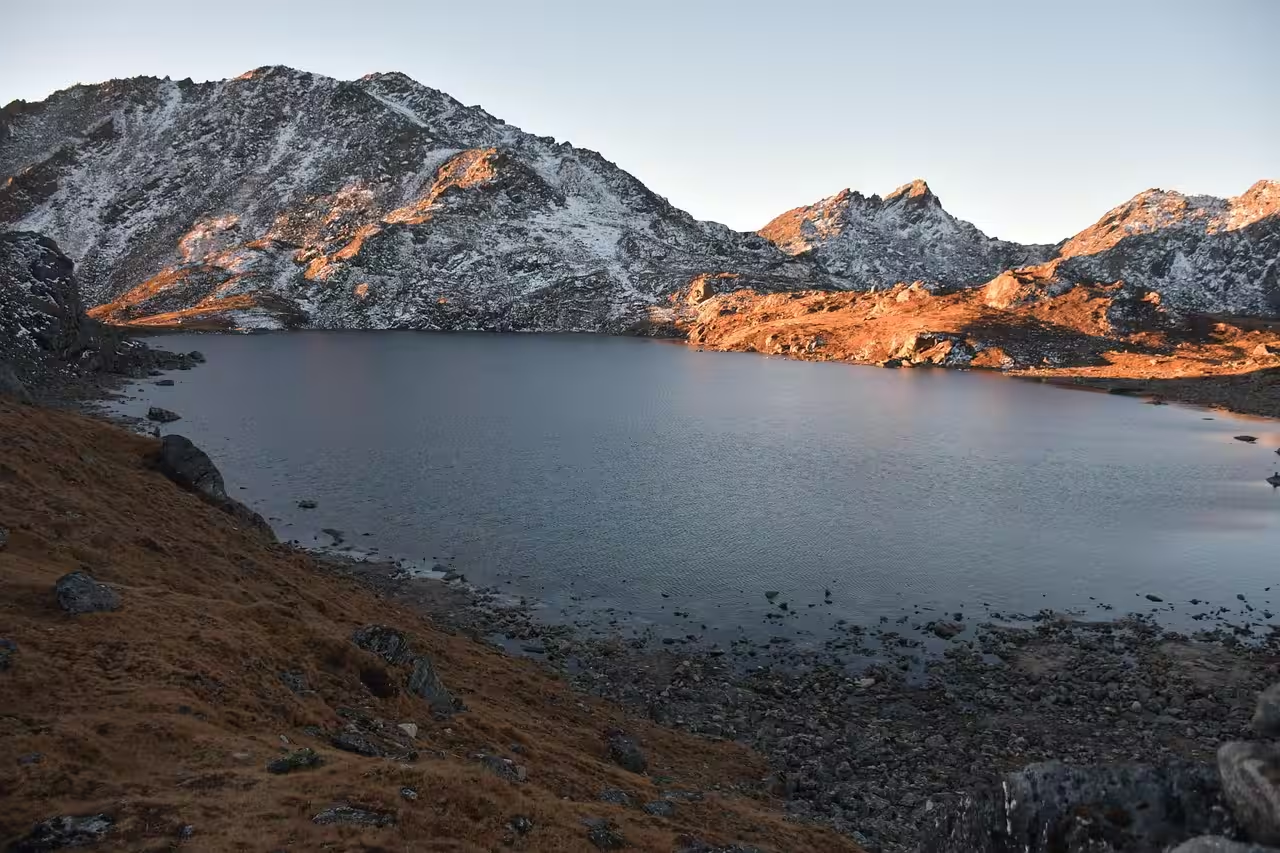
You wake near Gosaikunda Lake and watch the early light move across the surrounding ridges. The lake area is usually quiet in the morning, with prayer flags, shrines, and nearby alpine lakes visible around the upper basin. After breakfast, you begin descending toward Lauribinayak across rocky and exposed terrain, where careful footing is important.

The trail then continues through Cholangpati and gradually re-enters the forest. As you lose altitude, breathing becomes easier, and the temperature feels milder. You arrive back at Chandanbari / Sing Gompa and stay in a local teahouse for the night.

  • Trek duration: 5 to 6 hours

  • Trek distance: Approx. 8.5 km / 5.3 miles

  • Maximum altitude: 4,380m / 14,370ft

  • Sleeping altitude:: 3,330m / 10,925ft

  • Elevation gain: -1,050m / -3,445ft

Note: The long rocky descent can place pressure on your knees. Use trekking poles and avoid rushing on loose stones.

You leave Chandanbari and descend through the same forest trail toward Dimsa, Deurali, and Dhunche. The route passes through rhododendron, pine, and oak forests before returning to the lower hillside settlements. Although most of the day is downhill, repeated stone steps and uneven ground can still be tiring, while wet leaves, mud, and exposed roots may make some sections slippery.

After reaching Dhunche, you check into a local lodge and complete the walking section of the Gosaikunda Trek. You can rest, take a shower, and prepare your belongings for the return drive to Kathmandu the following day.

  • Trek duration: 5 to 6 hours

  • Trek distance: Approx. 9 km / 5.6 miles

  • Maximum altitude: 3,330m / 10,925ft

  • Sleeping altitude: 1,960m / 6,430ft

  • Elevation gain: -1,370m / -4,495ft

Note: Keep your rain jacket accessible and take care on damp forest paths and stone steps.

After breakfast, you leave Dhunche and drive back to Kathmandu. The road follows the same route through hillside settlements, terraced fields, river valleys, and busy towns. After arriving in Kathmandu, our team transfers you to your hotel, where you can rest, take a shower, do laundry, enjoy a spa treatment, or spend time shopping for souvenirs.

In the evening, you join a farewell dinner with the trekking team and look back on the journey through Dhunche, Sing Gompa, Lauribinayak, and Gosaikunda Lake.

  • Drive duration: 6 to 7 hours

  • Drive distance: Approx. 115 to 120 km / 71.5 to 74.5 miles

  • Maximum altitude: Dhunche, 1,960m / 6,430ft

  • Elevation loss: -560m / -1,837ft

Note: Traffic, road repairs, rain, and landslides may affect the arrival time in Kathmandu.

Our team transfers you from your hotel to Tribhuvan International Airport according to your international flight schedule. The drive normally takes around 25 to 30 minutes, although Kathmandu traffic may increase the travel time.

You leave Nepal with memories of Langtang National Park, Chandanbari, Lauribinayak, Gosaikunda Lake, and the mountain trail through Rasuwa District.

  • Trip duration: 25 to 30 minutes by vehicle

  • Drive distance: Approx. 6 to 8 km / 3.7 to 5 miles

  • Altitude: 1,400m / 4,593ft

  • Elevation loss: 1,350m / 4,429ft

Note: Reach the airport at least three hours before your international flight.

Cost Includes

Cost Excludes

Location Day Temperature Night Temperature
Kathmandu 18°C to 26°C / 64°F to 79°F 8°C to 14°C / 46°F to 57°F
Dhunche 12°C to 20°C / 54°F to 68°F 4°C to 10°C / 39°F to 50°F
Chandanbari / Sing Gompa 7°C to 14°C / 45°F to 57°F -1°C to 5°C / 30°F to 41°F
Cholangpati 5°C to 12°C / 41°F to 54°F -3°C to 3°C / 27°F to 37°F
Lauribinayak 1°C to 9°C / 34°F to 48°F -7°C to -1°C / 19°F to 30°F
Gosaikunda Lake -2°C to 7°C / 28°F to 45°F -10°C to -4°C / 14°F to 25°F

Note: These ranges represent common spring and autumn conditions. Temperature changes with the month, cloud cover, rain, snowfall, wind, and time of day. The lake area can feel much colder during strong winds.

The best time for the Gosaikunda Trek is autumn from September to November and spring from March to May. Autumn is generally the best overall season because the weather is more stable, rainfall is limited, and the skies are usually clear. This gives trekkers better views of Langtang Lirung, Ganesh Himal, Manaslu, and the surrounding ranges. Janai Purnima usually falls in August or early September and brings thousands of pilgrims to Gosaikunda Lake, creating a strong cultural atmosphere but also busier trails and teahouses.

Spring is another good season for the Gosaikunda lake trek, with mild daytime temperatures and blooming rhododendrons along the lower forest trail. Mornings are often clear, although clouds may develop later in the day. The monsoon season from June to August brings muddy paths, leeches, landslides, road delays, and poor visibility, while winter from December to February brings heavy snow, ice, and freezing temperatures around Lauribinayak and Gosaikunda Lake.

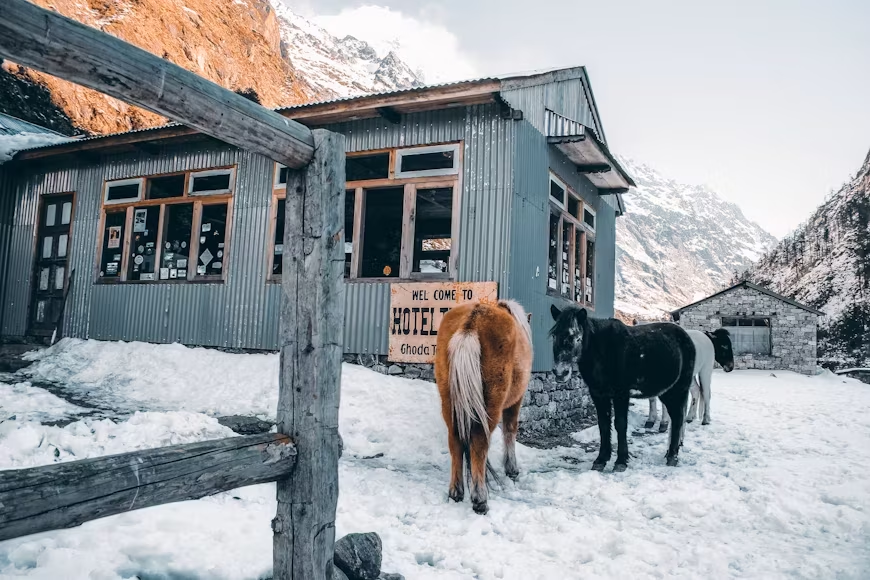
Accommodation on the Gosaikunda Trek is provided in basic twin-sharing teahouses. Rooms usually have two single beds, mattresses, pillows, and blankets, while bathrooms are commonly shared and become more basic at higher stops such as Lauribinayak and Gosaikunda. A sleeping bag is recommended for colder nights. Lodging usually costs around USD 5 to 7 per night, while hot showers, Wi-Fi, and device charging may cost an additional USD 3 to 5. During the main trekking seasons, beds can fill quickly, so advance booking through a guide is recommended.

Teahouses serve simple Nepali and Western meals, with food expenses usually ranging from USD 20 to 25 per day. Common options include dal bhat, momos, thukpa, fried rice, porridge, pancakes, pasta, potatoes, and soup. Dal bhat is a popular choice because it is filling and often comes with refills. Boiled water, tea, ginger lemon, and coffee are available, but trekkers should still carry water purification tablets. Vegetarian meals are the safer choice at higher elevations because meat is carried from lower areas and may not always be fresh.

The Gosaikunda Trek is rated moderate to challenging. Most itineraries take 5 to 7 days, with trekkers walking around 5 to 7 hours each day over steep climbs, stone steps, narrow ridges, and uneven mountain trails. The route rises quickly from Dhunche at around 2,030m / 6,660ft to Gosaikunda Lake at 4,380m / 14,370ft, so altitude sickness is a real concern. The upper trail can also be cold and windy, with sudden weather changes and possible snow above the tree line.

Reasonably fit trekkers can complete the route with proper preparation and steady pacing. Before the trek, build stamina through walking, running, cycling, stair climbing, and basic leg exercises such as squats. During the trek, walk slowly, drink enough water, take regular breaks, and report headaches, nausea, dizziness, or unusual tiredness to your guide. A well-paced itinerary and suitable cold-weather clothing make the journey safer and more manageable.

The Gosaikunda Lake Trek moves from mild lower hills to cold and windy alpine terrain, so pack lightweight layers that can be added or removed as temperatures change. Keep water, snacks, documents, rain protection, gloves, sunglasses, sunscreen, and a warm jacket in your daypack.

Plan Your Gosaikunda Trek with Us

Plan your Gosaikunda Trek with Joyful Eco Treks, including permits, road transport, Kathmandu accommodation, teahouses, meals, a licensed guide, porter support, airport transfers, and a farewell dinner. Share your travel dates and group size to receive a suitable itinerary and package price.

Frequently Asked Question

How much does the Gosaikunda Trek cost for Nepali citizens?

The Gosaikunda Trek cost for Nepali citizens is usually around NPR 7,000 to NPR 12,000 for a budget 4 to 5-day trip. The Langtang National Park entry fee is NPR 100, while a local bus from Kathmandu to Dhunche costs about NPR 800 to NPR 1,500 each way. Teahouse rooms cost around NPR 500 to NPR 800 per night, and meals usually cost NPR 400 to NPR 800 each. A guide costs about NPR 2,500 to NPR 3,500 per day, while a porter costs around NPR 2,000 to NPR 2,500 per day.

The Gosaikunda Trek usually costs around USD 350 to USD 800 or more for foreign travelers. Mandatory permits cost around USD 40 (NPR 5,000) in total, which includes the Langtang National Park entry fee and the TIMS card. Ground transport, teahouses, and meals add to the final amount. A guided 5 to 7-day package generally costs around USD 300 to USD 500 per person. Contact Joyful Eco Treks for an exact price based on your group size and travel date.

The Gosaikunda Trek normally takes five to eight days. A short trekking-only route from Kathmandu may be completed in five or six days, while an 8-day Gosaikunda Trek itinerary includes international arrival, trek briefing, road travel, four walking days, return to Kathmandu, and final departure.

Gosaikunda is about 132 to 138 km / 82 to 86 miles from Kathmandu via the Dhunche route, including a 115 to 120 km drive to Dhunche and a 17 to 18 km trek to the lake. From Sundarijal, which lies around 14 km / 8.7 miles from central Kathmandu, the trekking distance to Gosaikunda is approximately 32 to 40 km / 20 to 25 miles through Chisapani and the Helambu region. The Dhunche route is shorter on foot and usually reaches the lake in two trekking days, while the Sundarijal route takes around four to five days.

You can reach Gosaikunda from Kathmandu by either the Dhunche route or the Sundarijal route. The Dhunche route starts with a 6 to 7-hour drive of around 115 to 120 km / 71.5 to 74.5 miles, followed by a two-day trek through Chandanbari, Cholangpati, and Lauribinayak. The Sundarijal route starts with a 45-minute to 1-hour drive of about 14 km / 8.7 miles from central Kathmandu, followed by a longer 4 to 5-day trek through Chisapani, Kutumsang, Tharepati, and the Helambu region before reaching Gosaikunda Lake.

The best time for the Gosaikunda Trek is spring from March to May and autumn from September to November. Spring brings mild weather and blooming rhododendrons, while autumn offers clearer skies, drier trails, and better mountain views.

October is generally the best month for the Gosaikunda Trek because the weather is stable, the trails are dry, and mountain views are usually clear. April and May are also good choices for warmer days and blooming rhododendrons.

Yes, Gosaikunda receives snowfall, mainly from December to February. Snow and ice may remain around Lauribinayak and Gosaikunda Lake during colder periods. Winter trekkers may need microspikes, gaiters, warm gloves, and extra thermal clothing.

Gosaikunda is famous for its sacred alpine lake, connection with Lord Shiva, Janai Purnima pilgrimage, and high Himalayan setting. It is also known for nearby lakes, mountain views, prayer flags, stone shrines, and its location inside Langtang National Park.

According to Hindu belief, Lord Shiva swallowed poison during Samudra Manthan. To cool his burning throat, he struck the mountain with his trident and released water, creating Gosaikunda Lake. This story is one reason the lake is treated as a sacred pilgrimage site.

The Gosaikunda Trek is moderate to challenging. It does not require technical climbing skills, but the rapid ascent from Dhunche to Gosaikunda Lake at 4,380m / 14,370ft increases the risk of altitude sickness. Steep climbs, stone staircases, long descents, cold temperatures, strong winds, and sudden snow can also make the route demanding. Reasonably fit trekkers can complete it with proper preparation, slow pacing, hydration, and guide support.

Yes, fit beginners can complete the Gosaikunda Trek with suitable preparation. They should be ready to walk for five to seven hours, climb steep hills, and sleep above 4,000m / 13,123ft. Training, slow pacing, proper clothing, hydration, and guide support are recommended.

Ready to Trek to Gosaikunda Lake?

Share your planned travel dates, group size, trekking background, and preferred services. Our team will arrange the Gosaikunda Trek itinerary, permits, road transfers, Kathmandu hotel, teahouses, meals, licensed guide, porter support, and cost details.