Everest Base Camp Trek 14 Days | Itinerary & Trail Guide Joyful Eco Treks | Nepal’s Best Trek and Tours Packages

Everest Base Camp Trek | 14 Days

Mount Everest, Solukhumbu District, Nepal

14 Days

Trek-region

Everest

Group Size

1-12 (Private & Small Group)

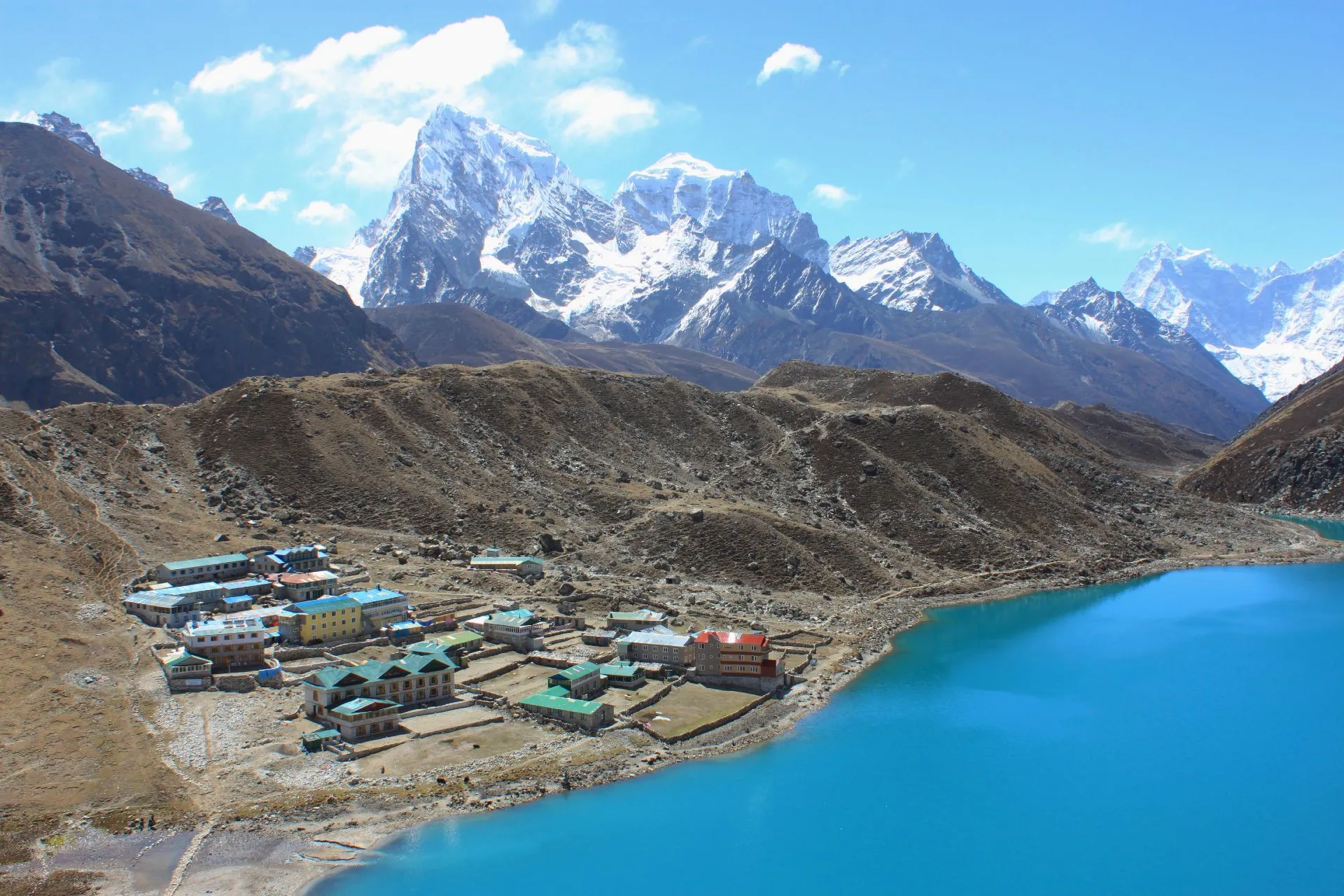
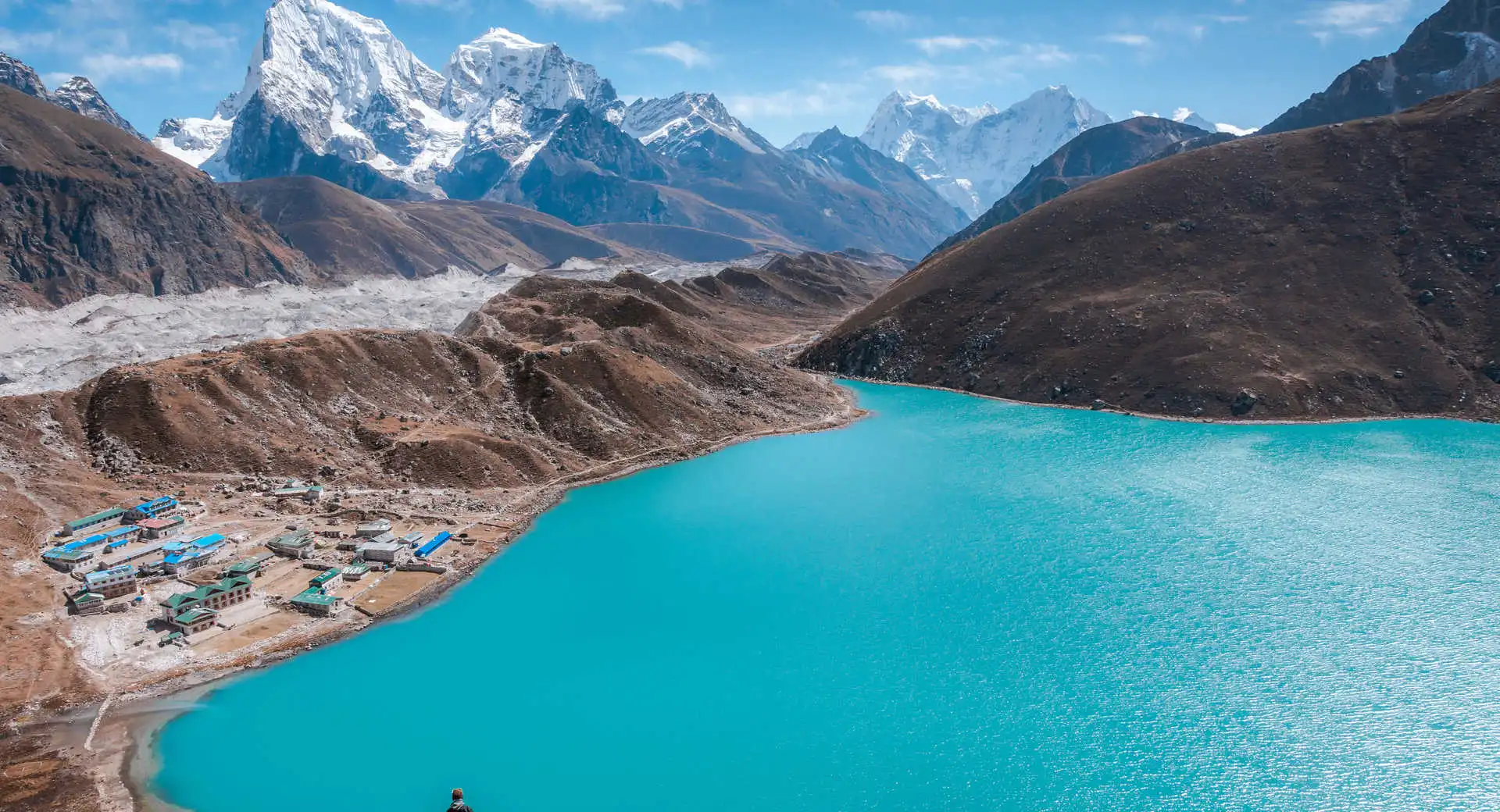
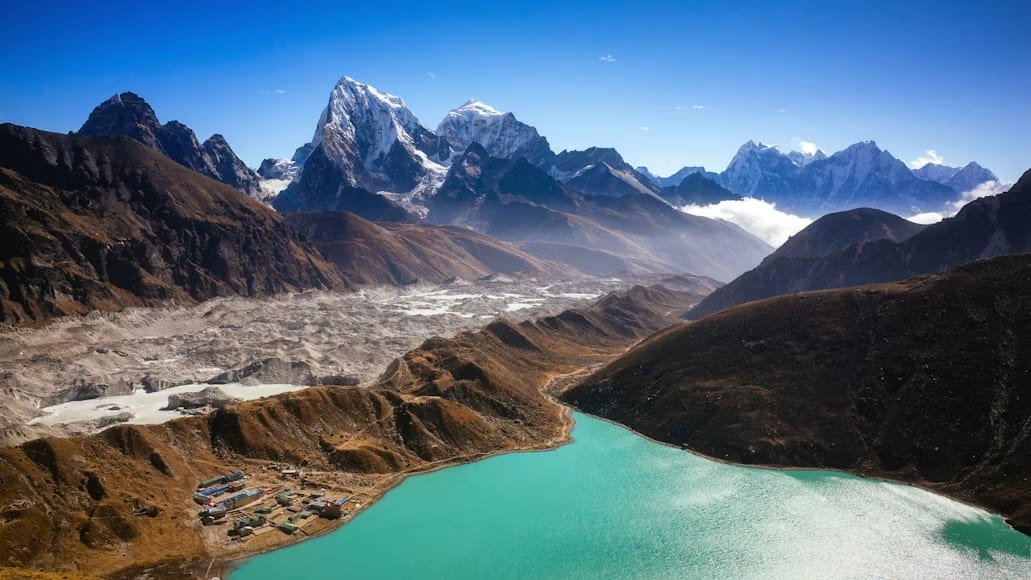
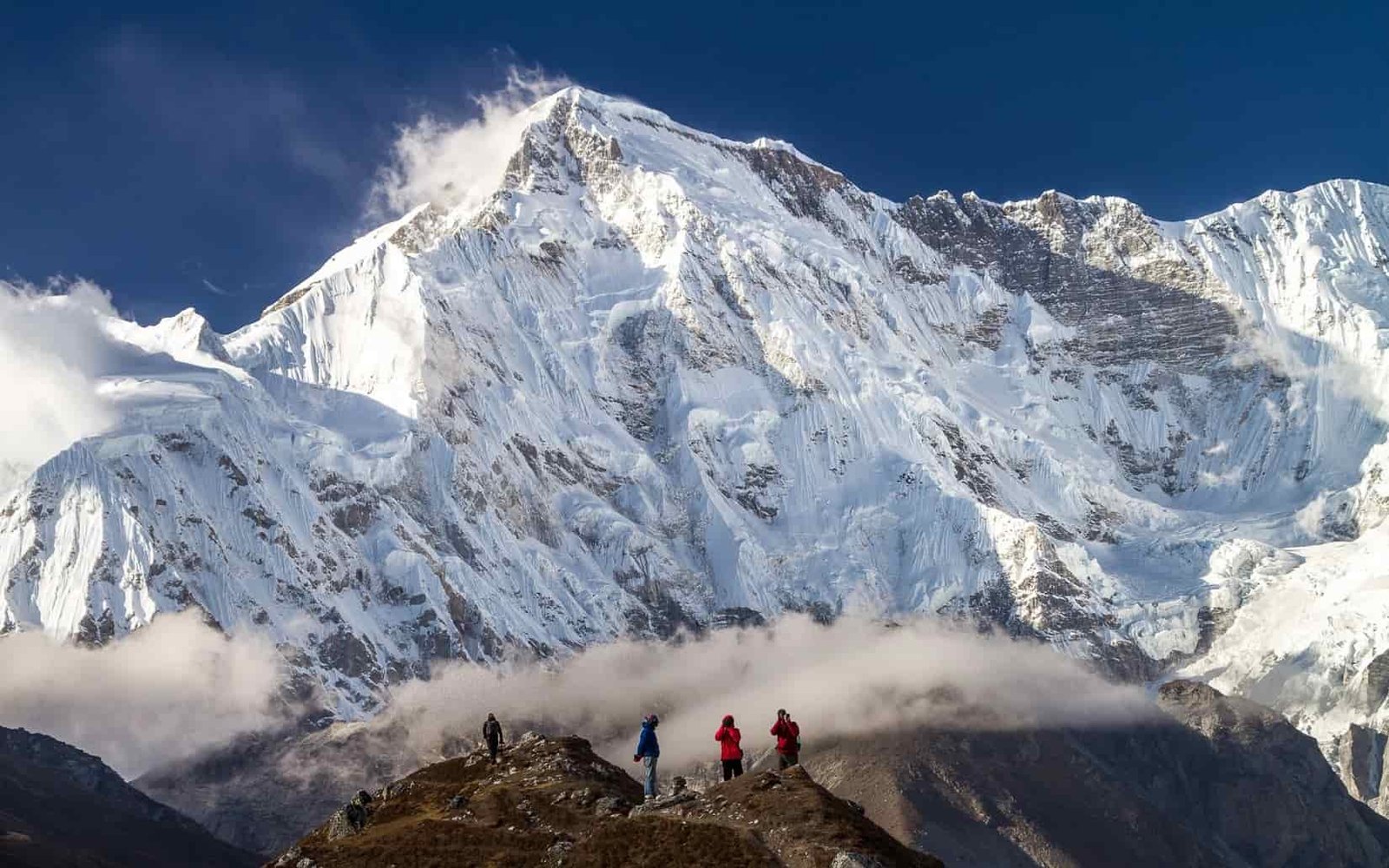
Most travelers dream of standing at the foot of the world’s highest peak. The iconic 14-day Everest Base Camp Trek turns that dream into reality, leading adventurers along the historic footsteps of legendary mountaineers through deep glacial valleys, high suspension bridges, and vibrant Sherpa settlements.

The itinerary climbs steadily through the bustling hub of Namche Bazaar, the spiritual grounds of Tengboche, and the high valleys of Dingboche and Lobuche before reaching Everest Base Camp (5,364m / 17,598ft). The journey reaches its spectacular peak with a sunrise climb up Kala Patthar, providing an unobstructed view of Everest before your return descent.

Trip Info 

  • Lukla Airport, after a scenic flight from Kathmandu/Ramechhap
  • Lukla Airport, followed by a return flight to the city
  • 130 km / 80 miles (total round-trip distance from Lukla)
  • Trekking/Hiking
  • Strenuous
  • March to May and September to November
  • Kala Patthar Viewpoint (5,555m / 18,225ft)
  • 5 to 8 hours
  • Khumbu Permit & Sagarmatha National Park Permit
  • Hotels in Kathmandu; local teahouses on the trail
  • Breakfast, lunch, and dinner during the trek
  • Licensed guide and porter available; 1 porter for 2 trekkers

Why Trek to Everest Base Camp

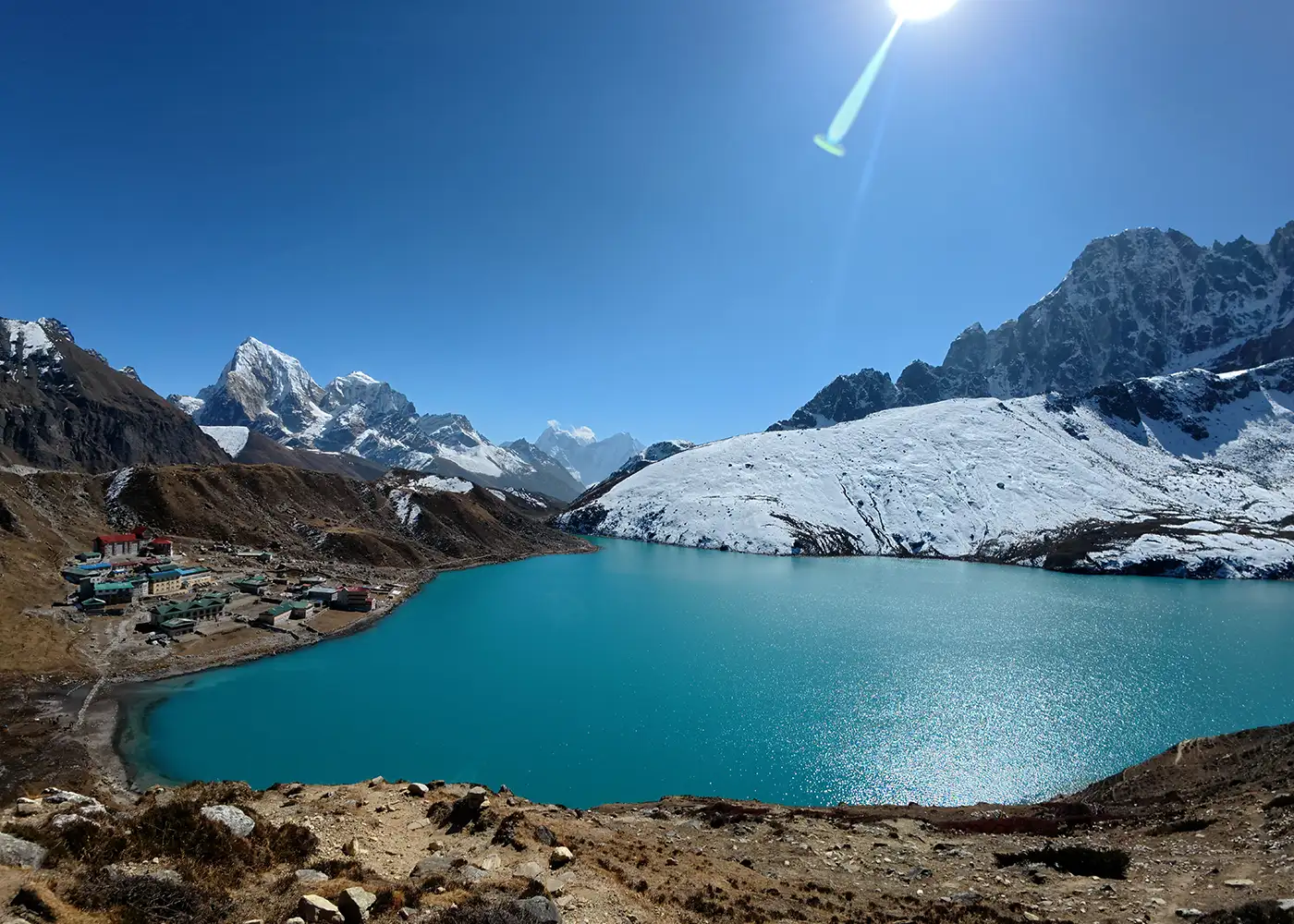
Our 14-day Everest Base Camp Trek takes you on an unforgettable journey from the lush, pine-scented river gorges of the lower Dudh Koshi into the rugged, stark terrain of the high Himalayas. As you pass the high alpine threshold near Dingboche, the landscape shifts into a spectacular display of massive ice walls and towering peaks. 

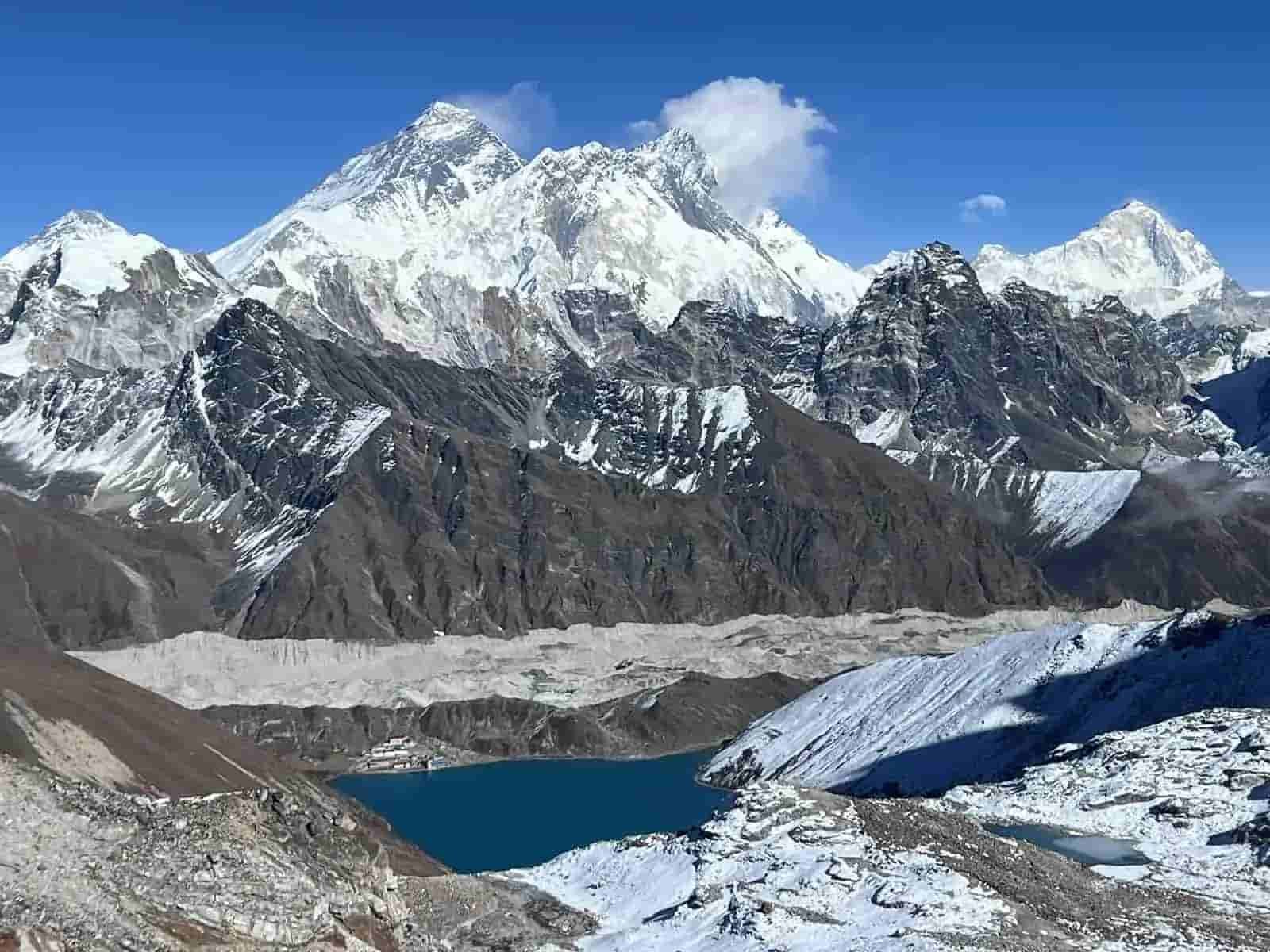
The ultimate reward of your journey comes when you stand on the rocky edge of Everest Base Camp at 5,364m / 17,598ft, right beside the shifting walls of the Khumbu Icefall. Combined with an early morning ascent of Kala Patthar at 5,555m / 18,225ft, which reveals an unmatched sunrise view of Everest, Lhotse, and Nuptse, this trek delivers a profound sense of achievement.

Trek Highlights 

  • Experience the exhilarating mountain flight to Lukla, a dramatic aerial gateway nestled high among the Himalayan ridges.
  • Spend two nights at Namche Bazaar, the vibrant alpine town filled with local bakeries, markets, and mountain views.
  • Stand in the spiritual heart of the Khumbu at Tengboche Monastery, surrounded by views of Ama Dablam.
  • Walk along the lateral moraine of the Khumbu Glacier, passing historic stone memorials dedicated to global climbers.
  • Stand directly at Everest Base Camp at 5,364m / 17,598ft, the famous launching pad for historical mountaineering expeditions.
  • Climb to the summit of Kala Patthar at 5,555m / 18,225ft for the ultimate panoramic view of Mount Everest at sunrise.

Tour Plan

Upon touching down at Tribhuvan International Airport in Kathmandu, our team will greet you outside the arrival terminal, handle your luggage, and drive you directly to your hotel in a private vehicle. After checking in, take some well-deserved time to freshen up, rest, and recover from your international flight.

In the evening, you can head out for a relaxed introductory walk through the colorful shops and cafés of Thamel. We will conduct a concise trip briefing and gear check this night before our early flight to the mountains the next morning.

  • Trip duration: 25 to 30 minutes for airport transfer

Note: Keep your passport, insurance details, and three passport photos handy this evening so our team can verify your trekking documentation.

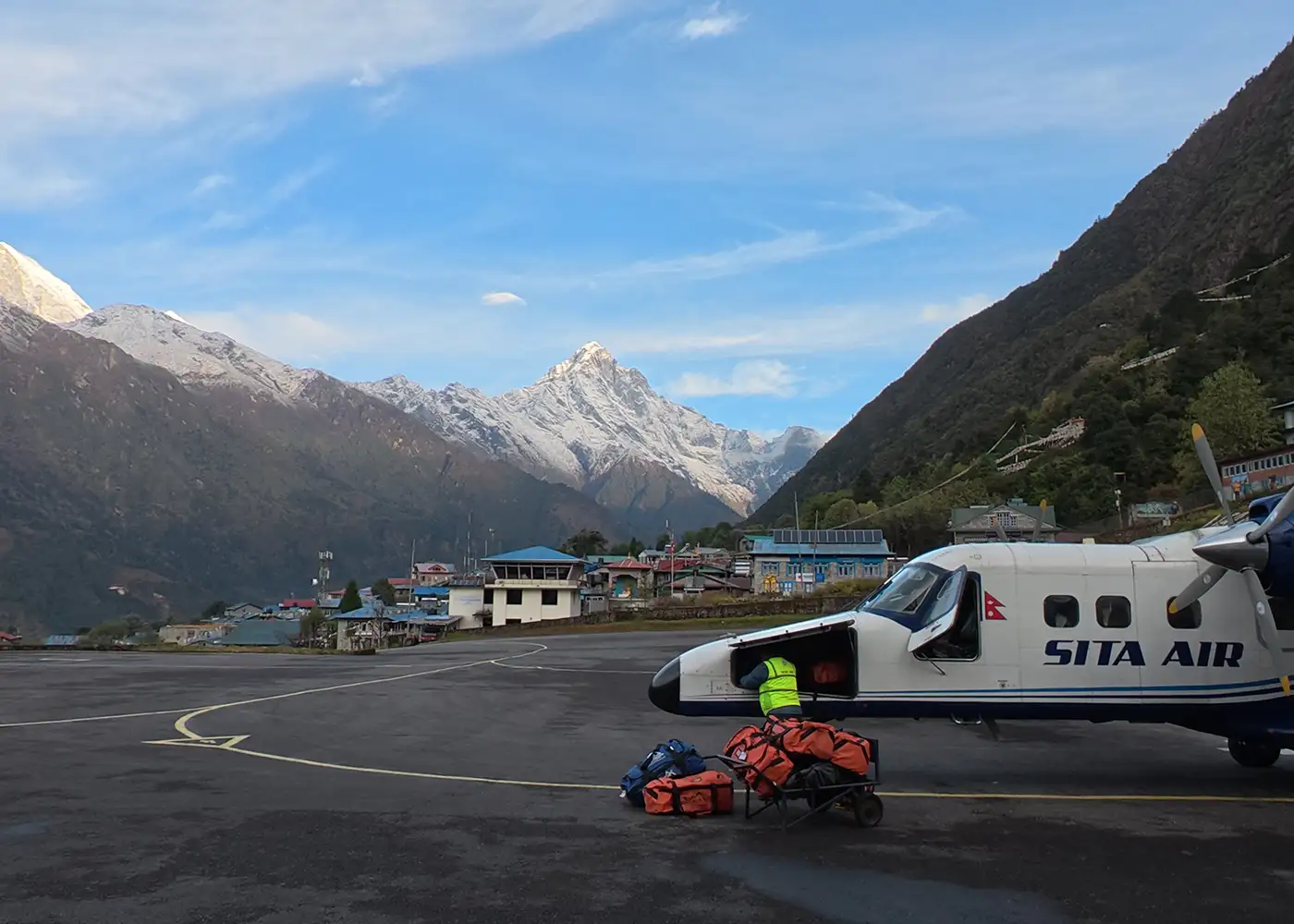
Following an early morning transfer to the airport, you board a scenic, thrilling twin-otter flight to Lukla. The 35-minute aerial journey cuts through rolling green hills and reveals distant views of snow-capped peaks before landing cleanly at the mountain airstrip of Tenzing-Hillary Airport.

Once on the ground, your guide introduces you to your porter team, and you take your official first steps onto the trail. The path begins with an easy, gradual descent past prayer walls and small farming hamlets, following the bright blue waters of the Dudh Koshi River down to the overnight stop at Phakding.

  • Flight duration: 35 minutes

  • Trek duration: 3 to 4 hours

  • Trek distance: 8 km / 5 miles

  • Maximum altitude: 2,860m / 9,383ft

  • Elevation loss: -250m / -821ft

Note: Depending on the trekking season, flights to Lukla may operate from Ramechhap Airport (a 4-hour drive from Kathmandu) to avoid capital city air traffic.

You leave Phakding after breakfast, tracing the banks of the river through sweet-smelling pine forests. The trail crosses several high suspension bridges draped in colorful prayer flags, weaving through small villages like Monjo, where we formally register your entry permits for Sagarmatha National Park.

After crossing the final, spectacular Hillary Suspension Bridge hanging high above the river fork, the trail throws its first big challenge at you. You face a sustained, steep uphill climb on dirt paths and stone steps that test your lung capacity before finally bringing you into the crescent-shaped mountain town of Namche Bazaar.

  • Trek duration: 5 to 6 hours

  • Trek distance: 12.3 km / 7.6 miles

  • Maximum altitude: 3,440m / 11,286ft

  • Elevation gain: +830m / +2,724ft

Note: This is your first major exposure to high altitude. Pace your steps very slowly and drink plenty of water to help your body adapt.

To ensure safety and comfort over the coming week, today is set aside as a mandatory active rest day. Staying active helps your body adjust to thin air much better than resting inside a teahouse all day, so we embark on a panoramic morning hike.

We climb the ridge up to the historic Everest View Hotel at 3,880m (12,730ft), where you can sit on the terrace and enjoy hot tea while taking in your very first clear look at Everest, Lhotse, and Ama Dablam. Afterwards, you descend back to Namche to browse the mountain shops, visit the Sherpa cultural museum, or enjoy a coffee at a local bakery.

  • Hike duration: 4 to 5 hours

  • Hike distance: 7.2 km / 4.5 miles

  • Maximum altitude: 3,880m / 12,730ft

Note: Do not skip this acclimatization hike. Reaching a higher altitude and returning to sleep lower is the golden rule of mountain safety.

You leave the Namche amphitheater along a wide, scenic trail carved smoothly into the mountainside. This section offers dramatic views of the peaks before dropping steeply down through rhododendron forests to the riverside settlement of Phunki Tenga for a hot lunch.

Following lunch, you cross a final bridge and begin a long, steady afternoon climb under a canopy of pine and fir trees. The trail opens up onto a high mountain ridge, revealing the stone gateway of Tengboche Monastery, the spiritual centerpiece of the valley, backed by an absolute wall of snow and ice.

  • Trek duration: 5 to 6 hours

  • Trek distance: 10.7 km / 6.6 miles

  • Maximum altitude: 3,860m / 12,664ft

  • Elevation gain: +420m / +1,378ft

The morning starts with a gentle descent through moss-draped birch forests to Deboche, crossing a rushing gorge of the Imja Khola. From here, you walk past long mani walls to reach Pangboche village, where the local stone houses sit in the shadow of the soaring Ama Dablam peak.

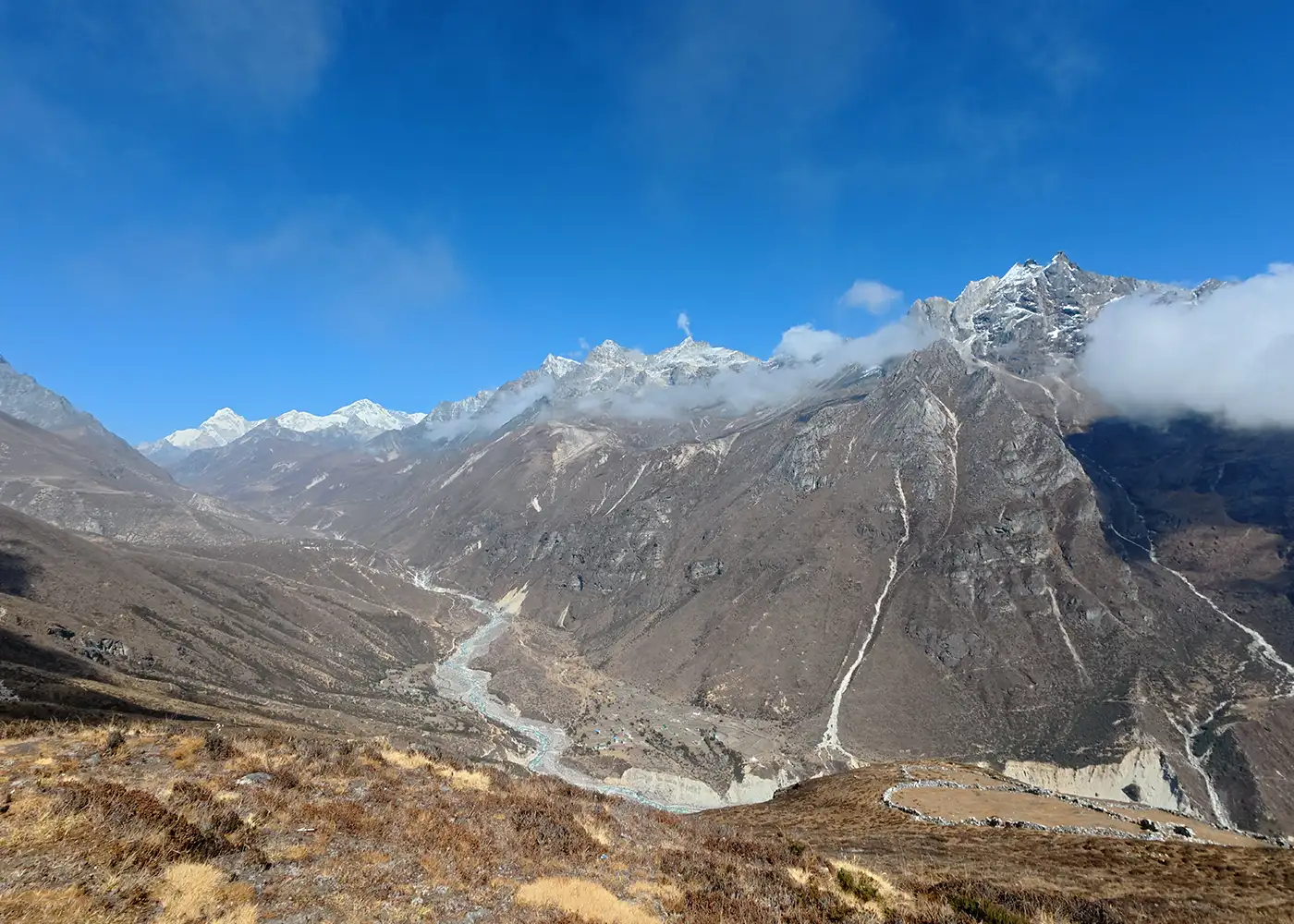
As you push past Pangboche, you will notice a distinct shift in the geography. The last remaining trees drop away completely, replaced by low alpine shrubs and dry, open grass plains. The trail climbs gradually but steadily into the wide Imja Valley, bringing you to the high stone-walled fields of Dingboche.

  • Trek duration: 5 to 6 hours

  • Trek distance: 10.8 km / 6.7 miles

  • Maximum altitude: 4,410m / 14,468ft

  • Elevation gain: +550m / +1,804ft

Note: You are now crossing well above the 4,000-meter mark. The air will feel significantly thinner and colder from this point forward.

This is your second mandatory physiological adaptation window. To prepare your body for the push past 5,000 meters, we spend another day practicing our active recovery routine to stimulate additional red blood cell production.

Your guide will lead you up a steep, challenging ridge toward Nangkartshang Peak, climbing to an elevation of approximately 4,730m or higher. This high vantage point rewards your effort with breathtaking views of Makalu (the world’s fifth-highest peak), Island Peak, and the massive ice walls of Lhotse before you descend back to Dingboche for a warm afternoon rest.

  • Trek duration: 4 to 5 hours

  • Trek distance: 5.2 km / 3.2 miles

  • Maximum altitude: 4,730m / 15,518ft

Note: Keep your hydration levels high today by drinking an extra liter of water or tea, even if you do not feel actively thirsty.

You leave Dingboche along a high, wind-swept trail that cuts gently across the wide alpine valley. The path leads you to the small cluster of huts at Thukla, where you stop for an early lunch to build up your energy before tackling the steep slope ahead.

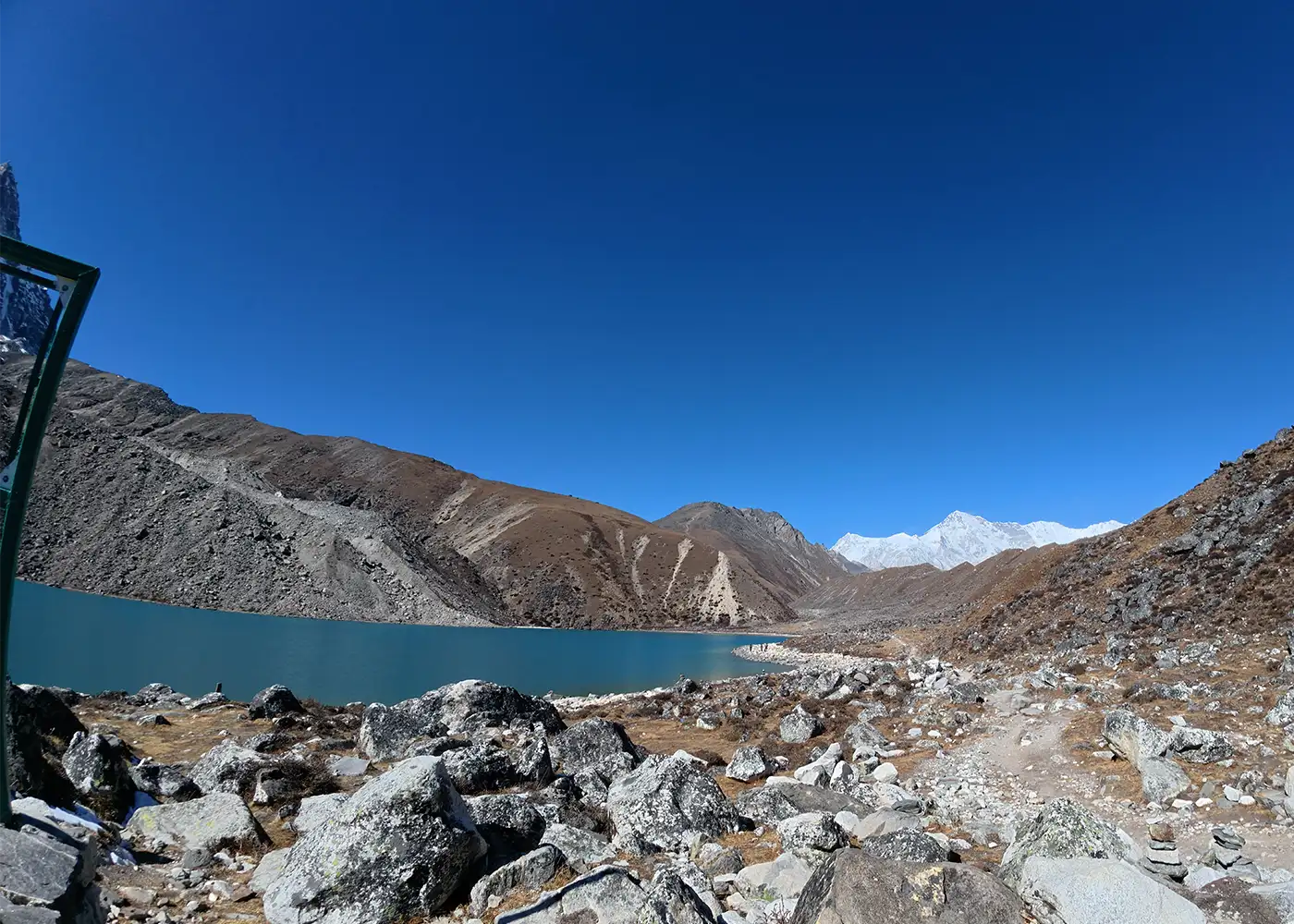
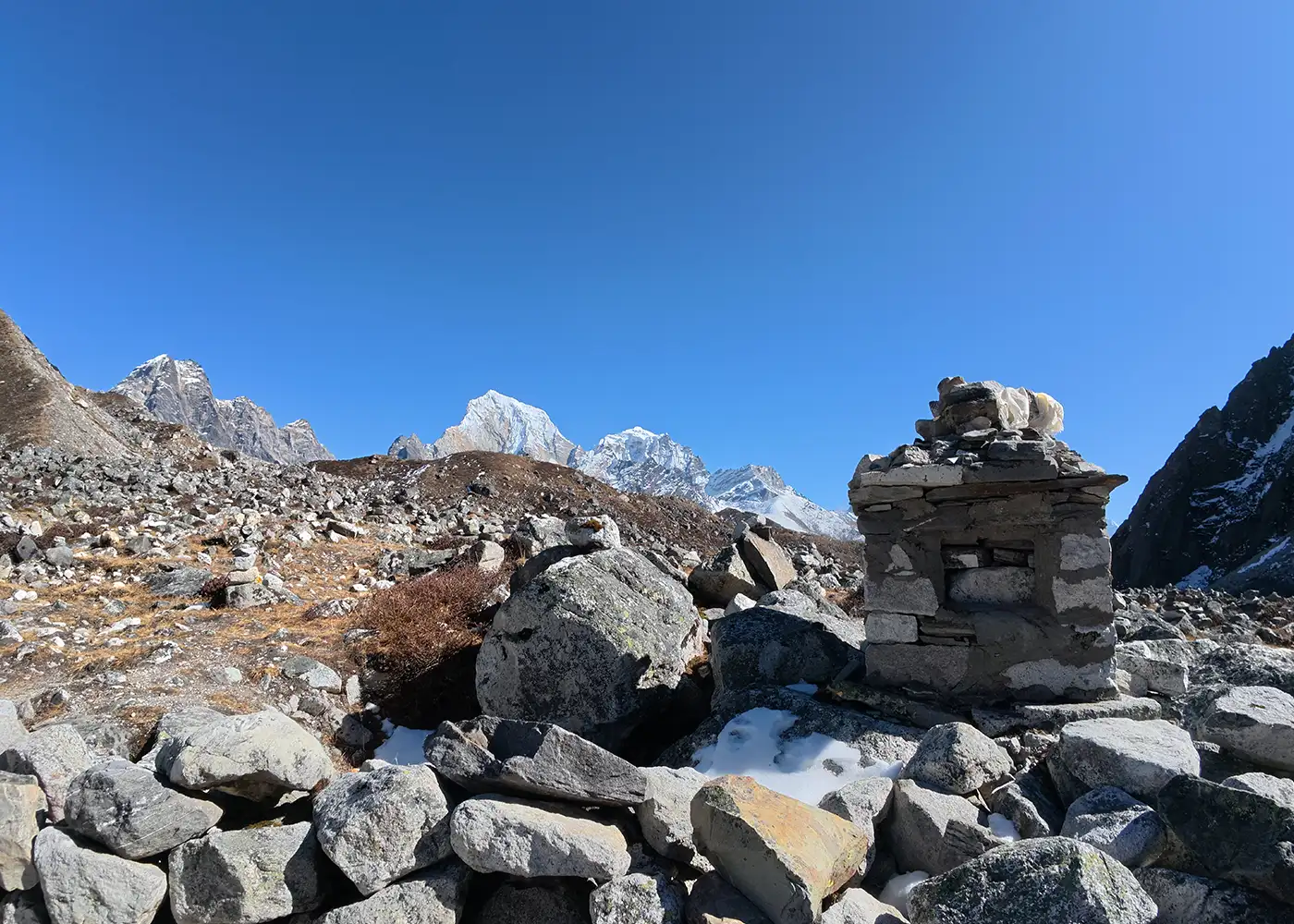
Following lunch, you climb the challenging Thukla Pass, a steep terminal moraine of the Khumbu Glacier. At the crest of the pass, you walk through a deeply moving collection of stone memorials dedicated to the climbers who have lost their lives on Everest. From here, the trail levels out onto a rugged, boulder-filled landscape that leads to the high outpost of Lobuche.

  • Trek duration: 5 to 6 hours

  • Trek distance: 8.8 km / 5.4 miles

  • Maximum altitude: 4,910m / 16,108ft

  • Elevation gain: +500m / +1,640ft

Note: Ensure your warm beanie and windproof gloves are easily accessible, as the wind cutting across the Khumbu glacier here is exceptionally cold.

This is the long-awaited highlight of the entire expedition. You start very early from Lobuche, weaving through loose shale paths and frozen moraine ridges along the edge of the active glacier to reach Gorak Shep, the highest lodging outpost on earth, where we stop briefly to check into rooms.

Leaving your heavy gear behind, you pack your daypack and set out for the final push to Everest Base Camp. The trail twists across rocky moraine waves until you finally drop down onto the glacier itself. Standing at 5,364m, surrounded by prayer flags, towering ice blocks, and the massive Khumbu Icefall, you celebrate reaching EBC before walking back to Gorak Shep for the night.

  • Trek duration: 8 to 9 hours

  • Trek distance: 11.5 km / 7.1 miles

  • Maximum altitude: 5,364m / 17,598ft

  • Elevation gain: +454m / +1,490ft

Note: Walk deliberately and at a slow, measured pace today. Navigating loose glacial rock above 5,000 meters requires absolute concentration.

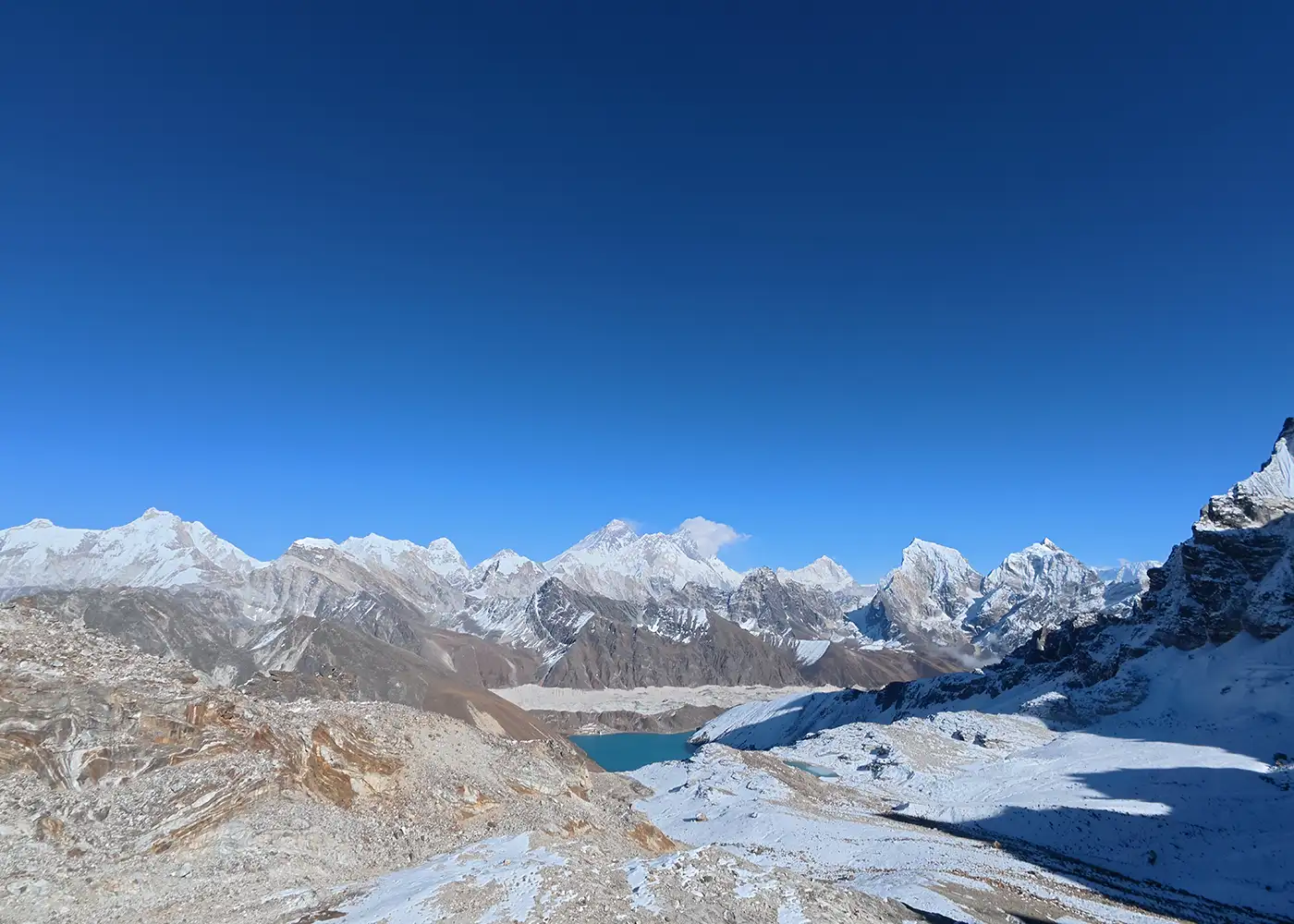
Your day starts with a pre-dawn wake-up call in freezing temperatures. Under the light of your headlamp, you tackle the steep, challenging switchbacks up the dark slopes of Kala Patthar, pushing through the cold air to reach the summit at 5,555m (18,225ft), the absolute highest point of the trip.

From this rocky peak, you are rewarded with the ultimate view of Mount Everest, standing completely unobstructed as the morning sun rises directly behind its massive black pyramid. After taking your photos, you descend to Gorak Shep for a hot breakfast, pack your bags, and begin a long, knee-jarring downward trek out of the high zone to the windy village of Pheriche.

  • Trek duration: 7 to 8 hours

  • Trek distance: 17.2 km / 10.6 miles

  • Maximum altitude: 5,555m / 18,225ft

  • Elevation loss: -1,315m / -4,314ft

Note: The descent brings a rapid increase in oxygen levels. Your legs will feel instantly lighter, and your breathing will become much deeper as you drop altitude.

Leaving Pheriche, you cross the river valley and follow a familiar trail down past Pangboche. You cross back over the Imja Khola gorge and tackle a short, warm uphill climb through the trees to re-enter the grounds of Tengboche Monastery for a quick rest.

From Tengboche, you plunge straight down through the rhododendron forests to the bottom of the valley at Phunki Tenga. The final leg of the day winds smoothly back along the high panoramic cliffs, eventually bringing you back into the familiar, welcoming streets of Namche Bazaar.

  • Trek duration: 7 to 8 hours

  • Trek distance: 19.7 km / 12.2 miles

  • Maximum altitude: 3,440m / 11,286ft

  • Elevation loss: -800m / -2,624ft

Your final day of trekking is a long but rewarding one. You exit Namche Bazaar and begin a steep descent down the rocky staircase to the Hillary Suspension Bridge, leaving the high park boundary behind. The trail follows the roaring river valley southward through Monjo and Phakding.

The air feels warm, thick, and full of life as you pass local farms and forests. The trek finishes with one last, gradual uphill push that brings you back up to the stone gates of Lukla, where you enjoy a final celebratory dinner with your guide and porter team to thank them for their incredible support.

  • Trek duration: 7 to 8 hours

  • Trek distance: 19.9 km / 12.3 milest

  • Maximum altitude: 3,440m / 11,286ft

  • Elevation gain/ loss: -580m / -1,903ft

Note: Gather all your personal gear tonight and double-check your packing before the domestic flight back to the city the next morning.

You head to the Lukla airstrip early this morning to board your return twin-otter flight. Saying a final goodbye to the Khumbu peaks, you take off and enjoy a smooth 35-minute scenic flight back across the terraced middle hills of Nepal.

Upon landing, our private vehicle meets you at the airport and drives you directly back to your hotel. The remainder of your afternoon is completely free to relax, catch up on laundry, or enjoy some easy shopping along the lively streets of Thamel. In the evening, we gather for a final farewell dinner to celebrate your successful expedition.

  • Flight duration: 35 minutes

  • Maximum altitude: 2,860m / 9,383ft

  • Elevation loss: -1,460m / -4,790ft

Note: High-altitude mountain flights are highly dependent on weather conditions. Your guide will keep you updated on any scheduling variations.

The morning is left open and flexible for you to rest at your hotel, pack your bags, or take one final walk around Thamel to pick up local gifts, tea, or souvenirs.

Our team will meet you at your hotel lobby according to your international flight schedule and transfer you to Tribhuvan International Airport in a private vehicle. As you head to the departure terminal, your 14-day Everest Base Camp Trek comes to an end.

  • Trip duration: 25 to 30 minutes for airport transfer

Note: Ensure you are packed and ready to leave your hotel lobby approximately 3.5 hours prior to your international flight time to guarantee smooth check-in logistics.

Cost Includes

Cost Excludes

Trekking Feasibility
Calculating...
Projections represent historical trends and general seasonal elevation conditions.
Route Stop & Elevation
Daytime (Sunny)
Nighttime (Cold)

Note: These temperatures represent the peak trekking seasons (Spring from March to May and Autumn from September to November). High-altitude weather can change rapidly.

The best times for the Everest Base Camp Trek are during the spring (March to May) and autumn (September to November) seasons. Spring rewards trekkers with longer daylight hours, warmer trail temperatures, and exceptional displays of red and pink rhododendrons blooming across the lower national park paths. Autumn provides highly reliable, clear skies, exceptionally crisp morning air, and unmatched visibility that showcases the massive ice walls of Nuptse, Lhotse, and Everest perfectly.

Winter journeys (December to February) are possible for experienced hikers seeking quiet trails, though temperatures drop drastically to sub-zero levels and upper routes feature thick snow. The summer monsoon window (June to August) is generally the least optimal choice, as heavy cloud cover blocks mountain views and wet weather causes frequent flight delays to and from Lukla.

Lodging along this world-famous route consists of established, family-operated trail teahouses. While you will enjoy standard 3-star city hotels in Kathmandu, trail accommodations are simpler but comfortable. Rooms typically feature wooden beds, clean sheets, and heavy quilts, with bathroom facilities generally being shared across the hallway. Many lodges in lower hubs like Namche offer attached bathrooms for an extra fee.

Menus on the trail are simple meals to power your daily steps. Options include the signature Nepali Dal Bhat, alongside fried noodles, garlic soups, egg scrambles, pancakes, pasta bakes, and hot teas. As you push above the 4,000-meter mark past Dingboche, meat products are discouraged due to local cultural protections, making personal high-energy snacks like protein bars and nuts highly useful.

The Everest Base Camp Trek is rated as a strenuous wilderness walk. You do not require technical mountaineering experience, ropes, or climbing equipment, but you must possess a good level of cardiovascular fitness and the endurance to tackle steep, uneven trails for multiple hours daily.

The specific challenge of this trek lies in its sustained altitude profile. You will spend several days walking and sleeping above 4,000 meters, culminating in a high point of 5,555 meters at Kala Patthar. Navigating rocky glacial moraines, crossing steep suspension bridges, and climbing rocky paths in thin air requires a controlled, steady pace and strong leg conditioning.

The trail transitions from warm, humid lower valleys to freezing, sub-zero alpine conditions at base camp. Pack light, but carry enough warm layers and trekking gear for changing weather and long walking days.

Start Your Everest Base Camp Journey with Us

Ready to experience historical Sherpa villages, high glacial valleys, and the ultimate close-up views of Mount Everest? Let our team help you plan your 14-day Everest Base Camp Trek with reliable service, expert local guidance, and full support throughout the journey.

Frequently Asked Question

Is the Everest Base Camp Trek difficult?

The Everest Base Camp Trek is considered a strenuous trek due to the high altitudes reached and the multi-day nature of the walk. While no technical climbing experience is required, you must be in good physical health and capable of walking for 5 to 8 hours daily over steep, rocky, and uneven terrain. Building your stamina through cardiovascular and leg-strength training prior to arrival is highly recommended.

Yes, the EBC trek is completely achievable for fit beginners, provided they choose a well-paced 14-day itinerary that contains proper acclimatization days. Rushing the elevation gain is the primary mistake made on this route. Booking with an experienced local guide ensures that your walking pace is carefully monitored and your daily safety is prioritized.

The Everest Base Camp Trek is generally more challenging than the Annapurna Base Camp Trek. EBC reaches a significantly higher maximum altitude (5,555m compared to ABC’s 4,130m) and requires spending multiple nights sleeping above 4,000 meters in colder, thinner air. While ABC features more continuous steep stone stairs, EBC presents a more sustained high-altitude challenge.

Our guides are fully certified in mountain first aid and monitor your oxygen saturation and heart rate daily. If you display early signs of mild altitude sickness, your guide will halt your ascent and have you rest or drop to a lower elevation. In severe cases, our team manages all emergency protocols, including immediate helicopter evacuation to a Kathmandu hospital.

Interestingly, when you stand directly at Everest Base Camp, the actual summit of Everest is obscured by the massive looming ridge of Nuptse. To secure the classic, unobstructed view of the entire peak from base to summit, we climb the adjacent viewpoint of Kala Patthar, which offers the premier panoramic view of the massif.

Yes, most teahouses along the EBC trail offer internet access via prepaid cards and have communal solar or generator charging stations. However, teahouse owners charge a separate fee for these services, which increases as you climb higher up the valley.

We recommend budgeting roughly $25 to $35 USD equivalent in cash per day in Nepali Rupees to cover personal travel expenses. This cash is used to purchase bottled water, hot showers, device charging, Wi-Fi access, bakery treats, and evening hot drinks that are not included in your standard tour inclusions.

Yes, travel insurance is strictly mandatory for all trekkers booking with us. Your policy must be explicitly verified to cover mountain trekking up to an elevation of 6,000 meters and must include comprehensive coverage for emergency medical helicopter evacuation.

The best preparation for the EBC trek involves building solid aerobic endurance. Focus on regular cardiovascular training such as long-distance walking, running, swimming, or cycling 3 to 4 months before your trip. Additionally, practicing regular stair-climbing or hiking on steep hill trails with a loaded daypack will excellently prepare your legs for the terrain.

Ready to Walk into the Home of the World’s Highest Peaks?

Tell us your travel dates, group size, and trekking experience. Our local team will help you shape a comfortable 14-day Everest Base Camp Trek with clear support for permits, transport, pacing, meals, and teahouse stays.