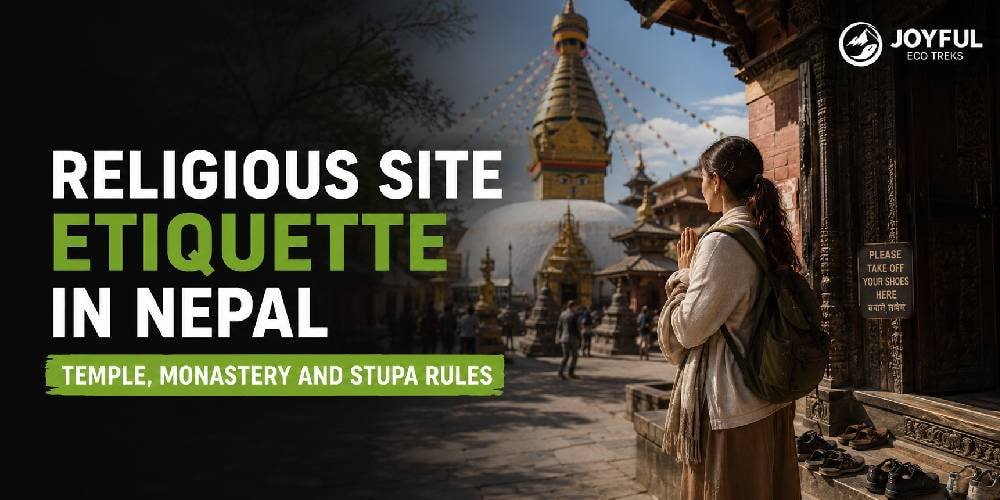
Visiting a temple, monastery, mosque, or church in Nepal often brings simple questions. Should you remove your shoes, take photos, join a prayer, or wait outside? Without clear guidance, even a respectful visitor can feel unsure about what to do.
Religious site etiquette in Nepal is simple once you understand the basic rules. Dress modestly, move quietly, respect worshippers, and ask before entering a restricted space or joining a ceremony.
This guide explains what to wear, how to behave, where photography is allowed, and how to handle offerings, donations, prayers, and religious services. It helps you visit sacred places with confidence while respecting the people who worship there.
- Religious site etiquette in Nepal begins with modest clothing, quiet behavior, footwear removal where required, and attention to entrance notices.
- Before going inside, silence your phone, leave doorways clear, and speak with a monk, priest, caretaker, staff member, or religious leader when something is unclear.
- At Hindu temples, respect offerings and access limits. At Buddhist sites, walk clockwise around stupas and turn prayer wheels gently.
- At mosques, remove your shoes before entering the prayer hall and respect prayer times. At churches, enter quietly and avoid disturbing services.
- Photography rules differ by location, while offerings and donations remain optional. Always follow the method approved by the religious site.
General Religious Site Etiquette in Nepal
Temples, monasteries, mosques, and churches remain active places of worship. Following basic religious site etiquette in Nepal helps you visit these places respectfully without disturbing prayers, rituals, or worshippers.
1. Dress Modestly
Wear clothes that cover your shoulders and knees. Long pants, loose trousers, longer skirts, and simple tops work well for both men and women.
Avoid short shorts, crop tops, transparent clothing, and beachwear. Carry a light scarf or shawl when extra coverage is required. Remove hats or caps when signs, staff, or local practice require it, especially inside prayer halls and inner shrines.
Source: Wikimedia Commons
2. Remove Shoes Where Required
Look for shoe racks, footwear beside the doorway, or a notice near the entrance. These signs usually show where you need to leave your shoes.
Many inner shrines, monastery halls, and mosque prayer areas require footwear removal. The rule does not always cover the entire outdoor complex. Place your shoes in the designated area instead of leaving them in a doorway or walking path.
3. Read the Signs at the Entrance
Entrance instructions often explain visiting hours, access limits, clothing rules, footwear areas, tickets, and photography restrictions.
Respect barriers and closed sections even when a door appears open. Some spaces remain reserved for worshippers, religious leaders, or members of a particular faith. At Pashupatinath, non-Hindus may visit the surrounding ghats and public areas but cannot enter the main sanctum. Other temples follow different limits.
4. Keep Your Phone Silent
Silence calls, messages, music, and video sounds before entering a worship area. Noise interrupts prayer, meditation, sermons, and chanting.
Step outside when you need to answer an urgent call. Avoid speakerphone conversations, video calls, and loud recordings.
5. Keep Entrances and Prayer Paths Clear
Leave doorways, stairs, aisles, and prayer paths open. Worshippers and religious leaders need these routes to move through the site.
Step to the side when you stop to look at artwork or read a notice. Do not sit on altars, shrine platforms, temple thresholds, or raised areas reserved for religious use.
6. Respect Religious Leaders and Worshippers
Do not interrupt someone who is praying, bowing, meditating, receiving a blessing, or listening to a service. Wait until the person has finished before speaking.
Give monks, priests, imams, pastors, and other religious leaders enough space to carry out their duties. Ask before starting a conversation or taking a photograph.
7. Do Not Touch Sacred Objects or Texts
Leave statues, religious books, lamps, paintings, bells, offering bowls, and ceremonial items untouched unless someone invites you.
Do not place your phone, bag, food, or other belongings on religious texts, altars, or raised platforms. These objects and spaces are used for worship.
8. Avoid Unsuitable Behavior in Worship Areas
Do not smoke, drink alcohol, chew gum, or eat ordinary snacks inside prayer halls or near active shrines. Prasad is different because it forms part of worship.
Avoid kissing, intimate touching, and other displays of affection inside worship areas.
Religious Site Etiquette in Nepal by Faith
Religious site etiquette in Nepal becomes especially important during prayers, rituals, festivals, and public ceremonies, when sacred areas may be crowded and active.
1. Hindu Temple Customs
Hindu temples range from small roadside shrines to large pilgrimage complexes. Worship methods and entry limits change between locations.
1.1. Give Offerings and Receive Tika or Prasad Properly
Use your right hand or both hands when giving flowers, money, or other offerings. Receive prasad in the same way and treat it carefully because it is food blessed during worship.
Tika is usually placed directly on your forehead. You may cup both hands below your chin to catch any rice, flowers, or powder that falls. Remain still while it is applied, or decline politely before the blessing begins.
1.2. Do Not Step Over Offerings
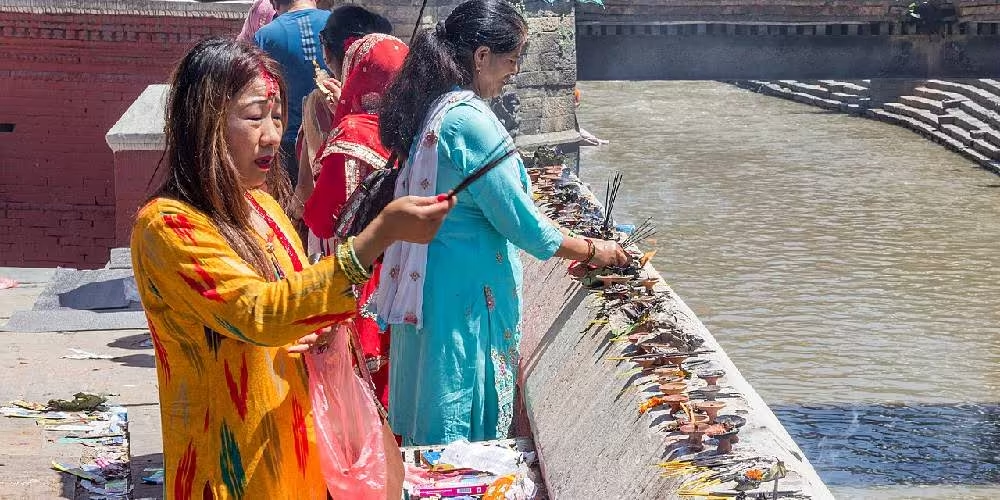
Flowers, rice, incense, oil lamps, food, and colored powder often sit near statues, steps, or doorways. Walk around these items rather than crossing over them.
Even a small object on the ground can be a part of worship. Watch your footing closely in crowded courtyards.
1.3. Etiquette Near Cremation Ghats
Some Hindu sites, including Pashupatinath, contain cremation ghats where families perform funeral rites.
Remain within the designated public viewing area and keep your voice low. Do not approach grieving families or take close photographs. Treat the ceremony as a private farewell rather than a tourist attraction.
2. Buddhist Monastery and Stupa Customs
Buddhist sites include stupas, monasteries, meditation centers, and prayer halls. Their open surroundings do not remove their religious importance.
2.1. Walk Clockwise Around Stupas
Walk clockwise around a stupa while keeping the structure on your right. Monks, pilgrims, and nearby worshippers usually move in the same direction.
In Tibetan Buddhist traditions, this clockwise prayer walk is commonly called kora.
2.2. Turn Prayer Wheels Clockwise
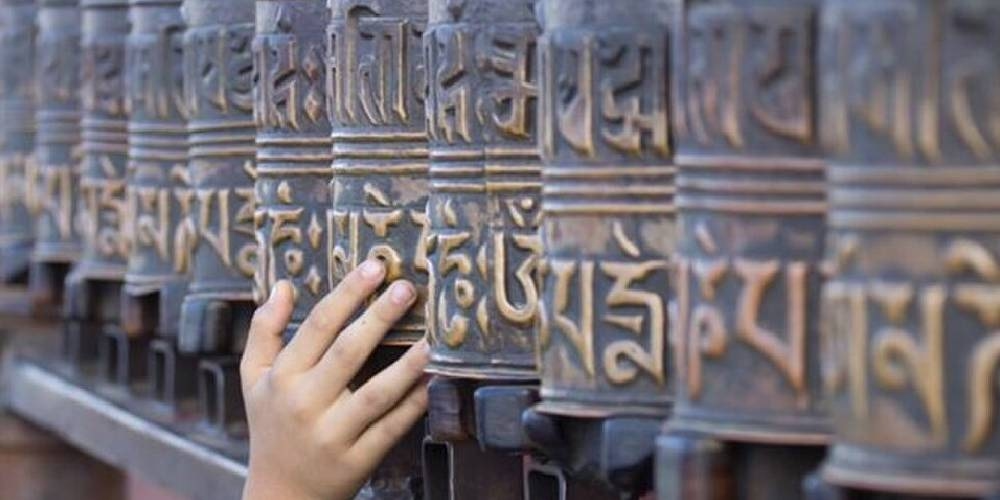
Move prayer wheels gently in a clockwise direction. Turn each wheel with care instead of pulling hard or spinning it rapidly.
These wheels contain written mantras and hold deep meaning for Buddhist worshippers. They should not be treated as toys or photography props.
Source: Wikimedia Commons
3. Mosque Customs
3.1. Cover Your Head Where Required
Some mosques ask women to cover their hair inside the prayer area. Carrying a light scarf helps you follow this custom when required.
Men should wear modest clothing and avoid sleeveless tops or very short trousers. Follow the clothing guidance displayed at the entrance.
3.2. Use the Assigned Prayer Area
Some mosques have separate prayer spaces for men and women. Use the section shown by entrance signs, mosque staff, or the person welcoming visitors.
Do not enter another area simply because it appears empty. These arrangements form part of the mosque’s worship practice.
3.3. Do Not Walk in Front of Someone Praying
Avoid crossing directly in front of a person performing prayer. Wait until the person has finished or pass behind them.
When group prayer is underway, wait near the entrance unless mosque staff welcome you farther inside.
4. Church Customs
4.1. Follow Standing, Sitting, and Kneeling With Care
Church services may include standing, sitting, and kneeling at different times. You may follow the congregation when you feel comfortable.
Remaining seated quietly is also acceptable when you are unsure. You do not need to copy every action around you.
4.2. Ask Before Receiving Communion
Communion rules differ between Christian traditions and individual churches. Ask a clergy member or church representative before joining the line.
When you are not invited to participate, remain seated quietly or follow the guidance provided by the church.
Etiquette During Prayers, Rituals, Festivals, and Services
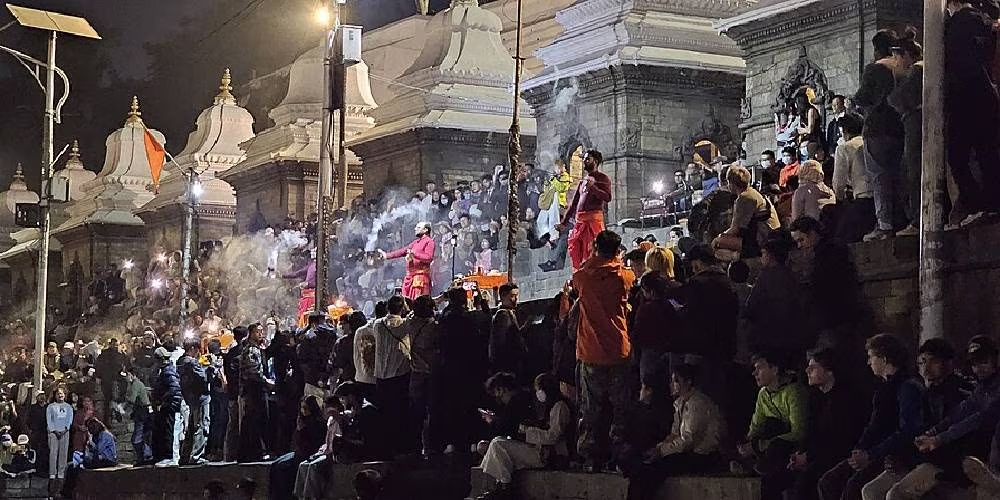
Religious events often include chanting, bells, lamps, music, movement, and large crowds. Many public ceremonies allow respectful observation, but worshippers should remain the main focus.
1. Stand or Sit Behind Worshippers
Choose a place behind the main group or along the side of the gathering. This lets you watch without taking up the space needed by people joining the ceremony.
Leave the area in front of the altar, prayer space, religious leader, or sacred image open. People carrying flowers and lamps also need room to pass.
Source: Wikimedia Commons
2. Keep Your Voice Low
Speak softly during worship ceremonies, chanting, meditation, and aarti, a prayer performed with lamps. Save longer conversations for the courtyard or exit area.
Remain silent during periods of quiet prayer or meditation. Notice the mood of the room before speaking.
3. Do Not Cross an Active Ritual
Do not walk between worshippers and an altar, shrine, prayer area, or religious leader. Wait for a pause or move around the outside.
Do not walk between worshippers and an altar, shrine, prayer area, or religious leader. Wait for the ritual to finish or move around the outside.
4. Join Only When Invited
Avoid copying each action simply because others are doing it. Some practices welcome everyone, while others are meant for regular worshippers.
When invited to light a lamp, receive tika, accept prasad, or join a chant, listen carefully to the instructions. You may also decline with a smile and a polite Namaste.
5. Follow Crowd Rules During Festivals
Festivals often bring longer lines, closed entrances, and temporary walking routes. Move with the crowd and follow directions from priests, monks, volunteers, police, or site workers.
Keep your belongings close and avoid stopping in the middle of a busy path. Give older visitors, families, and worshippers enough room.
6. Use Respectful Body Language
Avoid pointing your feet toward an altar, touching another person’s head, stepping over someone, or climbing onto a religious platform.
Use an open hand instead of pointing one finger toward a deity. Public affection should also remain limited inside worship areas.
Photography and Video Rules at Religious Sites
Photography is an important part of religious site etiquette in Nepal because rules change between courtyards, inner rooms, ceremonies, and prayer halls. Always check before taking pictures or recording videos.
1. Check Signs Before Taking Photos
Look for camera symbols or written notices before using your camera. An outdoor courtyard may allow pictures while the room beside it bans them.
Do not rely on an old blog, social media post, or another visitor. The instructions displayed at the site are the ones you should follow.
2. Ask Before Photographing People
Request permission before taking a close photograph of a monk, priest, sadhu, worshipper, child, or family. A sadhu is a Hindu holy person.
Seeing someone in traditional clothing does not give you permission to photograph them. The person may be working, praying, or sharing a private moment with family.
3. Avoid Flash Inside Sacred Buildings
Turn off the flash before entering an inner room. Sudden light distracts worshippers and disturbs the atmosphere.
Flash may also be restricted around old paintings, manuscripts, and statues. Use the available light when pictures are permitted.
4. Do Not Photograph Private Rituals or Grief
Do not record cremations, mourning families, personal blessings, or private prayers without clear permission.
Standing far away does not make the event public. Zooming in from across a courtyard or river is equally disrespectful.
5. Follow the Same Rules for Phones and Videos
A phone does not change the photography rules. When pictures are prohibited, videos, selfies, live streams, and video calls are also unsuitable.
Keep selfie sticks away from narrow halls and prayer lines. They block movement and bring the camera too close to other visitors.
6. Ask Before Flying a Drone
Many religious sites do not allow drone flights. Ask a religious leader, caretaker, or site staff member before using one.
Do not fly a drone without clear permission, even when regular photography is allowed.
Offerings, Donations, and Religious Services
Offerings and donations are optional at most religious sites. The correct method depends on the faith, ceremony, and management system.
Are Offerings Required at Religious Sites?
No, visitors are not required to make an offering or donation. You can visit the areas open to you without buying flowers, incense, lamps, food, or other items.
What Offerings Are Appropriate?
Common offerings include flowers, fruit, incense, lamps, food, money, and prepared puja sets. The suitable choice depends on the religion and ceremony.
Animal sacrifice forms part of worship at some Hindu temples and during certain festivals. You do not need to participate and may remain at a respectful distance if the ritual makes you uncomfortable.
Where Should You Place Donations?
You should place donations in an official donation box or give them at a marked counter. Do not leave cash on statues, ledges, or random parts of an altar, and read the labels when several boxes serve different purposes.
Should You Pay for Blessings or Religious Services?
No, payment is not required for every blessing or religious service. Some are offered freely, while arranged pujas, guided rituals, and selected services have fixed fees. Ask about the cost before agreeing and pay only through the method approved by the site.
Conclusion
Many religious sites across Nepal are open to visitors, but they remain active places of prayer and personal faith. Modest clothing, quiet movement, careful photography, and attention to the people around you cover most situations.
Good religious site etiquette in Nepal comes from awareness rather than perfect knowledge. When you pause, observe, and ask before acting, you show care for both the place and its worshippers.
Joyful Eco Treks arranges cultural visits with transport, route planning, and knowledgeable guides. Contact us to experience Nepal’s religious heritage while respecting the customs that give each place meaning.
See more travel stories, destination updates, trekking photos, and trip ideas from Nepal. Follow Joyful Eco Treks on Facebook, Instagram, and TikTok and stay connected with our latest adventures.
FAQs
What Should You Wear to Temples and Monasteries in Nepal?
At temples and monasteries in Nepal, wear clothes that cover your shoulders and knees. Avoid short shorts, crop tops, transparent clothing, and beachwear.
Do You Need to Remove Shoes at Every Sacred Site?
No, you do not need to remove your shoes throughout every sacred site. Leave them outside where signs, shoe racks, or staff instructions require it.
Can Non-Hindus Enter Hindu Temples in Nepal?
Entry rules differ between Hindu temples. Non-Hindus may enter the public grounds of many temples, but some inner shrines or temple compounds are reserved for Hindus. At Pashupatinath, for example, non-Hindus may visit the surrounding ghats and public areas but cannot enter the main sanctum. Follow the access instructions provided at each temple.
Can You Take Photos Inside Temples and Monasteries?
No, you cannot take photos in every area. Some courtyards allow photography, while inner rooms, ceremonies, and prayer halls may restrict it.
Which Direction Should You Walk Around a Stupa?
You should walk clockwise around a stupa while keeping the structure on your right.
Can Children Visit Temples and Monasteries?
Yes, children can visit most temples and monasteries. Keep them close and teach them not to run, shout, or touch religious objects.
Are Leather Bags and Belts Allowed Inside Temples?
No, leather bags and belts are not allowed at every temple. Some sites allow them in public areas, while others restrict them near or inside the main shrine.
Why Is Religious Site Etiquette in Nepal Important?
Religious site etiquette in Nepal is important because temples, monasteries, mosques, and churches are active places of worship. Respectful clothing, quiet behavior, careful photography, and attention to local instructions help visitors avoid disturbing worshippers.
0 Reviews