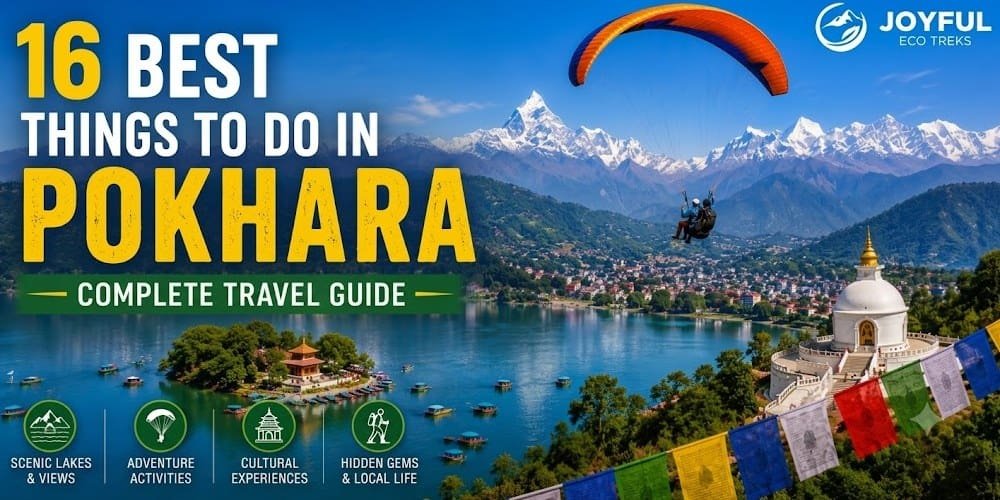
Pokhara was officially declared the Tourism Capital of Nepal on March 17, 2024, and the title feels well earned. The city brings together lakes, mountain views, caves, temples, adventure sports, and quiet hilltop escapes in one beautiful valley.
However, many visitors arrive with the same plan: boat on Phewa Lake, watch sunrise from Sarangkot, try paragliding, and move on. These experiences deserve their place, but they only show the easiest side of Pokhara.
Once you move beyond the busy Lakeside area, Pokhara starts to feel wider and more layered. Begnas Lake offers a calmer side of the valley, while Gupteshwor Cave and Davis Falls bring a raw natural touch. Tibetan settlements, old temples, and hilltop monasteries add culture, prayer flags, quiet corners, and local life to the journey.
In this guide, we will cover the best things to do in Pokhara, from famous highlights to places that make the trip feel adventurous. Whether you have one day before a trek or a full week in the valley, it helps you plan your visit with more meaning and less rush.
- Pokhara is Nepal’s adventure hub because its valley setting supports paragliding, ziplining, bungee jumping, rafting, ultralight flights, caving, and short hikes.
- The best things to do in Pokhara include boating to Tal Barahi Temple, watching sunrise from Sarangkot, hiking to the World Peace Pagoda, visiting Pumdikot, exploring Davis Falls and Gupteshwor Cave, and more.
- Different Pokhara experiences suit different travel styles, from couples and families to solo travelers, adventure lovers, spiritual visitors, and travelers with limited time.
- The best time to visit Pokhara is autumn for clear mountain views, while spring suits outdoor activities, winter brings fewer crowds, and monsoon gives the valley a greener, quieter feel.
- Before exploring Pokhara, prepare for cash payments, transport outside Lakeside, temple etiquette, trekking permits, safe drinking water, local SIM cards, and drone rules.
Why is Pokhara Nepal’s Adventure Hub?
Pokhara is Nepal’s adventure hub because of its natural setting. From the city, mountains above 6,000 meters can be seen from an altitude of about 800 meters within a distance of around 28 kilometers. This dramatic setting brings high hills, deep river paths, and good places for outdoor sports.
That warm rising air makes Sarangkot a popular place for paragliding. From there, flights move above Phewa Lake, with the city below and the Annapurna mountains ahead. The same valley also supports ziplining, canyoning, ultralight flights, and short hikes.
Pokhara also has adventure below the ground. Water has shaped caves, gorges, and underground channels around the valley over time. Near Davis Falls, water flowing from Phewa Lake drops into a narrow gorge and passes through an underground channel.
Furthermore, the city is a starting point for mountain journeys. Most trekkers heading to Annapurna Base Camp, the Annapurna Circuit, or Mustang begin their trip from Pokhara. Over the years, this has brought trekking guides, gear shops, tour agencies, and adventure operators into the city.
What are the Things to Do in Pokhara, Nepal?
The most unique things to do in Pokhara mix lakes, mountains, caves, culture, and adventure in one trip. The city is not only about views; it also gives you quiet places, sacred sites, old neighborhoods, and activities that fit different travel styles.
Start with the famous experiences, then make time for the places outside the usual Lakeside route. That balance gives your Pokhara visit more depth and helps the city feel less like a quick stop before the mountains.
1. Boat Across Phewa/Fewa Lake to Tal Barahi Temple
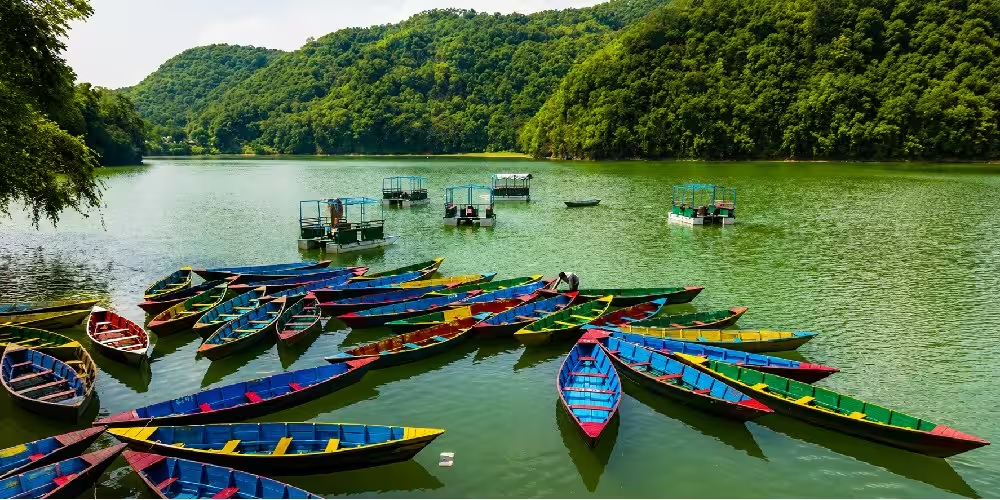
Phewa Lake is the centerpiece of Pokhara. The lake sits beside Lakeside, but once the boat moves away from the shore, the city noise starts to fade. On clear mornings, the Annapurna Range and Machhapuchhre reflect beautifully on the water.
Source: Wikimedia Commons
Tal Barahi Temple sits on a small island in the middle of the lake, and the only way to reach it is by boat. A local legend says the lake formed after a flood covered an old village, while a kind couple survived after receiving a warning from the goddess. That story gives the temple a deeper meaning than its small size suggests.
2. Watch Sunrise from Sarangkot
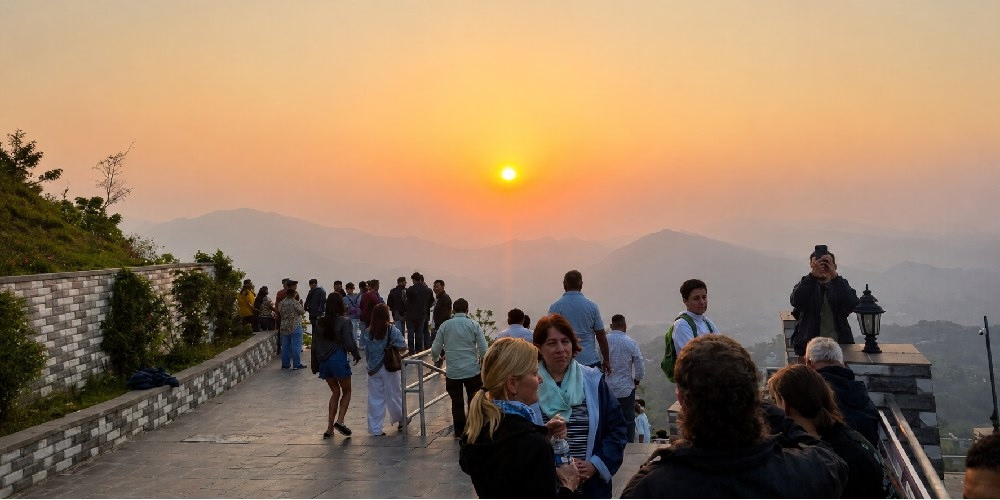
Sarangkot is famous for sunrise, but the hill has an older story behind its name. “Kot” means fort in Nepali, and this ridge once watched over the Pokhara Valley long before travelers came for mountain photos. That past gives the place more character than a normal viewpoint.
Source: Wikimedia Commons
Arrive before dawn and watch the first light move across Annapurna, Machhapuchhre, and Dhaulagiri as the valley wakes below. Sarangkot sits high above Pokhara, so the clouds and morning haze often stay beneath the ridge. After sunrise, the same hill turns into a paragliding launch area, making it a memorable place to start the day in Pokhara.
3. Paraglide Over the Valley
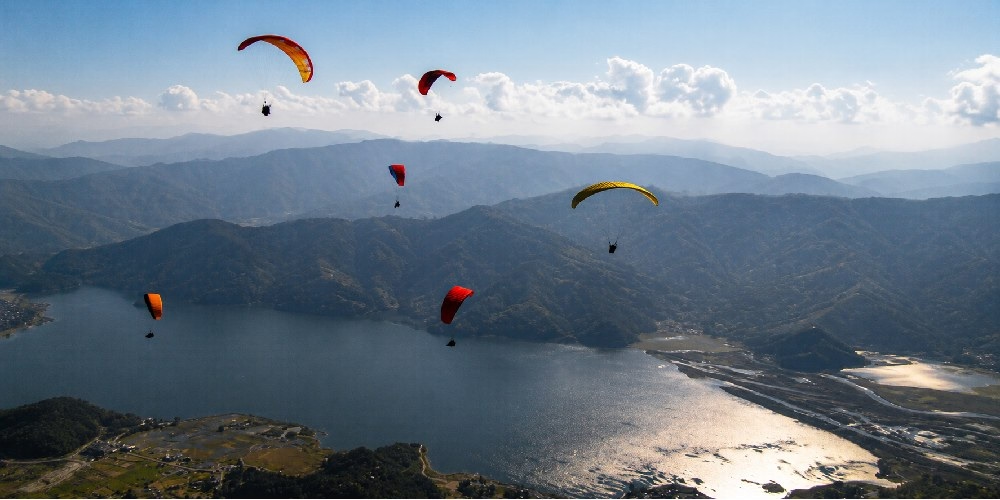
Paragliding is one of the most exciting things to do in Pokhara, and the reason becomes clear once your feet leave the hillside. The valley drops below you, Phewa Lake comes into view, and the Annapurna peaks rise across the horizon. The hills around Pokhara create warm rising air, which helps your glider stay in the sky longer.
Source: Wikimedia Commons
Your flight is usually tandem, so a licensed pilot handles the takeoff, flight, and landing while you enjoy the view. A standard ride often lasts around 20 to 30 minutes, with longer flights available when the weather is clear and the air stays steady. Late morning usually gives better flying conditions, while spring and autumn offer some of the best chances for clear mountain views.
4. Try Ziplining, Ultralight Flying, or Bungee Jumping
Pokhara has three major adventure activities for travelers who want more than paragliding: ziplining, ultralight flying, and bungee jumping. The ZipFlyer starts from the hill area below Sarangkot and runs for about 1.8 kilometers. It drops more than 600 meters at a steep angle, with speeds that can go over 100 km/h.
Bungee jumping takes place from a cliff-top tower platform with an 80-meter drop. The jump is short, direct, and intense, so it suits travelers who want a stronger adrenaline activity. Many visitors pair it with ziplining because both activities are operated in the same general area.
Ultralight flying is the better option if you want aerial views without a jump or high-speed drop. The flight uses a small aircraft and gives clear views of the valley and the surrounding peaks. Choose ziplining for speed, bungee jumping for a free-fall experience, and ultralight flying for mountain views from the air.
5. Hike Up to the World Peace Pagoda
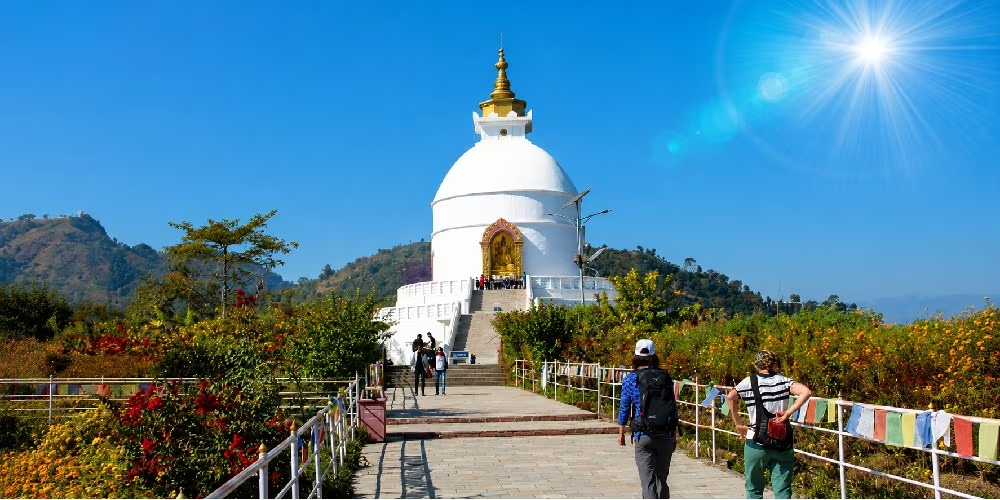
The World Peace Pagoda, known as Shanti Stupa, stands on Anadu Hill above the southern side of Phewa Lake. It was built as a Buddhist symbol of peace by the Japanese Buddhist order Nipponzan-Myōhōji with support from local people. The project began in the 1970s, faced years of delay, and was completed in 1999.
Source: Wikimedia Commons
Reaching the pagoda feels like part of the visit. Take a boat across Phewa Lake and hike uphill through hillside villages, or drive close to the top and walk the final steps. The white stupa has four Buddha images facing four directions, and the hilltop gives wide views of the lake below, Pokhara Valley, and the mountain skyline.
6. Visit the Shiva Statue at Pumdikot
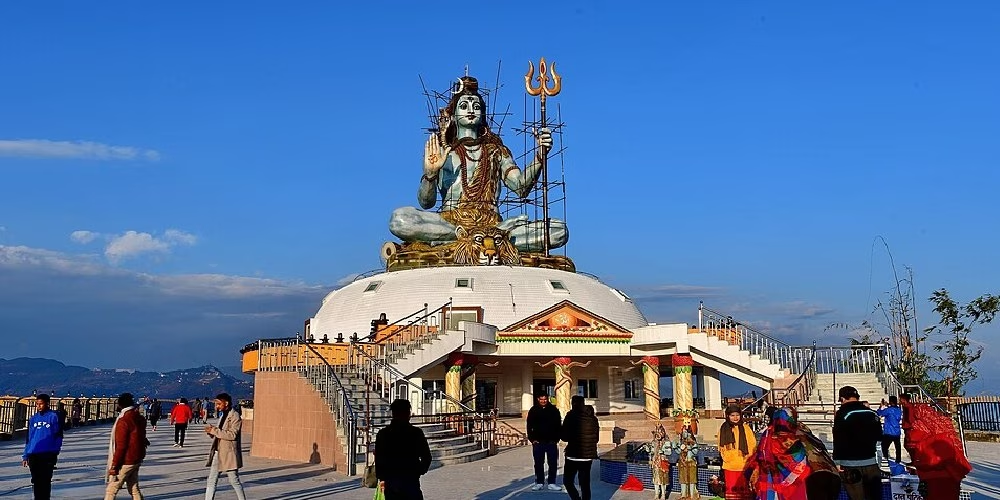
Pumdikot is a newer landmark in Pokhara, built to draw more religious and scenic travelers to the hill above the valley. The project began in 2017 through local effort and fundraising, and the statue was inaugurated in 2021 after construction continued through the difficult COVID period. The sitting Shiva statue is 51 feet tall and stands on a 57-foot white base, bringing the total height to a symbolic 108 feet.
Source: Wikimedia commons
Reach Pumdikot by a drive of about 30 minutes from Lakeside, or hike from the World Peace Pagoda if your plan has more time. At the site, matching sets of stone steps and shrines circle the main structure to echo the sacred number 108. The hilltop gives wide views of Phewa Lake, Pokhara Valley, Annapurna, Machhapuchhre, Dhaulagiri, and Manaslu. Go early for softer light and better mountain views.
7. Explore Gupteshwor Mahadev Cave and Davis Falls
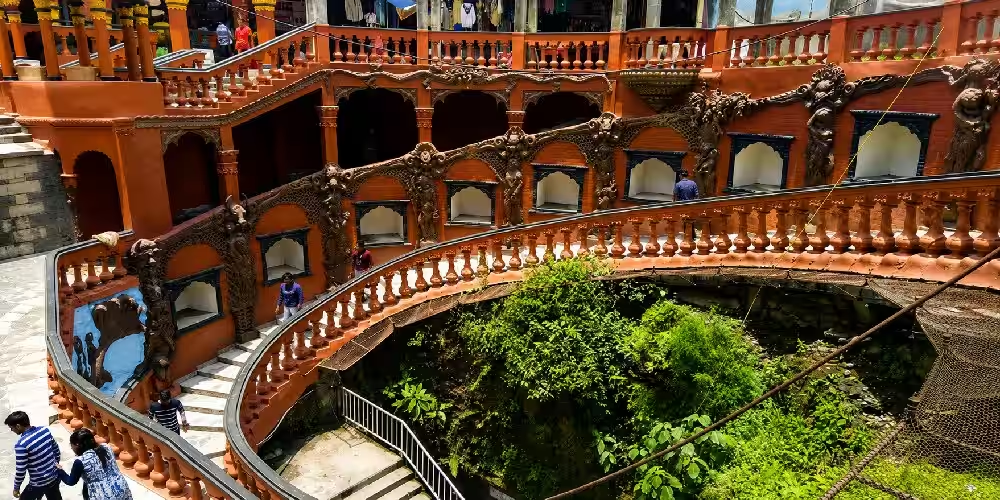
Davis Falls, locally called Patale Chhango, is one of Pokhara’s strangest natural sights. Instead of flowing into an open river, the water drops into a narrow gorge and disappears underground. A common local story says the English name came after a Swiss woman was swept away here in 1961, which gives the place a serious history behind its beauty.
Source: Wikimedia Commons
Conveniently, Gupteshwor Mahadev Cave sits just across the road, so both places fit easily into one visit. Inside the cave, stone steps lead down to a Shiva shrine, damp rock walls, and a lower chamber where the same waterfall roars past from below. Wear shoes with a good grip, move slowly on the wet stairs, and enjoy both sides without rushing.
8. Go White-water Rafting on the Seti River
The Seti River is the closest major rafting route from Pokhara, about 30 minutes from Lakeside. Its name means “white” in Nepali, which fits the pale water colored by fine mountain sediment from the Annapurna region. The Upper Seti suits travelers who want a short, high-energy ride, with Class III to IV rapids packed into a compact route.
Before the launch, a guide gives a safety briefing and explains the paddling commands. Once the trip begins, the water moves through narrow bends and quick drops toward the takeout near the dam area. For a slower pace, choose the Lower Seti instead. It has Class II to III sections, calmer breaks, riverside villages, and enough quiet stretches to enjoy the scenery.
9. Explore the Old Bazaar and Bindhyabasini Temple
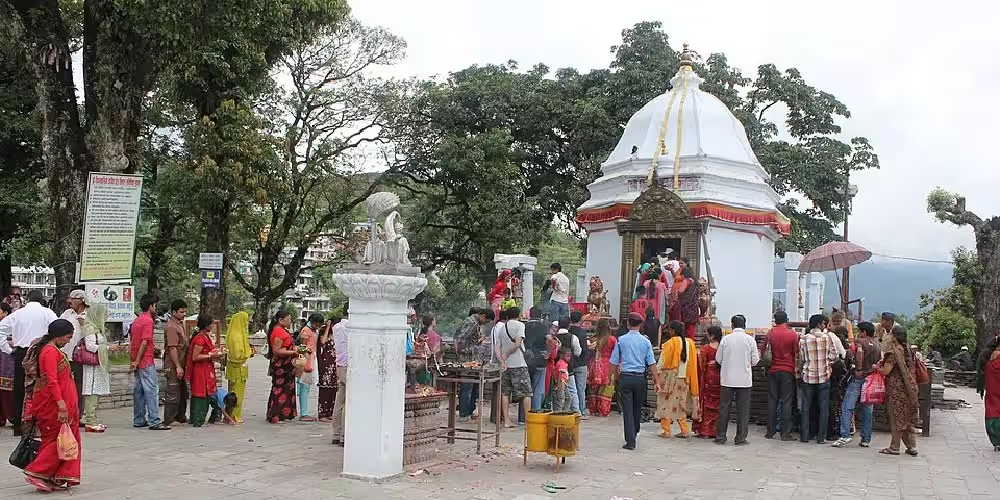
Old Pokhara feels most rooted around Bindhyabasini Temple and the streets below it. According to local legend, King Siddhi Narayan Shah of Kaski brought an idol of the goddess from India, but the idol could not be moved after his men rested on this hilltop. The king took it as a divine sign and built the temple where the goddess had chosen to stay.
Source: Wikimedia Commons
The Old Bazaar below the temple grew with Newar traders who settled in Pokhara along the old salt trade route to Tibet. Walk through its narrow lanes to see traditional houses, carved wooden windows, and small shops before climbing the stone steps to Bindhyabasini Temple. From the top, the white pagoda-style shrine, smaller temples, and vistas over Annapurna and Dhaulagiri give a strong mix of faith, history, and local life.
10. Visit Pokhara’s Museums (International Mountain and Gurkha Memorial)
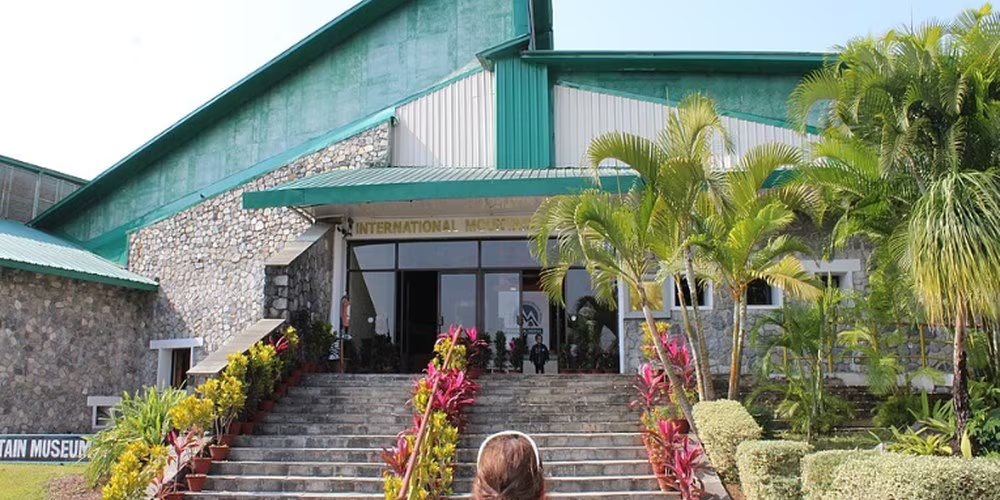
Pokhara’s museums are worth visiting when the trip needs more than lake views and adventure activities. The International Mountain Museum covers Himalayan climbing, mountain communities, Sherpa culture, local wildlife, and early expeditions. It also has a section on Yeti stories, which adds a curious local layer to the mountain history.
Source: Wikimedia Commons
A short drive away sits the Gurkha Memorial Museum. It focuses on Nepali soldiers who served in Gurkha regiments from the early 19th century onward. Inside, you will find uniforms, medals, photos, kukri knives, and records of Victoria Cross recipients.
11. Visit a Tibetan Monastery and Refugee Settlement
Pokhara has four Tibetan settlements: Tashi Palkhel, Tashi Ling, Paljorling, and Jampaling. They were established in the 1960s after many Tibetans crossed into Nepal, and over time these camps became settled communities. Tashi Palkhel in the north and Tashi Ling near Chhorepatan are easier to visit, with monasteries, schools, small restaurants, and carpet workshops.
A visit here gives a respectful look at Tibetan culture in Pokhara. Walk through the lanes, watch prayer flags move above the streets, try thukpa or momos, or visit a carpet showroom where handmade weaving still supports local families. Go with a local guide when possible, and spend inside the settlement so your visit supports the community directly.
12. Take a Short Day Hike to Dhampus or Australian Camp
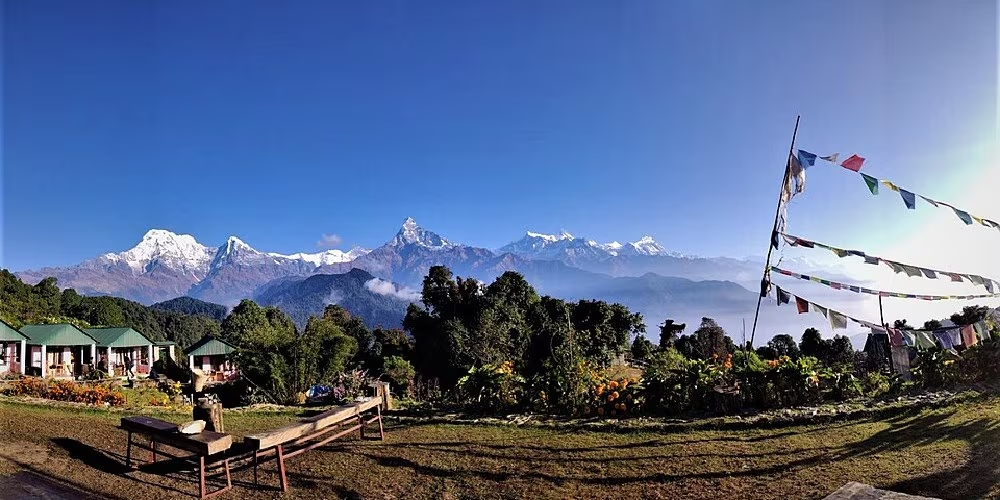
Australian Camp is still known locally as Thulo Kharka, meaning “big pasture,” because the ridge was once used for grazing animals from nearby villages. One local account says Austrian visitors camped there for several days in the late 1980s, and the place became known as “Austrian Camp.” Over time, local pronunciation is said to have shifted the name from “Austrian” to “Australian.”
Source: Wikimedia Commons
Start your hike from Kande, about 45 minutes by road from Lakeside. The trail climbs for around two hours through forest and stone steps before reaching Australian Camp, where Annapurna South, Hiunchuli, Machhapuchhre, and Lamjung Himal fill the skyline on clear days. From there, walk downhill for about an hour to Dhampus, a Gurung village with stone houses, slate roofs, fields, and tea stops, then continue to Phedi for the drive back to Pokhara.
13. Explore Begnas Lake & Enjoy Fishing
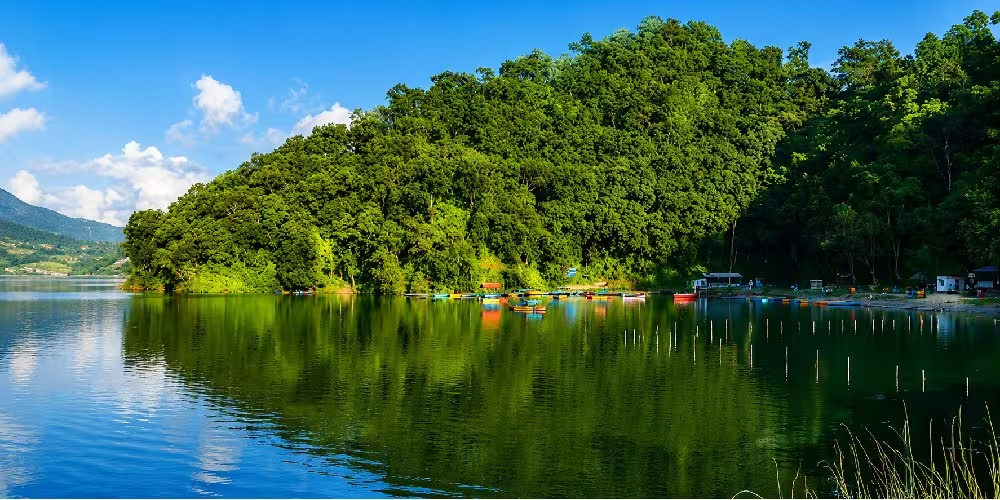
Begnas Lake sits about 15 kilometers east of Pokhara and feels much quieter than Phewa Lake. It is Pokhara’s second-largest lake, but the mood here stays calmer, with fishing boats, lakeside villages, and Nepali families spending relaxed weekends by the water. This is a good place to visit when your Pokhara trip needs calm scenery without the busy tourist crowd.
Source: Wikimedia Commons
Fishing is a big part of daily life around Begnas. You may see fish cages on the lake, where families raise carp and tilapia, along with local fish such as rahu and sahar. Rent a rod, take a wooden boat across the water, or head to Majhikuna for fresh grilled fish by the shore.
14. Try a Yoga or Meditation Class
Pokhara gives space for both rest and learning, which makes yoga and meditation feel like a natural part of the trip. Some travelers join a class to recover after Mardi Himal, Poon Hill, or Annapurna Base Camp, while others stay longer to study yoga, breathing, meditation, or sound healing. The setting helps too, with studios around Lakeside and retreat centers on quieter hills above Phewa Lake or near the World Peace Pagoda.
For a short visit, join a drop-in Hatha, Ashtanga, or meditation class to loosen your body and calm your mind. A longer retreat may include daily yoga, pranayama, guided meditation, simple meals, Ayurvedic treatments, quiet walks, and singing bowl sessions. If your goal is serious study, Pokhara also has multi-week yoga teacher training programs around the valley. Spring and autumn bring clearer mountain views, while winter gives colder mornings and a quieter practice setting.
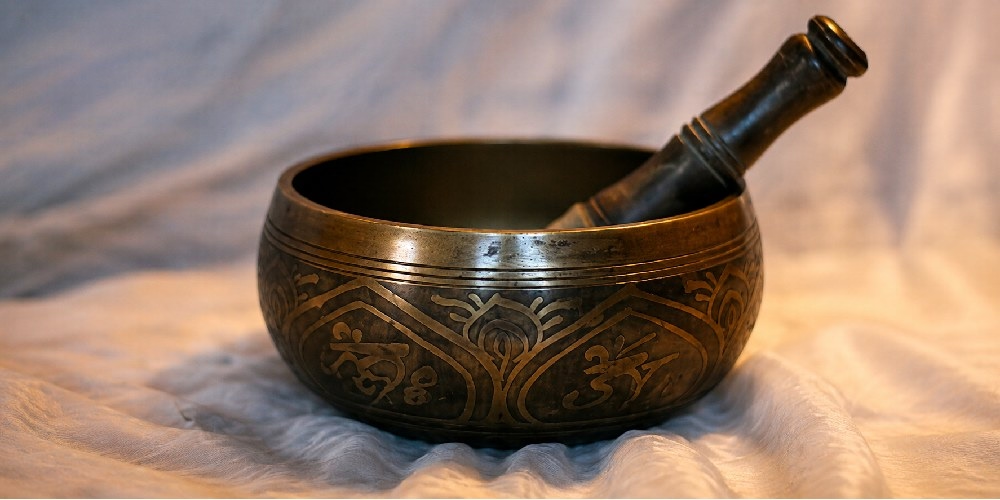
15. Join a Singing Bowl Session
A singing bowl session gives your Pokhara trip a calm pause between sightseeing and adventure. Around Lakeside, several shops and wellness centers offer short sound sessions, longer relaxation sessions, and bowl demonstrations. The bowls are usually played with a wooden or padded mallet, which creates steady tones and gentle vibrations.
Source: Wikimedia Commons
During the session, you sit or lie down while the practitioner plays bowls in a slow sequence. The sound builds softly, and the room becomes quiet enough to help your body settle. It works well after a trek, a long travel day, or an active morning in Pokhara.
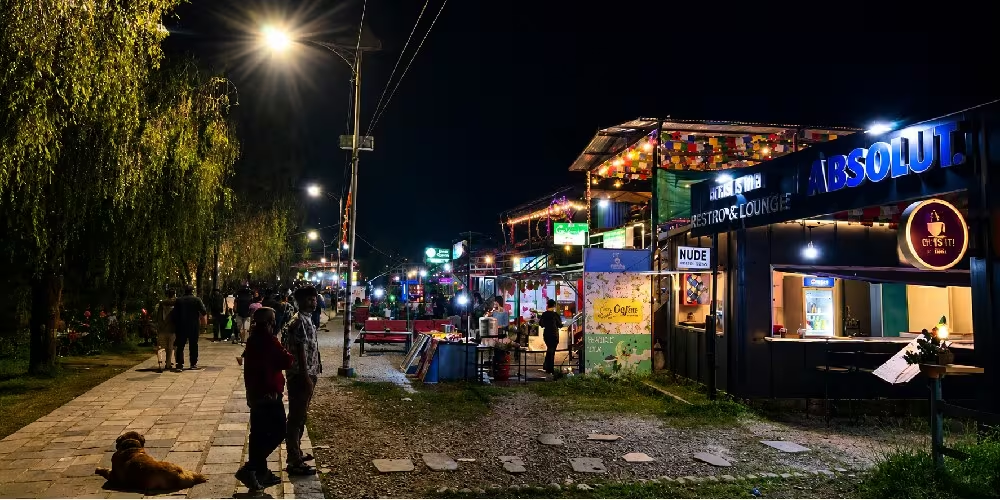
16. Walk or Shop Along Lakeside in the Evening
Pokhara Lakeside, also called Baidam, stretches along the eastern side of Phewa Lake. It started as a simple stop for trekkers and early travelers, then slowly grew into Pokhara’s main area for food, shopping, cafés, and nightlife. The lake keeps the pace calm, with lit-up restaurants, soft music, and people walking along the shore after sunset.
Source: Wikimedia Commons
Walk along the strip for pashmina, jewelry, handicrafts, books, cafés, rooftop meals, and live music. Many shops allow polite bargaining, especially when buying more than one item. For a quieter evening, sit by the lake with coffee, take a short walk along the promenade, or join a night boat ride if boats are operating.
Which Pokhara Experiences Suit Your Travel Style Best?
The best Pokhara experience depends on your pace, time, and reason for visiting. Couples usually enjoy quiet lake views and relaxed evenings. Families do better with easy scenic places. Solo travelers often enjoy flexible time around Lakeside, yoga studios, and cultural sites. Adventure travelers should focus on paragliding, ziplining, bungee jumping, and Seti River rafting.
| Travel Style | Top Picks in Pokhara |
| Couples | Sunset boat ride to Tal Barahi Temple, Lakeside evening walk, singing bowl session |
| Family | Begnas Lake, Dhampus day hike, Pumdikot |
| Solo | Yoga or meditation class, Lakeside, Old Bazaar & Bindhyabasini Temple |
| Adrenaline | Paragliding, ziplining, bungee jumping, Seti River rafting |
| Spiritual | Bindhyabasini Temple, Pumdikot, Tibetan monastery, singing bowl session |
| Short on Time | Phewa Lake & Tal Barahi Temple, Sarangkot sunrise, Lakeside evening |
How Can You Plan One or Two Days in Pokhara?
Use the following simple plan to connect the main attractions without making the visit feel rushed.
| Time Available | Suggested Plan |
| One day | Sarangkot sunrise → Phewa Lake and Tal Barahi Temple → Davis Falls and Gupteshwor Cave → Lakeside evening |
| Two days: Day 1 | Sarangkot sunrise → Phewa Lake → Old Bazaar and Bindhyabasini Temple → Lakeside |
| Two days: Day 2 | Davis Falls and Gupteshwor Cave → World Peace Pagoda → Pumdikot → International Mountain Museum |
When Should You Visit Pokhara?
The best time to visit Pokhara is during autumn, from September to November. The monsoon has cleared the air, the mountain views are usually sharp, and the weather works well for boating, sunrise trips, paragliding, and short hikes. This is also the busiest season, so book hotels and activities early.
Similarly, Spring, from March to May, is also a good choice. The weather feels warmer, the hills look fresh, and rhododendrons bloom on nearby trails. Mornings are often better for mountain views, while afternoons may bring haze or clouds later in the season.
Furthermore, Winter, from December to February, brings fewer crowds, cold mornings, and mild daytime weather. Monsoon, from June to August, brings heavy rain and limited mountain views, but the valley turns green, and Lakeside feels quieter.
What Should You Know Before Exploring Pokhara?
Before exploring Pokhara, carry enough cash, plan transport outside Lakeside, dress respectfully at religious sites, and check trekking rules if you are heading toward the Annapurna region. A few small preparations make your trip easier and help you avoid common travel problems.
- Visa and entry: Most travelers get a Nepal tourist visa on arrival at Kathmandu airport before continuing to Pokhara. Filling out the online form in advance saves time. Your passport should have at least six months of validity and one blank page.
- Visa fees: Tourist visa fees are usually USD 30 for 15 days, USD 50 for 30 days, and USD 125 for 90 days. Children under 10, Chinese nationals, and SAARC citizens on their first visit of the year get visa fee exemptions. Check the latest rule before flying.
- Cash: Pokhara still runs heavily on cash, especially for taxis, boating, small cafés, temples, local shops, and tips. Carry Nepali rupees and keep some backup cash in case ATMs run dry or card machines fail.
- Trekking rules: If Pokhara is your starting point for the Annapurna region, arrange your guide, permits, and insurance before leaving the city. Permit rules differ by route, and trekking agencies in Pokhara help sort the details.
- What to wear: Dress modestly at temples, stupas, monasteries, and religious sites. Cover shoulders and knees, remove shoes before entering temple spaces, and walk clockwise around stupas, mani walls, and prayer wheels.
- Connectivity: Buy a local SIM from Ncell or Nepal Telecom if steady mobile data matters for your trip. Hotel Wi-Fi works in many places, but it may slow down during rain, wind, or power cuts.
- Power backup: Keep a charged power bank for sunrise trips, long sightseeing days, photos, maps, and online payments. Power cuts still happen during bad weather.
- Drone rules: Do not fly a drone over Phewa Lake, near the airport, temples, or mountain areas without permission. Nepal requires official approval for drone use, and flying without clearance may lead to fines or confiscation.
- Drink Bottled or Filtered Water: Tap water is not safe to drink in Pokhara. Stick to bottled, boiled, or filtered water during your stay, especially if you have a sensitive stomach.
Want to Explore Pokhara Beyond Lakeside?
Want to see the best parts of Pokhara without any stress? Tell us your travel dates and what you like to do. Joyful Eco Treks provides local guides, private cars, and custom tours to help you explore the city easily.
Conclusion
Pokhara is not a place to rush through with only a lake ride, a sunrise view, and a paragliding flight. Those experiences are worth doing, but the city feels fuller when you add its caves, temples, museums, Tibetan settlements, quiet lakes, and hilltop viewpoints to your plan.
The best things to do in Pokhara depend on your time, pace, and travel style. A short visit may focus on Phewa Lake, Sarangkot, and Lakeside. A longer stay gives room for Begnas Lake, Pumdikot, Dhampus, yoga, rafting, or a cultural walk through Old Pokhara.
Joyful Eco Treks helps you plan the wider side of Pokhara without making the trip feel tiring. Our Pokhara tour includes a local guide, private transport, hotel support, and a route that connects the main sights in the right order. We also help adjust the day around your interests, whether you want culture, mountain views, soft adventure, or a relaxed family-friendly trip beyond Lakeside.
See more travel stories, destination updates, trekking photos, and trip ideas from Nepal. Follow Joyful Eco Treks on Facebook, Instagram, and TikTok and stay connected with our latest adventures.
FAQs
What is Pokhara famous for?
Pokhara is famous for Phewa Lake, Sarangkot sunrise, Annapurna views, paragliding, caves, waterfalls, and adventure activities. It is also a major gateway to Annapurna Base Camp, the Annapurna Circuit, Mardi Himal, and Mustang.
Which month is best to visit Pokhara?
October is usually the best month to visit Pokhara because the skies are clear after the monsoon and the mountain views are sharp. September to November is the best overall season, while March to May is also good for warm weather and outdoor activities.
Can I see Mount Everest from Pokhara?
No, you cannot see Mount Everest from Pokhara. However, you can see other peaks from the Annapurna and Dhaulagiri ranges, including Machhapuchhre, Annapurna South, Hiunchuli, and Dhaulagiri.
Is Pokhara in Nepal worth visiting?
Yes, Pokhara is worth visiting for its lakes, mountain views, adventure activities, caves, temples, and relaxed atmosphere. It is also a good base before or after trekking in the Annapurna region.
Which is more beautiful, Pokhara or Kathmandu?
Pokhara is beautiful for nature, lakes, mountains, and a slower travel pace. In contrast, the Kathmandu Valley tour is better for heritage, temples, old streets, museums, and cultural depth. Choose Pokhara for scenery and relaxation, and Kathmandu for history and heritage.
What to buy in Pokhara, Nepal?
You can buy pashmina, singing bowls, handmade jewelry, Tibetan carpets, thangka paintings, prayer flags, hemp bags, local tea, and small handicrafts in Pokhara.
Can I visit Pokhara without trekking?
Yes, you can visit Pokhara without trekking. You can enjoy Phewa Lake, Sarangkot, Davis Falls, Gupteshwor Cave, Pumdikot, the World Peace Pagoda, Begnas Lake, museums, and Lakeside without doing a trek.
What can I do in Pokhara at night?
At night, you can walk along Lakeside, enjoy live music, eat at a rooftop restaurant, shop for souvenirs, or sit by Phewa Lake with coffee or a drink. Lakeside is the main evening area, and it has a calmer nightlife feel than Kathmandu’s Thamel.