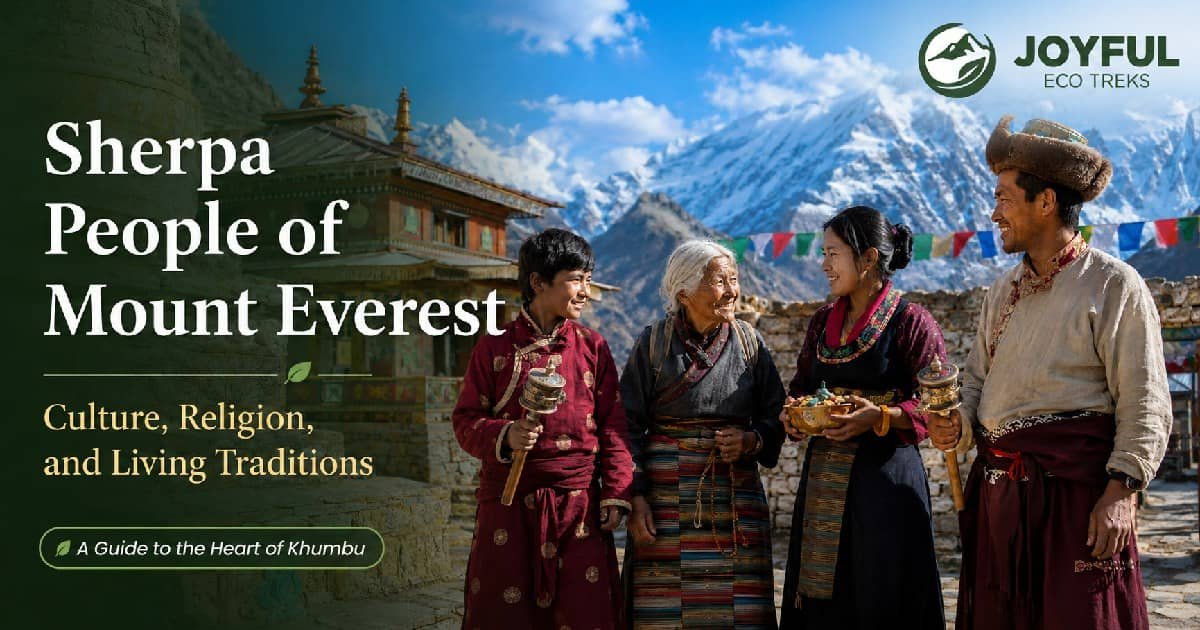
Mount Everest, the highest mountain in the world, draws trekkers and climbers from across the globe every year. Beyond its dramatic peaks and famous trails, the Everest region is home to different communities, but the Sherpa people have a particularly strong cultural connection with the Khumbu area, where many Sherpa families have lived for generations.
The Sherpa people of Mount Everest are known for much more than mountaineering. Their culture includes Tibetan Buddhist beliefs, monasteries, prayer flags, village festivals, traditional foods, family customs, and community practices that have been passed down over time.
Although life in the Everest region has changed with tourism, education, migration, and modern technology, many Sherpa traditions are still practiced today. This article looks at those traditions, how they remain part of everyday Sherpa life, and how they have continued across generations.
The Sherpa people are a Himalayan ethnic group with deep roots in Nepal’s Solukhumbu and Everest regions. Sherpa culture is shaped by Tibetan Buddhism, the Sherpa language, family and clan traditions, mountain-based livelihoods, festivals such as Mani Rimdu and Dumji, and a long relationship with the Khumbu landscape. Sherpa is an ethnic identity, not another word for a mountain guide.
- Sherpa people of Mount Everest have a distinct ethnic identity shaped by Tibetan Buddhist beliefs, family customs, language, and community traditions.
- Sacred mountains, monasteries, prayer flags, mani walls, chortens, and puja ceremonies remain closely tied to Sherpa religious life.
- Festivals such as Mani Rimdu, Dumji, and Lhosar continue to bring families, villages, and Buddhist communities together.
- Traditional practices like Nawa land management, Lotok Bulo harvest customs, Sherpa food, clothing, and crafts show how older knowledge is still carried forward.
- Tourism, migration, education, and modern life have changed Khumbu, but Sherpa traditions continue by adjusting while keeping their cultural meaning.
Who Are the Sherpa People of Mount Everest?
Sherpas are a Himalayan ethnic group with long roots in the Solukhumbu region of eastern Nepal. Their ancestors are generally believed to have migrated from eastern Tibet several centuries ago and gradually settled in areas that now include Khumbu, Solu, and surrounding valleys. The Sherpa ethnic group has its own language, Buddhist traditions, family customs, and community practices.
The word “Sherpa” is sometimes used outside Nepal to describe a mountain guide or porter, but that use can be misleading. Sherpa is first an ethnic identity. Some Sherpas on Mount Everest work as climbers, guides, lodge owners, or expedition staff, while many others work in farming, business, education, tourism, religious life, and professions far removed from mountaineering.
How Did Sherpa Culture Take Root in the Everest Region?
Sherpa communities developed their way of life around the conditions of the high Himalayas. Farming, yak and livestock herding, trade, and movement between villages shaped daily routines for generations. Potatoes, barley, dairy products, and other foods suited to cold mountain conditions became part of local diets, while wool and animal products supported household needs.
Trade also connected Sherpa communities with Tibet and lower areas of Nepal. These exchanges helped shape food, clothing, religious customs, and local livelihoods. Tourism later changed the economy, but older forms of farming, herding, trade, and village cooperation still help explain how Sherpa culture developed in Khumbu.
Why Are Mountains Sacred in Sherpa Culture?
Mountains in Sherpa culture are not viewed only as physical places to climb. Tibetan Buddhist beliefs and local religious traditions connect certain peaks, valleys, forests, and water sources with spiritual meaning. Everest is known as Chomolungma in Tibetan tradition, a name associated with the sacred character of the mountain.
Khumbila, also known as Khumbu Yul-Lha, is another mountain with strong religious meaning in the region. It is linked with a protective deity of Khumbu and has traditionally been treated with respect. These beliefs help explain why religious sites, offerings, prayer flags, and ceremonies are closely tied to the natural environment throughout the Everest region.
Tibetan Buddhism in Everyday Sherpa Life
Tibetan Buddhism is one of the main foundations of Sherpa religious life. Monasteries, lamas, prayers, blessings, household rituals, and religious festivals remain part of many communities. Important moments such as births, marriages, deaths, journeys, and community gatherings may include prayers or ceremonies led by Buddhist religious figures.
Religion is also present outside monasteries. Sherpa families may place prayer flags near homes, visit religious sites, turn prayer wheels, or take part in ceremonies at different times of the year. These acts connect everyday life with Buddhist teachings that each generation learns from the one before it.
Prayer Flags, Mani Walls, Chortens, and Prayer Wheels
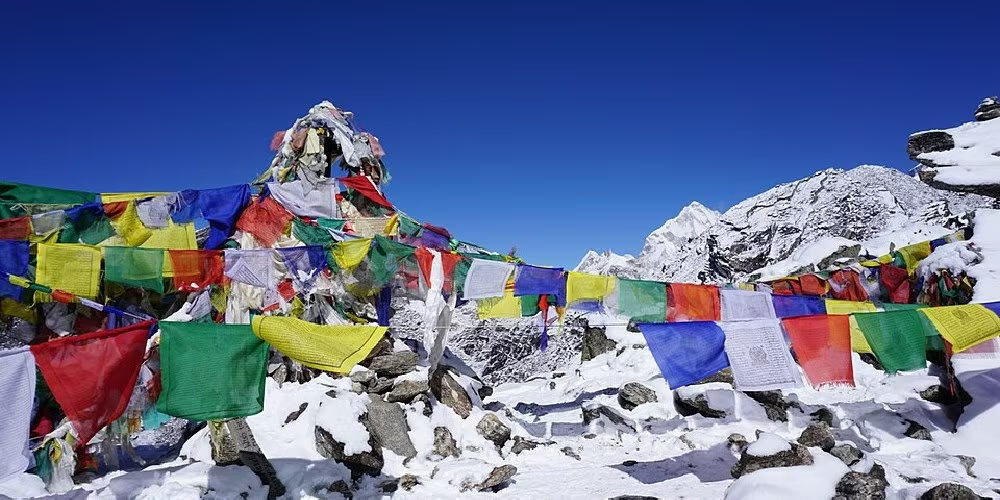
Trekkers in the Everest region often pass colorful prayer flags, stone walls carved with sacred texts, chortens, and prayer wheels. Mani stones commonly carry Buddhist prayers, while mani walls are made by arranging many of these carved stones together. Chortens are Buddhist religious monuments found near villages, monasteries, trails, and other sacred locations.
Source: Wikimedia Commons
These structures are not simply decoration along trekking routes. They are part of religious practice. A common local custom is to pass mani walls and chortens clockwise, keeping the sacred structure on the right. Visitors who understand this simple practice can move through Sherpa villages with greater respect for local beliefs.
Puja and Blessings Before Entering the High Mountains
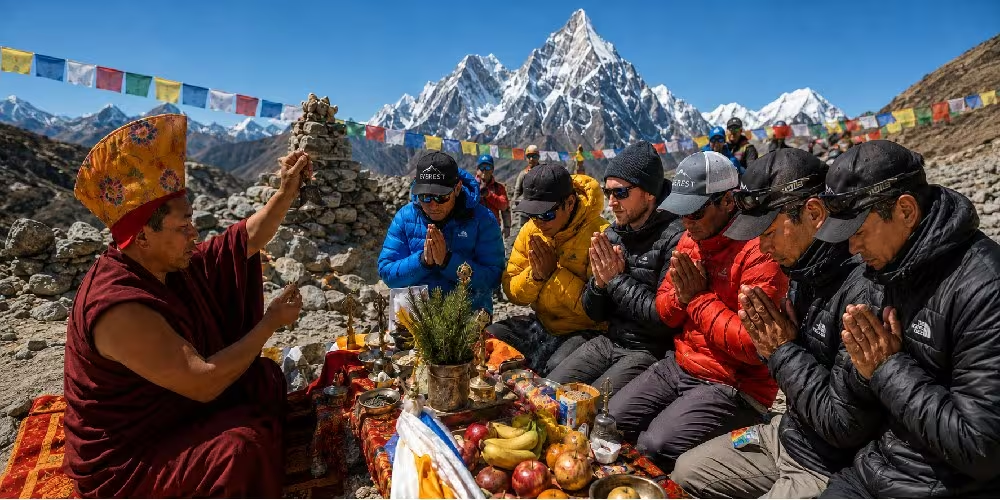
Religious blessings remain closely connected with journeys into the high Himalayas. Before some climbing expeditions, Sherpa climbers and team members take part in a puja ceremony. A lama may lead prayers and make offerings while asking for protection and safe passage in the mountains.
The ceremony reflects a core belief: entering the high mountains is a spiritual undertaking as much as a physical one, and it calls for respect toward a sacred environment. For many Sherpa climbers, the puja is a religious practice rather than a symbolic event created for visitors or expeditions.
Mani Rimdu: A Living Buddhist Festival
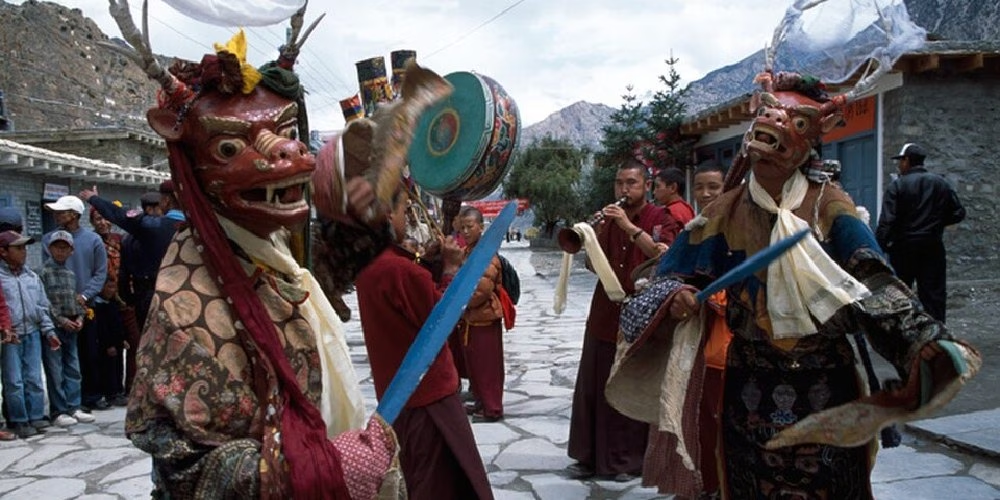
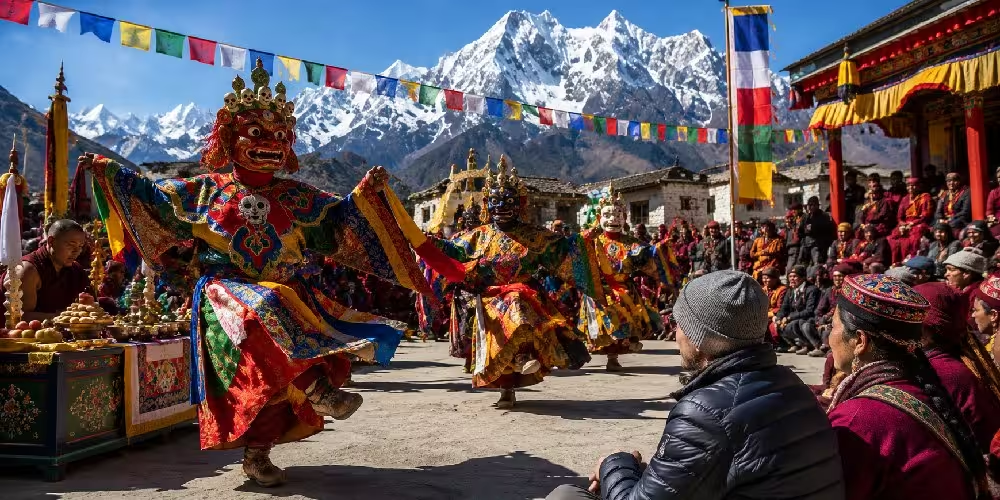
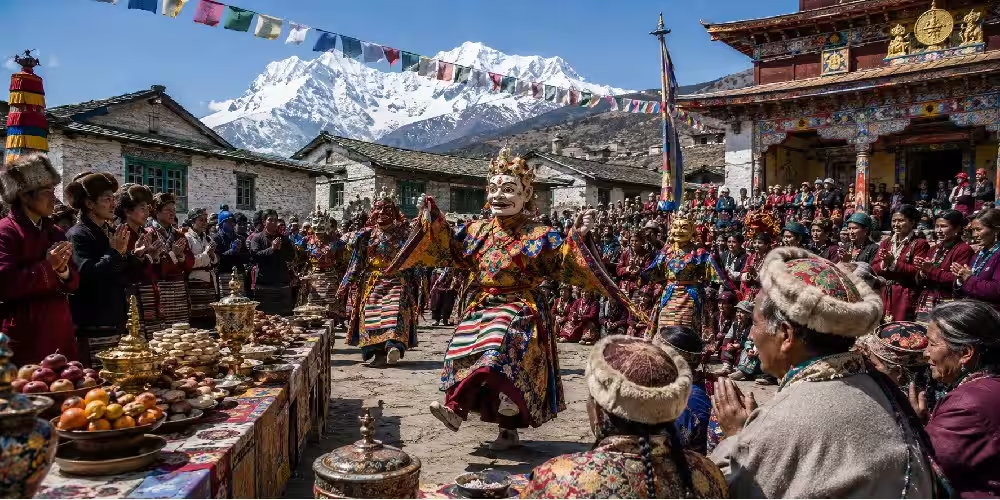
Mani Rimdu is one of the best-known Buddhist festivals celebrated in the Everest region. It is especially associated with monasteries such as Tengboche. The celebration includes prayers, blessings, music, and masked religious dances performed by monks.
Source: Wikimedia Commons
The masks and dances often attract visitors, but Mani Rimdu is first a religious ceremony for the local Buddhist community. Families and villagers gather around the monastery, receive blessings, and take part in an event that brings religious teachings and community life together.
Dumji: A Festival of Faith and Community
Dumji is another important Sherpa festival practiced in parts of the Everest region. It combines Buddhist rituals with village gatherings and social activities. Prayers are performed for the well-being of the community and for protection from harmful influences.
The festival also creates time for relatives, neighbors, and families to meet, eat together, and maintain community ties. This social side of Dumji matters because monasteries are only one place where Sherpa traditions live; family gatherings and everyday village life carry them just as much.
Lhosar and Sherpa New Year Traditions
Lhosar marks the Tibetan New Year and is celebrated by Sherpa communities as well as several other Himalayan groups. Sherpa families may clean and prepare their homes, cook special foods, visit relatives, attend religious ceremonies, and begin the new year with prayers for health and good fortune.
The way Lhosar is celebrated can differ between families and places. Sherpas living in Kathmandu or outside Nepal may celebrate differently from families living in Khumbu. Even with these differences, Lhosar remains an important time for reconnecting with family, religion, and cultural identity.
Lotok Bulo: A Lesser-Known Harvest Tradition
Lotok Bulo is a harvest tradition connected with Sherpa communities in Khumbu. Traditionally, part of the first harvest is offered in a religious setting before people begin using the new crop. Groups may then visit houses, sing traditional songs, and offer good wishes to families.
In earlier times, households commonly gave grain to people taking part in the tradition, while money may now sometimes be given instead. The practice is a good example of how an old tradition can change in form while continuing to serve the same social and cultural purpose.
Nawa: A Traditional Sherpa System for Managing Land
Nawa is a long-standing community system used in parts of Khumbu to manage land and natural resources. Community members chosen as Nawas help oversee matters such as grazing periods, harvesting, grass cutting, forest use, and the movement of livestock.
The system shows that Sherpa tradition covers more ground than religion and festivals alone. It also includes practical knowledge about living in a fragile mountain environment. Rules shared within the community helped families use pastures, forests, and farmland in an organized way long before modern tourism became a major part of the regional economy.
Sherpa Family, Clan, and Community Traditions
Family relationships have long played a central role in Sherpa life. Traditional Sherpa society is organized around clans known as ru. Clan membership has influenced family identity and marriage customs, including the traditional rule against marriage between people from the same clan.
Community cooperation is just as important as family ties. Religious ceremonies, festivals, funerals, weddings, farming work, and village events give people regular opportunities to support one another. Even when family members move to Kathmandu or overseas, many continue to return home for important occasions.
Sherpa Language and Knowledge Passed Between Generations
The Sherpa language belongs to the Tibetic language group and remains an important part of cultural identity. It is used in family conversations, community gatherings, songs, religious settings, and other parts of daily life. Nepali and English are also widely spoken, especially among younger people and those working in tourism.
Language is closely tied to cultural memory because stories, prayers, songs, place names, and local knowledge are often carried through spoken communication. When younger generations learn from parents, grandparents, monks, and community elders, they receive more than words. They also learn how traditions are understood and practiced.
Traditional Sherpa Food and Mountain Life
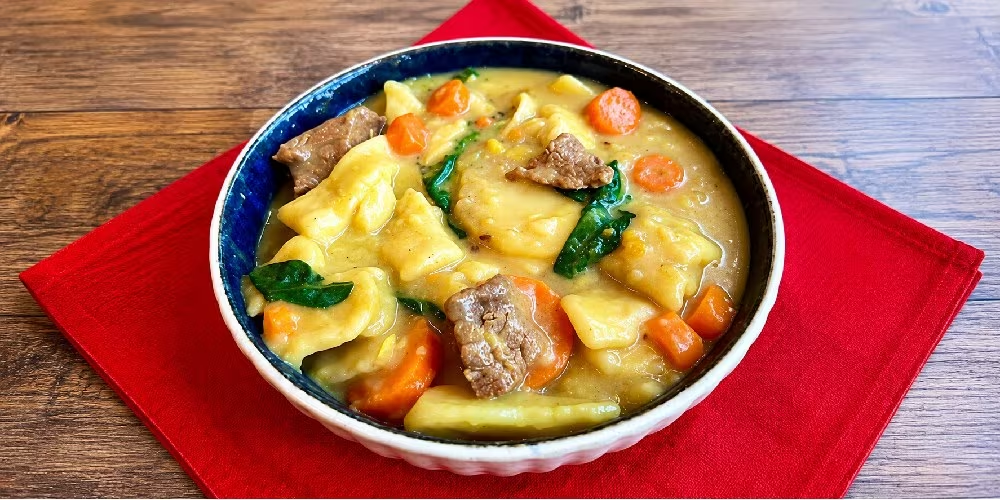
Traditional Sherpa food developed around ingredients that could grow, be stored, or be prepared in cold mountain conditions. Potatoes, barley, wheat, dairy products, soups, noodles, and preserved foods have long been common. Shyakpa, a thick stew often made with vegetables, potatoes, and pieces of dough, is one well-known Sherpa dish.
Source: Instagram
Food also reflects family and seasonal life. Certain dishes may be prepared during festivals or gatherings, while butter tea and simple warm meals suit the cold climate. Trekking lodges now serve food from many parts of the world, but traditional dishes remain part of Sherpa homes and cultural occasions.
Traditional Clothing and Sherpa Craftsmanship
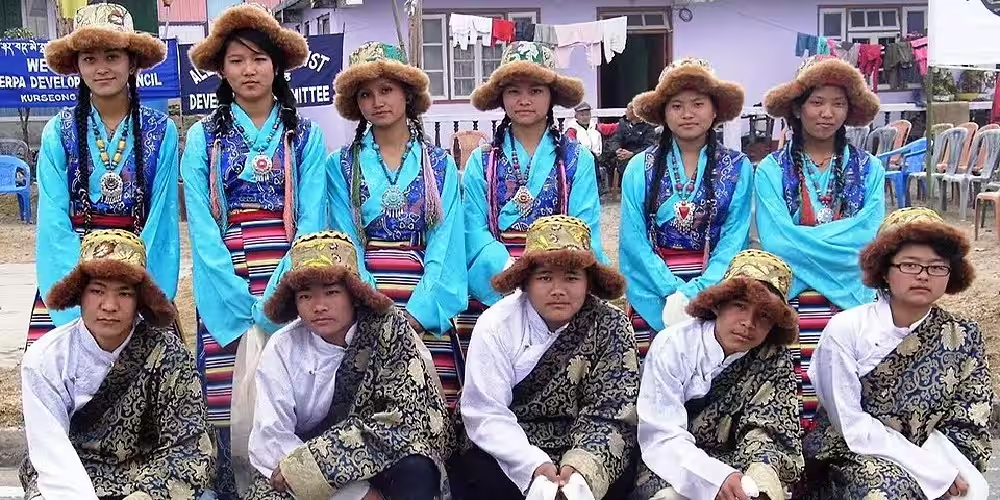
Traditional Sherpa clothing was made for a cold Himalayan environment. Wool, layered garments, warm boots, and other practical materials helped people live and work at high altitude. Today, modern clothing is common, but traditional dress may still be worn during festivals, ceremonies, or family events.
Source: Wikimedia Commons
Sherpa craftsmanship also includes wool-based household items. Kshara, for example, is a traditional blanket made from yak and nak wool. Such crafts show how older skills were connected to locally available materials and the everyday needs of mountain households.
From Yak Herding and Trade to Tourism
Before trekking and mountaineering became major industries, many Sherpa families depended on farming, livestock, and trade. Yak and livestock herding provided food, transport, wool, and other materials, while trade routes connected communities across the Himalayas.
Tourism later created new sources of income through guiding, climbing, lodges, restaurants, transport, shops, and trekking services. This changed work patterns across Khumbu. The Sherpas of Mount Everest became widely known for climbing, but tourism is only one part of a much longer social and cultural history.
Why Do Some Worry About the Sherpa Culture Changing?
Some people worry about Sherpa culture changing because migration, tourism, modern education, changing livelihoods, technology, and climate-related pressures can make language, farming practices, crafts, and community knowledge harder to pass between generations.
Climate-related changes add another concern. Glacial hazards, changing weather, water conditions, and pressure on mountain settlements can affect both homes and traditions tied to the land. Cultural change does not mean Sherpa identity is disappearing, but it does mean some practices require more active effort to keep them in use.
How Are Sherpa Traditions Surviving Today?
Sherpa traditions continue because communities practice them, teach them, and adjust them to modern life. Festivals are still celebrated, monasteries remain active, family ceremonies continue, and younger Sherpas return to their villages for important events even when they study or work elsewhere.
Some traditions now look different from how they were practiced decades ago. Money may replace grain in a harvest custom, or a family may celebrate Lhosar in Kathmandu rather than Khumbu. The form can change while the purpose remains connected to family, religion, community, and cultural identity.
How Can Trekkers Respect Sherpa Culture in Everest?
Trekkers can show respect by remembering that villages, monasteries, mani walls, and religious sites are part of everyday community life. Walk clockwise around chortens and mani walls, keep voices low around monasteries, and ask before photographing people, monks, or religious ceremonies.
Visitors should also avoid sitting or climbing on religious structures for photos. During festivals, it is better to observe quietly rather than treat ceremonies as performances. Learning a few basic customs before entering the region helps travelers interact more respectfully with Sherpa communities.
You may also read: Religious Site Etiquette in Nepal
Final Thoughts
The Sherpa people of Mount Everest have maintained a strong cultural identity through religion, family ties, festivals, language, food, crafts, and community customs. Traditions such as Mani Rimdu, Dumji, Lhosar, Lotok Bulo, and Nawa show a culture with roots that go far deeper than the history of Everest climbing.
These customs have not survived because life in Khumbu has stayed unchanged. Tourism, migration, education, and new technology have reshaped the region, and some older practices are now carried out in different ways. What has continued is the connection between people, family, faith, community, and the mountain environment.
For trekkers, learning about Sherpa culture adds meaning to a journey through Everest. The monasteries, prayer flags, festivals, villages, and sacred mountains along the trail are part of a living culture, one that existed long before modern trekking and that each generation still hands on to the next.
If you’re planning a trek through the Everest region and want help preparing for the journey, contact us, and our team can guide you through the process.
See more travel stories, destination updates, trekking photos, and trip ideas from Nepal. Follow Joyful Eco Treks on Facebook, Instagram, and TikTok, and stay connected with our latest adventures.
FAQs
Who are the Sherpas on Mount Everest?
Sherpas on Mount Everest are members of a Himalayan ethnic group with long roots in Nepal’s Solukhumbu region. Some work as climbers and guides, but Sherpa identity also includes its own language, Buddhist traditions, festivals, food, family systems, and community history.
What are Everest Sherpas known for?
Everest Sherpas are widely known for mountaineering and high-altitude work, but their culture extends far beyond climbing. Sherpa communities are also known for Tibetan Buddhist traditions, monasteries, festivals, community life, farming, trade, and long ties with the Khumbu region.
Are Sherpas on Mount Everest only mountain guides?
No, Sherpas on Mount Everest are not only mountain guides. They work in many fields, including tourism, business, farming, education, religion, hospitality, and other professions. Using “Sherpa” as another word for a mountain guide does not describe the full meaning of the Sherpa ethnic identity.
What religion do the Sherpa people follow?
The Sherpa people mainly follow Tibetan Buddhism. Religious life in the Everest region includes monasteries, lamas, prayer flags, mani stones, chortens, sacred mountains, household rituals, and festivals.
Which Sherpa festivals are celebrated in the Everest region?
The Sherpa festivals celebrated in the Everest region include Mani Rimdu, Dumji, and Lhosar. Each has a different role, ranging from monastery-based Buddhist ceremonies to family and village gatherings.
Why is Sherpa culture important to the Everest region?
Sherpa culture is important to the Everest region because it explains the religious, social, and historical meaning of many places visitors see while trekking in Khumbu. Monasteries, sacred mountains, village customs, festivals, and community practices all form part of the cultural life of the region.