Kanchenjunga may be known for high mountains and remote trekking trails, but the region has much more than dramatic scenery. For many trekkers, the first questions are simple: Which villages will I pass through? What sacred places might I see? Are there local customs I should follow? Knowing these things before the trek can help you avoid uncomfortable mistakes along the way.
The Kanchenjunga region is home to different communities, religious practices, monasteries, prayer flags, seasonal traditions, and long-standing beliefs connected with the mountains and surrounding land. Customs can also change as you move from lower villages toward higher Himalayan settlements, so behavior that feels normal elsewhere may not always be appropriate here.
This guide to the Sacred Traditions of the Kanchenjunga Region explains the beliefs, communities, Buddhist practices, local festivals, hospitality, and cultural etiquette trekkers should know before visiting. It will also show you how to behave around sacred sites, interact respectfully with local people, and travel through the region with greater awareness.
- Kanchenjunga is considered sacred across the wider Himalayan region, especially in Sikkimese Buddhist and Indigenous traditions.
- The Kanchenjunga region of Nepal is home to Limbu, Rai, and Sherpa communities, with cultural traditions changing as the trail climbs higher.
- Mundhum is an important Limbu/Yakthung religious and oral tradition connected with rituals, ancestors, customs, and community life.
- Trekkers may see monasteries, prayer flags, chortens, prayer wheels, and seasonal festivals such as Chasok Tangnam along the route.
- Respectful trekking includes asking before taking photos, keeping quiet near religious sites, leaving sacred objects untouched, and following local guidance.
Why Is Kanchenjunga Considered Sacred?
Kanchenjunga is considered sacred because Buddhist and Indigenous traditions across the wider Himalayan region, especially in Sikkim, treat the mountain and its surrounding natural features as a living religious landscape, not just a summit. UNESCO recognizes this area as a sacred zone where Buddhist and pre-Buddhist beliefs have coexisted for generations.
Beyond its height as the world’s third-highest mountain, Kanchenjunga’s name is closely tied to the idea of the “Five Treasures of Snow“, a belief that helps explain why the mountain has never been viewed only as something to conquer. For anyone considering Kanchenjunga trekking, this matters: many of the peaks, valleys, and villages along the trail are also part of active religious and cultural traditions, not simply scenery.
1. Why Do Climbers Avoid Standing on Kanchenjunga’s Exact Summit?
The tradition became widely known during the first successful ascent in 1955. Joe Brown and George Band reached the top area but stopped just below the exact summit because the Sikkimese considered the mountain sacred. Nepal Tourism Board states that the climbers stopped about five vertical feet below the summit on May 25, 1955.
This custom needs to be explained carefully. The promise connected with leaving the highest point untouched comes from Sikkimese religious belief, so it should not be presented as a rule created by every community on the Nepal side. It still shows how strongly Kanchenjunga is tied to religion and cultural identity across the border region.
Who Lives in the Kanchenjunga Region of Nepal?
The Kanchenjunga region of Nepal is home to Limbu, Rai, and Sherpa Indigenous communities, with cultural influence shifting as the trail climbs from the lower eastern hills toward high Himalayan settlements.
- Lower villages: stronger Kirati and Limbu influence
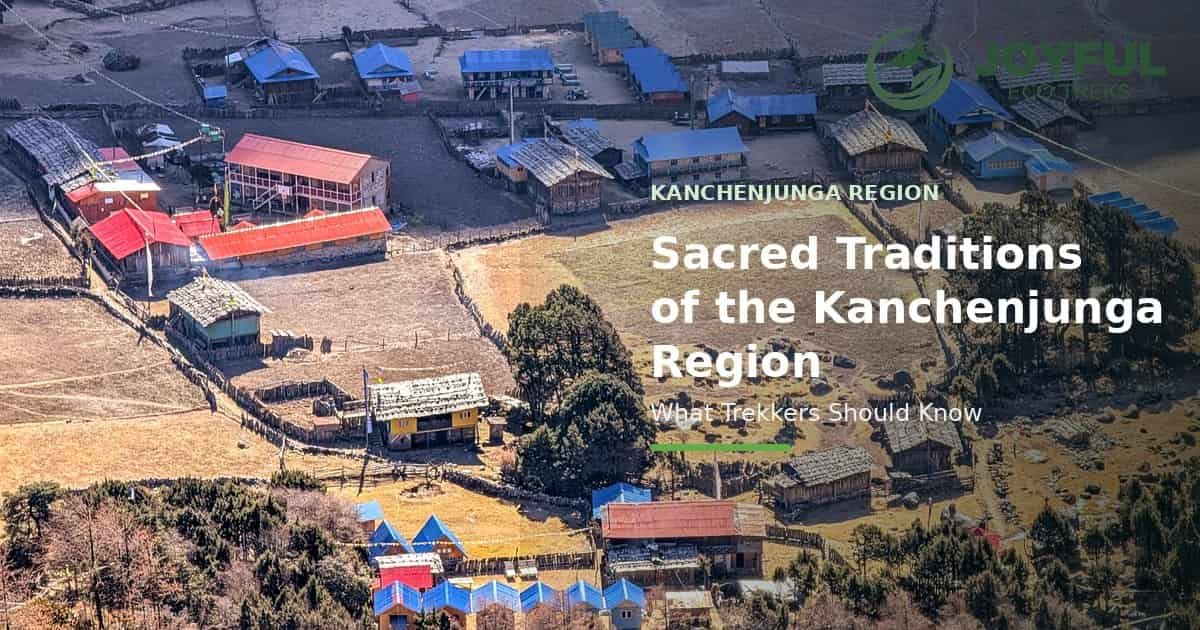
- Higher settlements (Ghunsa, Phale, Khambachen): Tibetan Buddhist traditions become more visible
This changing cultural setting is one reason a Kanchenjunga region trek feels different from routes that pass through a single cultural area: whether you’re following a shorter route to base camp or a full Kanchenjunga circuit trekking itinerary, you’ll move through several distinct cultural traditions within a single journey, a shift that’s as much about people as it is about elevation.
1. Limbu and Yakthung Communities
The Limbu, who also use the name Yakthung, are closely connected with eastern Nepal. Their culture includes their own language, rituals, oral traditions, social customs, and the Mundhum tradition. For trekkers passing through Limbu areas, each village is a home first, where customs and family traditions shape everyday life, not just a stop on the trekking day.
Land, farming, seasonal events, ancestors, and religious practices are closely tied to Limbu cultural life. Trekkers do not need to learn every ritual before visiting, but knowing that these traditions are still practiced can change how you approach homes, ceremonies, agricultural areas, and sacred locations.
2. Sherpa Communities in the Upper Valleys
As the Kanchenjunga trek climbs toward higher settlements, Sherpa and Tibetan Buddhist culture becomes more visible. Ghunsa is one of the best-known cultural stops in the upper valley, where a Buddhist monastery forms part of the religious life of the community.
This part of the journey is also connected with high-altitude livestock keeping and mountain livelihoods. Across the wider Kanchenjunga area, high pastures have traditionally been used for seasonal grazing of animals such as yak and sheep. These practices remind trekkers that the trails around Kanchenjunga Base Camp are also working routes and grazing areas for local communities.
What Is Mundhum and Why Does It Matter?
Mundhum is a religious and cultural tradition closely associated with the Yakthung Limbu people. It includes oral narratives, rituals, teachings, and performances that carry knowledge about community life, religion, customs, ancestors, and social practices. Academic research on Limbu society describes Mundhum performances as an important part of Limbu cultural and religious life.
For trekkers, Mundhum helps explain why parts of eastern Nepal cannot be understood only through Buddhist or Hindu traditions. The Kanchenjunga area contains different belief systems, and some are strongly tied to Indigenous Kirati traditions. Understanding this makes the Sacred Traditions of the Kanchenjunga Region easier to see as living practices rather than stories created for tourists.
How Are Mountains and Nature Connected to Local Beliefs?
In the wider Kanchenjunga area, nature can carry religious meaning as well as physical beauty. UNESCO’s description of the Khangchendzonga sacred area in Sikkim connects mountains, lakes, caves, forests, and other natural features with Buddhist and Lepcha traditions. The mountain itself is treated as part of a sacred environment rather than an isolated peak.
Trekkers on the Nepal side should not assume that every Sikkimese belief is practiced in the same way in Taplejung. Still, the wider sacred relationship between people and the Himalayan environment is worth knowing. It encourages a different approach to Kanchenjunga trekking, where mountains, forests, rivers, pastures, and villages deserve the same care a guest would show in someone’s home.
What Buddhist Traditions Will Trekkers See Along the Kanchenjunga Trek?
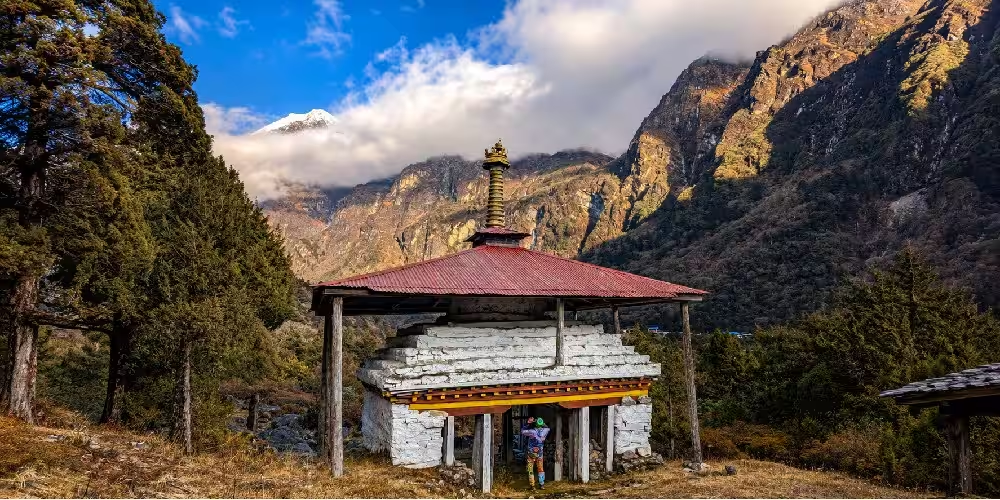
Buddhist traditions become easier to notice in higher settlements such as Ghunsa and Phale. Trekkers may encounter monasteries, prayer flags, chortens, prayer wheels, and other religious structures as they move through these communities. In places such as Ghunsa, the local monastery remains an active place of worship and community life, not simply an attraction to see in passing.
When visiting a monastery or passing a religious structure, watch what local people do before doing anything yourself: how they walk around chortens, when they lower their voice, when they pause. Keep your voice low, avoid interrupting prayers, and let your guide signal what’s appropriate in the moment. Prayer flags and religious objects should remain exactly where they are, undisturbed by visitors passing through.
What Festivals and Seasonal Traditions Are Practiced in the Region?
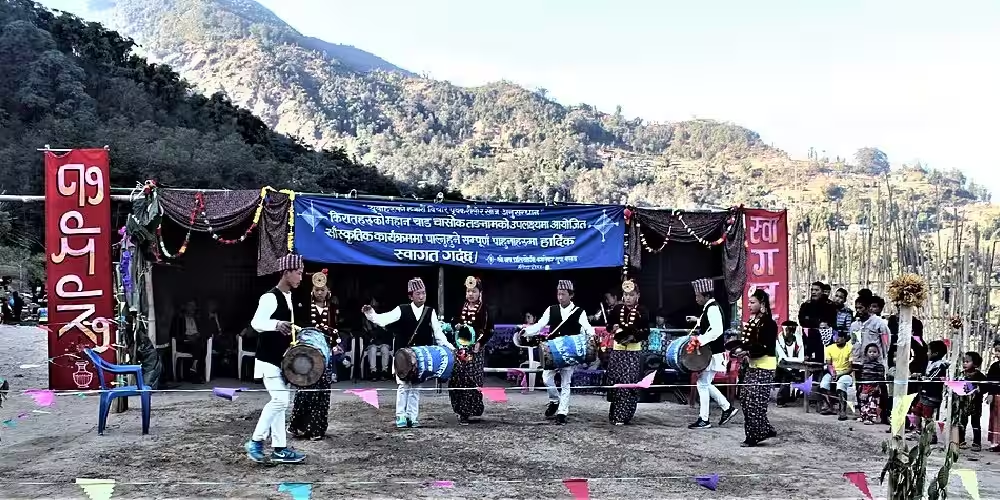
One important Limbu celebration is Chasok Tangnam, a harvest festival associated with offering the first harvest and giving thanks. The festival is celebrated among Limbu communities in eastern Nepal and includes religious and cultural gatherings. Because its timing follows the local calendar, trekkers should not assume that every Kanchenjunga trip will coincide with the celebration.
Source: Wikimedia Commons
Seasonal life also shapes when villages are busiest and how communities engage with visitors. Harvest months bring gatherings and ceremonies in lower Limbu settlements, while spring (March–May) and autumn (September–November), the region’s main trekking seasons, often overlap with local festivals and community events.
Trekking during these windows can give visitors a chance to witness cultural life alongside clear mountain views, though exact festival dates shift year to year with the local calendar.
What Local Hospitality Can Trekkers Expect?
Hospitality is one of the most memorable parts of traveling through remote mountain settlements. Tea houses and family-run lodges give trekkers a chance to meet people whose homes and communities form the route itself. A simple meal, cup of tea, or conversation can become as memorable as reaching a viewpoint.
Respect works both ways. Follow your host’s lead when entering a home or shared space, ask before entering private areas, and show appreciation for food that is offered. Customs can differ from one household or community to another, so polite observation is often better than assuming that one rule applies everywhere in the Kanchenjunga region.
Cultural Etiquette Every Kanchenjunga Trekker Should Know
Good cultural etiquette during Kanchenjunga trekking is mostly about asking, observing, and not treating local life as a tourist display. Remote villages receive fewer visitors than Nepal’s busiest trekking regions, which makes respectful behavior especially important when photographing people, visiting monasteries, or entering family spaces.
Keep these simple rules in mind:
- Ask permission before photographing local people, monks, children, ceremonies, or private homes.
- Keep noise low around monasteries and during prayers.
- Do not move prayer flags, religious objects, or stones from sacred places.
- Do not sit or climb on religious structures for photographs.
- Ask before entering monastery rooms or private areas.
- Give livestock and people carrying loads enough space on narrow trails.
- Dress respectfully when entering religious places.
- Follow your local guide when you are unsure about a custom.
What Should Trekkers Avoid Doing in the Kanchenjunga Region?
Trekkers should avoid treating villages, sacred structures, or ceremonies as photo sets. A rushed photo, snapped without asking, mid-ceremony, or right in someone’s doorway, can turn a welcoming interaction into an uncomfortable one for both visitor and resident. The same goes for moving objects, entering private areas uninvited, or raising your voice around monasteries.
It is also best not to make assumptions about someone’s religion or ethnicity based only on clothing, language, or village location. Limbu, Rai, Sherpa, Buddhist, Hindu, and other traditions can exist close to one another. Asking your guide when you are unsure is far better than applying one cultural rule to the entire Kanchenjunga region of Nepal.
What Should You Remember Before Trekking in Kanchenjunga?
The main thing to remember is simple: Kanchenjunga is a place where Indigenous traditions, Buddhist practices, village livelihoods, sacred beliefs, and modern trekking all meet. Customs may change as you move between communities, so observation and respectful questions matter.
You do not need to know every ceremony or local word before starting the trek. Arrive willing to listen, ask before photographing people or sacred places, follow local guidance, and leave religious and natural objects untouched. These small actions can make your journey more respectful for the people who call the region home.
Final Thoughts
The Sacred Traditions of the Kanchenjunga Region add another layer to a journey already known for remote trails and huge Himalayan scenery. From Limbu Mundhum traditions in eastern Nepal to Buddhist monasteries in the upper valleys, the route introduces trekkers to communities whose relationship with these mountains goes far beyond tourism.
Learning about these customs before you go can make your Kanchenjunga journey more respectful and meaningful. If you are planning a trek and need help choosing the right route, itinerary, or travel plan, contact Joyful Eco Treks, and our team can help you prepare for your journey.
See more travel stories, destination updates, trekking photos, and trip ideas from Nepal. Follow Joyful Eco Treks on Facebook, Instagram, and TikTok, and stay connected with our latest adventures.
FAQs
Is Kanchenjunga considered a sacred mountain?
Yes. Kanchenjunga is considered sacred, especially in Sikkimese Buddhist and Indigenous traditions, where the mountain and its surrounding natural features form part of a wider sacred area recognized by UNESCO.
Why did climbers stop below the summit of Kanchenjunga?
Climbers stopped just below the summit to respect the Sikkimese belief that Kanchenjunga’s highest point should remain untouched. During the first successful ascent in 1955, Joe Brown and George Band stopped about five vertical feet from the top.
What cultures are found in the Kanchenjunga region of Nepal?
The Kanchenjunga region of Nepal is home to Limbu, Rai, and Sherpa communities. Kirati traditions are stronger in the lower region, while Tibetan Buddhist culture becomes more visible in higher settlements such as Ghunsa and Phale.
What religion is practiced in the Kanchenjunga region?
The Kanchenjunga region follows several traditions rather than one religion. Limbu communities maintain Mundhum practices, Tibetan Buddhism is common in higher Sherpa settlements, and Hindu traditions are also present in eastern Nepal.
Can trekkers take photographs inside monasteries?
Yes, but only when photography is permitted. Always ask before photographing inside monasteries, of monks, or during ceremonies; rules differ between monasteries, so follow your guide’s or local host’s instructions.
How can trekkers respect local traditions during the Kanchenjunga trek?
Ask permission before photographing people or sacred sites, stay quiet near monasteries, avoid touching or moving religious objects, respect private spaces, and follow your local guide whenever you’re unsure of a custom.